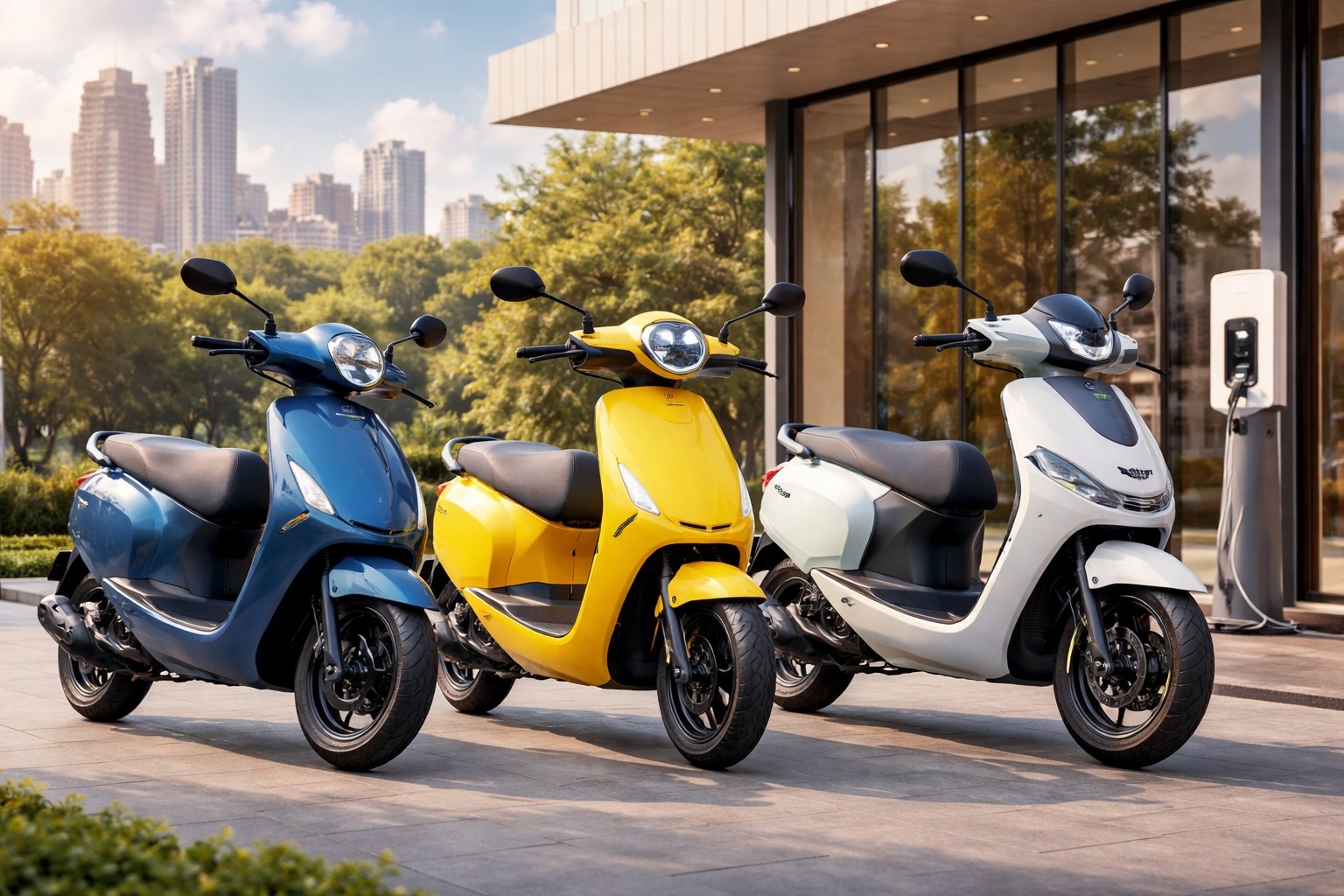
Affordable electric scooters are reshaping India’s EV adoption story. Instead of premium models leading the shift, scooters priced below Rs 1 lakh are driving sales growth, expanding the market, and making electric mobility accessible to a far wider base of consumers
In most market economies, new technologies are usually adopted first by wealthier consumers who are willing to try new products early. Premium versions of new technology therefore tend to sell faster initially, before gradually reaching the wider market.
However, India’s electric scooter market is showing a different pattern. Instead of expensive models leading adoption, it is the cheaper scooters that are driving growth.
By the second half of 2024, monthly electric scooter sales in India crossed an average of 100,000 units, a significant increase from around 70,000 units per month in 2023. Data from the Vahan database shows that this growth was mainly driven by companies launching affordable electric scooters priced close to petrol-powered models.
Affordable models boost demand
Several manufacturers introduced low-cost models in the sub-Rs 1 lakh segment.
Ola Electric launched the S1 X in December 2023 at a price below Rs 1 lakh, and by March 2024 around 50,000 units had already been sold. Earlier, the company had introduced the S1 Air at Rs 1.10 lakh, but demand later shifted towards the cheaper S1 X.
Bajaj Auto entered the affordable segment in December 2023 with a model priced at Rs 1.15 lakh. In June 2024, it introduced a variant priced at Rs 96,000 (ex-showroom), which significantly boosted its competitiveness.
TVS Motor also strengthened its presence in the price-sensitive segment in May 2024 by launching a version of the iQube priced under Rs 1 lakh.
These affordable scooters typically use smaller batteries, offer lower performance, and include simpler features. Many models use basic displays instead of touchscreens, drum brakes instead of disc brakes, and avoid expensive components such as alloy wheels to reduce costs.
Affordable segment driving sales
Scooters priced below Rs 1 lakh have become the main driver of sales.
Industry estimates suggest that by the second half of 2024, about 80% of Bajaj’s electric scooter sales came from its affordable variant. For TVS, lower-priced models accounted for around 50–55% of iQube sales. At Ola Electric, scooters priced below Rs 1 lakh contributed about 57% of sales in the September quarter and an even larger share in the December quarter.
The strategy works because electric scooters priced below Rs 1 lakh are now close to the cost of petrol scooters. Government incentives and road-tax exemptions in several states have further reduced prices, making electric scooters only slightly more expensive or sometimes comparable to petrol models. With much lower running costs, this creates a strong incentive for buyers to switch.
Brand trust becomes important
As companies focus on basic models with fewer features, brand reputation and reliability have become key factors for buyers. Established manufacturers such as Bajaj and TVS have benefited from their strong brand trust and extensive sales and service networks.
Newer companies face greater challenges. Ola Electric initially saw strong demand but later encountered issues related to reliability, service network limitations, and internal workforce challenges, causing it to drop to third place in the market by the end of 2024.
Growth in new regions
Affordable electric scooters are also expanding the market in lower-income states such as Uttar Pradesh, Madhya Pradesh, Odisha, West Bengal, Bihar and Punjab. Buyers in these regions were previously reluctant to spend around Rs 1.5 lakh on electric scooters but became more interested once prices moved closer to petrol models.
The share of these states in national electric scooter sales rose from about 15% in the first half of 2023 to 27% by the second half of 2024.
Future outlook
India sells more than seven million scooters every year, while electric scooters currently account for about 1.2 million annual sales, or roughly 17% of the market. This indicates significant room for growth.
Although premium models may expand in the future, affordable electric scooters are likely to remain the backbone of the industry, much like budget petrol scooters continue to dominate India’s two-wheeler market.