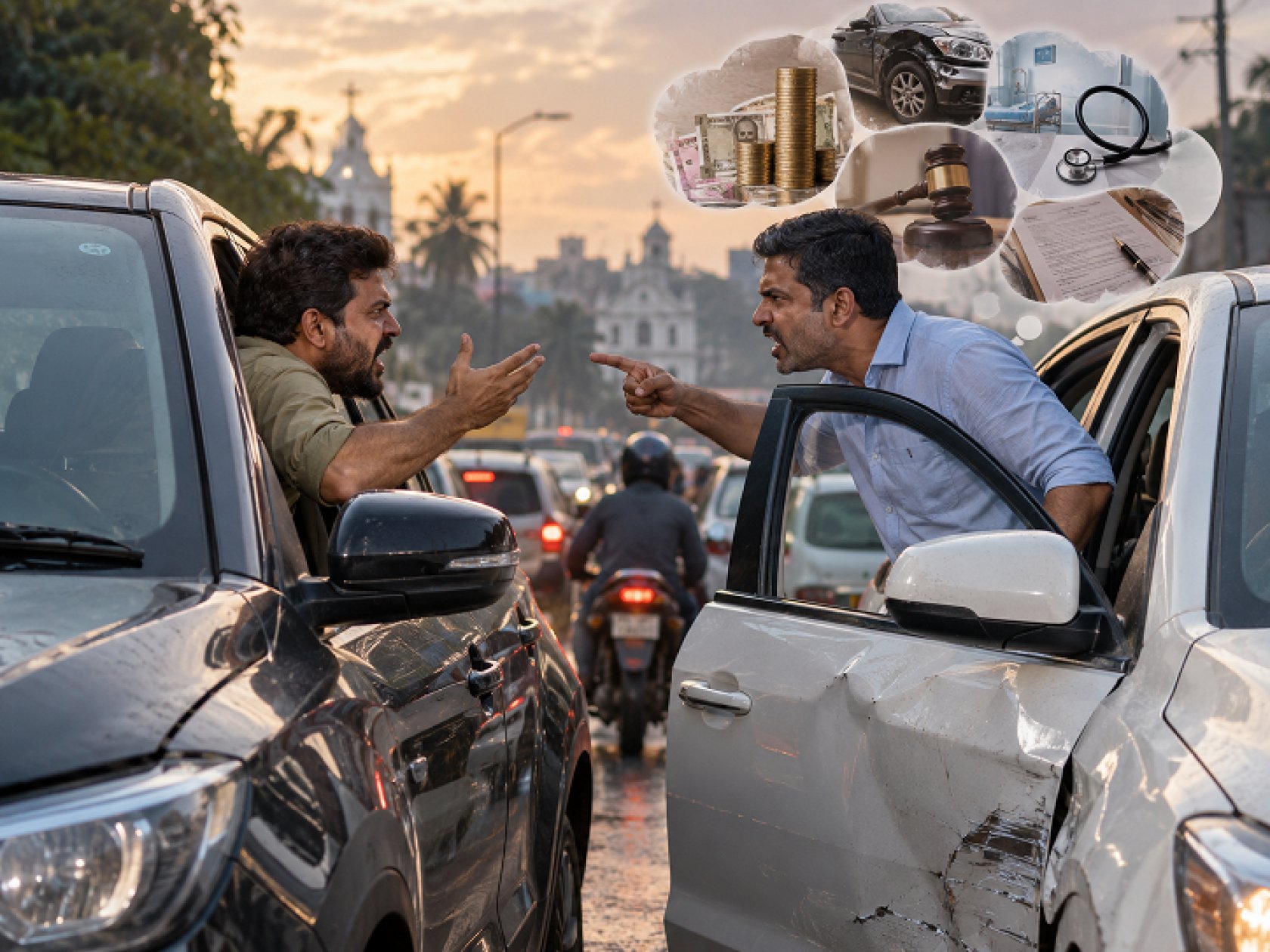
A moment of anger on the road can last barely a few seconds. The financial consequences, however, can stay with you for months or even years.
With road-rage incidents increasingly making headlines, the discussion usually centres on reckless driving, injuries, traffic violations and the law. But there is another side that deserves attention: the personal financial cost of losing your temper behind the wheel.
Damage Bills
Consider a familiar situation. Another driver cuts you off. You honk. They refuse to move. Words are exchanged. One driver follows the other, a vehicle is deliberately rammed or someone gets out of the car to confront the other motorist. What began as an irritating traffic incident can quickly turn into a costly affair.
The first and most obvious cost is vehicle damage. A minor collision can mean a damaged bumper, headlamp, door, windscreen or alloy wheel. Depending on the vehicle, even seemingly minor repairs can run into tens of thousands of rupees.
Insurance Costs
Then comes insurance.
Motor insurance can protect you against several financial consequences of an accident, but making a claim is not necessarily cost-free. If you claim for damage to your own vehicle, you could lose the No Claim Bonus accumulated on your policy, depending on the circumstances and the terms of the policy. For someone who has built up a substantial NCB over several claim-free years, losing that benefit can increase the cost of insurance at renewal.
There is also a more important distinction: an accident is not necessarily the same thing as deliberate damage.
If a driver intentionally rams another vehicle during a road-rage incident, the matter can go beyond an ordinary motor-insurance claim. Police action, legal proceedings and questions of liability can enter the picture. If another person’s vehicle is damaged or someone is injured, the financial exposure can become considerably larger.
Third-Party Liability
Third-party liability is particularly important here. Motor insurance in India includes mandatory third-party cover, which is intended to protect against specified liabilities arising from accidents involving other people or their property. But motorists should not assume that insurance means every consequence of their actions will simply be paid by an insurer.
Medical Expenses
Then there are medical expenses.
A road-rage confrontation can result in injuries even when the original dispute involved nothing more serious than a lane change or an argument over parking. Hospitalisation, medicines, diagnostic tests and follow-up treatment can quickly add to the bill. There can also be indirect costs if the injured person is unable to work.
This is where the financial impact becomes bigger than the repair bill.
Suppose someone earns Rs 50,000 a month and is unable to work for two weeks because of injuries sustained in a road incident. The loss is not limited to the medical expenses. There is also lost income, transportation costs, possible assistance from family members and other incidental expenses.
For self-employed people, the impact can be even more direct. Time spent dealing with a damaged vehicle, police complaints, insurance paperwork or legal proceedings is time that may not generate income.
Legal Expenses
Legal costs are another expense that people rarely consider when they are angry. A confrontation that escalates into a police complaint or court case can mean lawyer’s fees, repeated visits to authorities and considerable time away from work. Even if the original dispute was over something trivial, the resulting financial burden may not be.
Hidden Costs
There is also the cost of replacing a vehicle temporarily. If your car or motorcycle is in a workshop after an incident, you may need taxis, ride-hailing services or a rental vehicle. A few days may not seem significant, but repeated expenses can add up.
The lesson is not that motorists should never use their insurance or avoid reporting incidents. Insurance exists precisely to protect people against financial risks. The lesson is that insurance cannot eliminate the financial consequences of reckless decisions.
Before reacting to another driver, it is worth asking a surprisingly simple financial question: How much could this argument cost me?
The answer could include a repair bill, an insurance claim, a higher renewal cost, medical expenses, legal fees, lost income and potentially compensation to another person.
And none of this accounts for the time and stress involved.
Manage Risk
Personal finance is often presented as a subject about investments, tax planning, loans and savings. But managing money also means managing risk. Avoiding an unnecessary financial liability can be just as important as earning a better return on your investments.
The next time someone cuts you off in traffic, the cheapest response may also be the simplest one: let them go.
You may save more than your temper.