PANAJI
The death of a 21-year-old tourist from Indore in an apparent drug overdose after a visit to the party club in Vagator has punctured the police’s repeated claim that the State recorded no drug-related deaths over the past three years.
The fatality has prompted fresh scrutiny of statements that maintained no overdose deaths had been reported during this period. Officials had cited that record as evidence of a “zero-tolerance” approach, built on surveillance, intelligence inputs and coordinated enforcement. The latest case, however, raised questions about the accuracy of the department’s stance.
Conflicting evidence
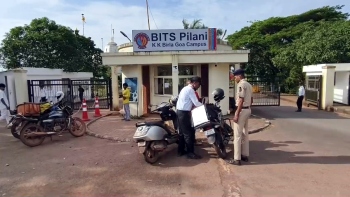
Doubts deepened with preliminary toxicology findings in the death of 20-year-old Rishi Nair, a second-year student at BITS Pilani’s Goa campus last year. Initially believed to have died after choking on vomit, analysis suggested that a mix of sedatives, stimulants and recreational substances may have induced vomiting, followed by aspiration -- a condition in which vomit enters the lungs during sleep and can prove fatal.
Police officials have maintained that conclusions must rest on scientific evidence. “No case of drug-related death or overdose has been reported in Goa during the last three years. The present death of the Indore youth does confirm a fatal mix of drugs, but that case is under investigation. As regards the student deaths at BITS Pilani K K Birla Goa Campus, the enquiry is in progress,” a senior officer said.
Enforcement data
Even as questions mount, senior officers reiterated that rising case numbers and seizures reflect intensified enforcement rather than increased availability. Drug seizures rose from 171.204 kgs in 2023 to 275.082 kgs in 2024, before declining to 234.286 kgs in 2025, with the police attributing it to improved intelligence gathering and inter-agency coordination.
“On receiving specific information, raids are conducted promptly, contraband is seized, and cases are registered under the law. We are maintaining sustained pressure on drug networks,” the officer said.
Official records show 140 narcotics cases registered in 2023, rising to 162 in 2024 and 163 in 2025, with more than 570 arrests over the three years.
Accountability concerns
The police also rejected assertions of rampant drug availability, pointing instead to expanded surveillance, cyber monitoring and intelligence-sharing with central agencies such as the Enforcement Directorate and the Narcotics Control Bureau. Preventive measures, officials said, include patrols in tourist-populated zones, surprise inspections of nightlife establishments, highway checkpoints and monitoring of repeat offenders.
The police also claimed to have conducted more than 500 awareness programmes in schools and colleges, besides public campaigns across beaches and transport hubs, warning of the risks of drug use.
At the administrative level, regular reviews under the Narco Coordination mechanism bring together departments including police, health and education to assess enforcement and intelligence inputs, with the stated aim of creating a unified response to trafficking and abuse.
The latest fatality in the Anjuna-Vagator belt has nonetheless deepened questions about accountability and oversight in areas where drug activity has repeatedly been flagged, particularly youngsters falling prey to it.