PANAJI
The death of 21-year-old tourist Ishan Singh Badgujar outside a party venue in Anjuna last week has once again thrown the spotlight on Goa’s persistent drug problem. Badgujar’s collapse was confirmed as triggered by an overdose of a cocktail of narcotics and alcohol -- Ecstasy and MDMA, along with alcohol.
The incident has sparked outrage among locals and renewed calls for stronger enforcement against the narcotics trade.
This isn't the first such case and Goa has witnessed several tragedies over the years. Way back in 2015, two youths, Parag Raikar (26) and Rodson Monteiro (27), died of suspected drug overdose at a birthday party in Maina-Curtorim. Police recovered narcotic-laced cigarette butts and empty sachets at the site, leading investigators to probe the case through the drug angle.
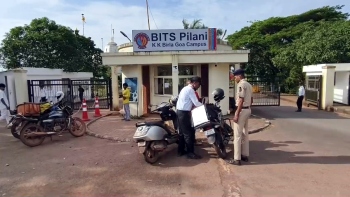
More recently, in December 2024, a Delhi youth Akshat Kashyap (26) died while being treated at a Mapusa hospital hours after he collapsed at the Dhargal venue of the controversial 'Sunburn' EDM festival. Last year, the death of a BITS Pilani student marked the fifth such case in the year. Similar incidents have been reported in coastal villages like Vagator and Calangute, where rave parties often end in tragedy.
Spread beyond beaches
While Goa’s coastal belt has long been associated with rave culture and narcotics, the menace has seeped into hinterland villages and rural landscapes. The Curtorim case demonstrated that even quiet communities are not immune.
A senior police official admitted, “The challenge is not only in tourist hubs but also in villages where narcotics are finding their way into local networks.”
Authorities usually intensify raids and seizures after every such incident, but enforcement alone has not stemmed the tide. At another level, educational institutions are stepping in with awareness campaigns, peer counselling, and collaborations with NGOs. Schools and colleges are strengthening counselling services to identify early signs of drug dependency among students, but the intervention experts say is far below the necessary levels to tackle a problem so big and real.
A pattern of tragedy
Each incident of death sparks public outrage and political debate, but the systemic change necessary to confront the problem remains slow.
Goa’s reputation as a party destination, meanwhile, continues to attract traffickers and consumers alike. And, the recurring deaths of young people -- tourists and locals alike -- highlight a grim reality: unless enforcement, education, and rehabilitation converge effectively, Goa risks losing more of its youth to narcotics.
NGOs, educators, and police officials are now ringing the alarm bells.
According to Peter F Borges, social activist and founder of the Human Touch Foundation, drug addiction among youth is not about lacking willpower or making poor choices but an illness that needs treatment and understanding. "We must shift focus from punishment to prevention, guided by scientific evidence and compassion,” Borges, a former State Commissioner for Protection of Child Rights, said.
A former police officer agreed, saying enforcement alone does not suffice.
Call for prevention
"Prevention, counselling, and community awareness must be strengthened to protect our youth," the official who retired as Superintendent of Police a decade ago said. He pointed to the Curtorim incident in 2015, which he briefly dealt with, saying it showed that drug abuse is not merely restricted to the tourism belt. Another serving police official admitted that even in villages away from the tourist hubs, narcotics are finding their way into local networks.
As Goa grapples with balancing its tourism-driven economy and the safety of its youth, the death of Ishan Singh Badgujar once again serves as a tragic reminder that the fight against drugs must extend beyond raids and arrests. It requires a sustained, community-wide effort to protect the coming generations.