THE AOUTO | THE GOAN
A road accident can happen in a matter of seconds. Two vehicles meet at a junction, a motorcyclist suddenly changes lanes, a pedestrian steps onto the road or a vehicle brakes unexpectedly. In the aftermath, the question is often simple but difficult to answer: what exactly happened?
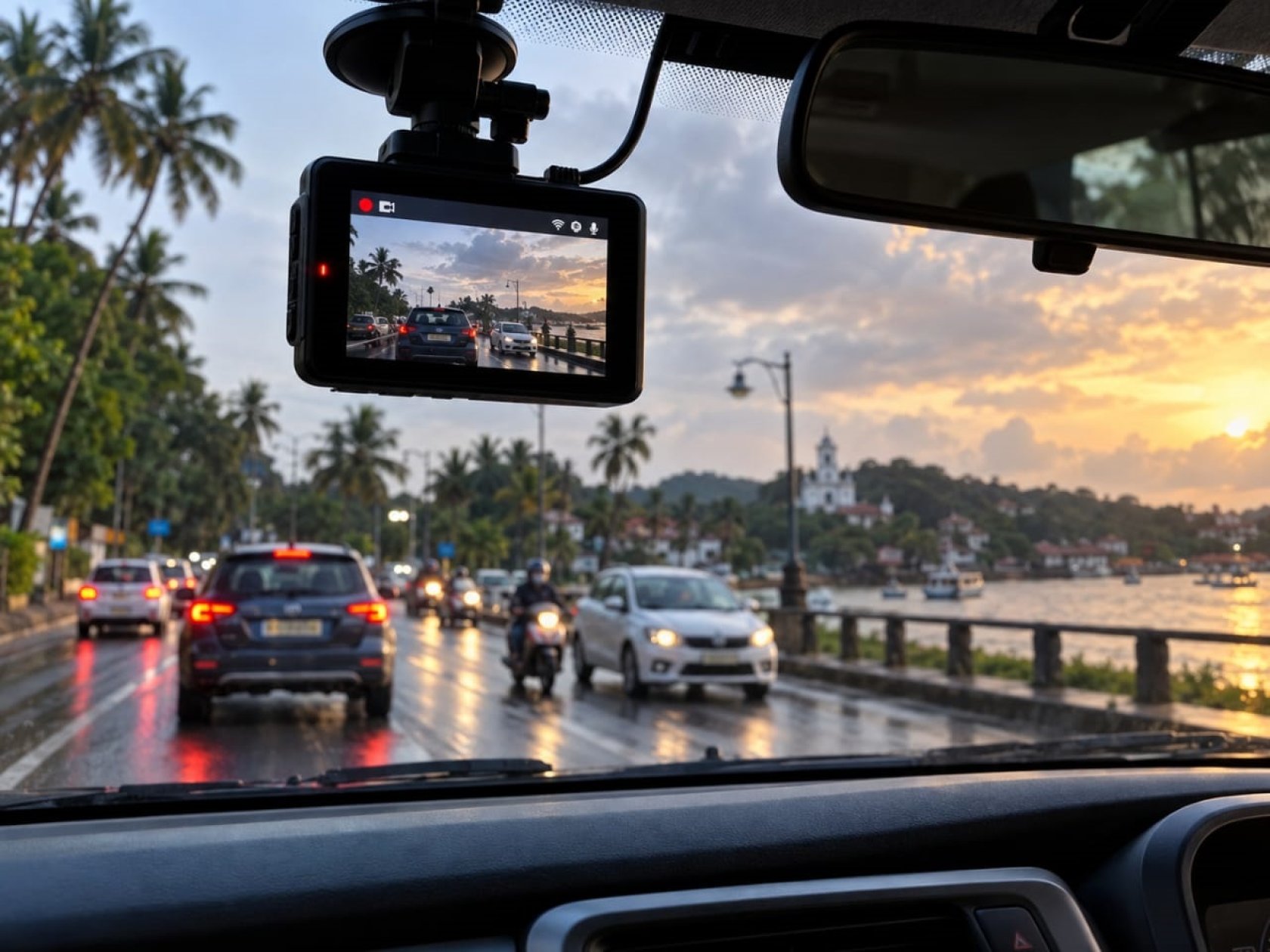
This is where a small device mounted on a car's windscreen is increasingly becoming relevant. Dashcams, or dashboard cameras, continuously record what happens in front of a vehicle and, depending on the model, behind it or inside the cabin as well.
For many motorists, a dashcam is no longer simply a gadget for recording interesting moments on the road. It can serve as an additional record of a journey and, in certain situations, provide useful evidence of what happened.
A camera on the road
A typical dashcam is designed to start recording automatically when the vehicle is switched on. It records video in short segments and saves them to a memory card. When the storage is full, older footage is normally overwritten by newer recordings.
This means the driver does not usually need to manually start and stop the camera every time the car is used.
Many dashcams also have an impact or G-sensor. When the system detects a sudden impact or significant movement, it can protect the relevant video file from being overwritten. This can be particularly useful after a collision, when the driver may not immediately think about saving the footage.
More advanced models may also include GPS, which can record information such as the vehicle's location and speed alongside the video.
When footage matters
The most obvious use of a dashcam is after a road accident.
Consider a situation in which two vehicles collide at an intersection. Both drivers may have different accounts of what happened. There may be no independent witnesses, or witnesses may remember the incident differently.
A recording from a dashcam can provide an additional account of the event.
It may show the traffic signal, lane positions, vehicle movements, road conditions and what happened immediately before the collision. This does not automatically determine legal responsibility, but it can provide information that may help insurers, authorities or the people involved understand the sequence of events.
Dashcam footage can also be useful in less serious situations. A sudden braking incident, a vehicle moving into another lane or an object falling onto the road may all be captured without the driver having to remember every detail afterwards.
More than just the front view
Not all dashcams are the same.
A basic model may record only the road ahead. Others use two cameras, with one facing forwards and another recording the rear. Some systems add an interior camera as well.
A front-and-rear setup can provide a broader picture of what is happening around the vehicle. An interior camera can be useful for certain applications, but it also raises additional privacy considerations because people inside the vehicle may be recorded.
Another feature found on some models is parking mode. Depending on the system, the camera can record when the vehicle is parked, particularly if movement or an impact is detected.
Parking mode can be useful in documenting incidents such as another vehicle hitting a parked car. However, it can also place additional demands on the vehicle's battery, so the installation and power-management system matter.
Resolution isn't everything
Dashcam specifications can be confusing. A buyer may see terms such as Full HD, 2K, 4K, HDR, wide-angle lens and high frame rates.
Higher resolution can provide more detail, but it does not automatically guarantee useful footage in every situation.
Night-time performance is particularly important. A camera that produces excellent images during the day may struggle with glare from headlights, poorly lit roads or rapidly changing light conditions.
The position of the camera also matters. A poorly mounted camera can have part of its view blocked by the dashboard, windscreen pillars or other objects. A dirty windscreen can affect image quality as well.
The best footage is therefore not necessarily the footage with the biggest number on the box. Image quality, night performance, lens coverage, reliability and proper installation all play a role.
Don't forget the memory card
Because dashcams record continuously, they place more demands on their memory cards than many ordinary cameras do.
The camera repeatedly writes and overwrites video files, making a suitable high-endurance memory card important. Storage capacity also determines how much footage can be retained before older files are overwritten.
Drivers should also understand how their particular dashcam handles protected files. An important recording can still be lost if the user assumes it will remain available indefinitely.
If an incident occurs, the footage should be backed up as soon as practical rather than leaving the memory card in the camera until it eventually gets overwritten.
Privacy and responsible use
A dashcam records public roads, but that does not mean every recording should automatically be shared publicly.
Modern cameras can capture vehicle registration numbers, pedestrians, passengers and other identifiable information. Interior cameras can record conversations or people inside a vehicle.
This makes responsible handling of footage important. A recording may be useful for an insurance or legal matter without being appropriate for posting on social media.
Drivers should also make sure that the camera is installed without obstructing their view of the road or interfering with the operation of the vehicle.
A useful record, not an infallible witness
The phrase "witness sitting on your dashboard" makes a dashcam sound definitive, but there are limits to what a camera can establish.
A camera has a fixed field of view. It may not capture something happening outside that area. Heavy rain, darkness, glare or a dirty windscreen can reduce visibility. The camera also records images rather than the complete circumstances surrounding an incident.
A recording therefore needs to be considered in context.
Its greatest value is that it can preserve a visual record of events that might otherwise depend entirely on memory. In a dispute, that can make a difference.
Becoming part of the car
Dashcams are gradually moving from being niche accessories to another piece of automotive technology.
As vehicles become more connected and drivers increasingly rely on cameras for parking, reversing and driver assistance, recording the road is another extension of that technology.
For motorists, the appeal is straightforward. Most journeys are uneventful, but when something unexpected happens, having a record of those few seconds can be useful.
A dashcam cannot prevent an accident, settle every dispute or replace careful driving. What it can do is quietly observe the road ahead and preserve what its lens sees.
And sometimes, when everyone remembers an incident differently, that small camera may provide the one thing that memory cannot: a recording of what happened.