TEAM AUTO I THE GOAN
There was a time when a car producing 100 horsepower was considered fairly powerful in India. Today, 150 hp is hardly headline material, 200 hp is increasingly accessible, and performance cars with 300, 400 or even 500 hp are no longer the preserve of a tiny group of enthusiasts.
The obvious question is: do we actually need all that power?
For most Indian motorists, the honest answer is probably no. But that does not mean there is no reason to want it.
The horsepower race
Car manufacturers have been engaged in a quiet performance arms race. Turbocharged petrol engines, sophisticated automatic gearboxes and electric powertrains have made it easier than ever to extract serious performance from relatively affordable cars.
The electric vehicle has accelerated this trend. Electric motors can deliver substantial torque almost instantly, allowing even family-oriented EVs to offer acceleration figures that would have seemed extraordinary a decade ago.
The result is an interesting situation. A buyer shopping for a perfectly practical family car can now end up with performance that was once associated with sports cars.
But how often can that performance actually be used?
Where do you use it?
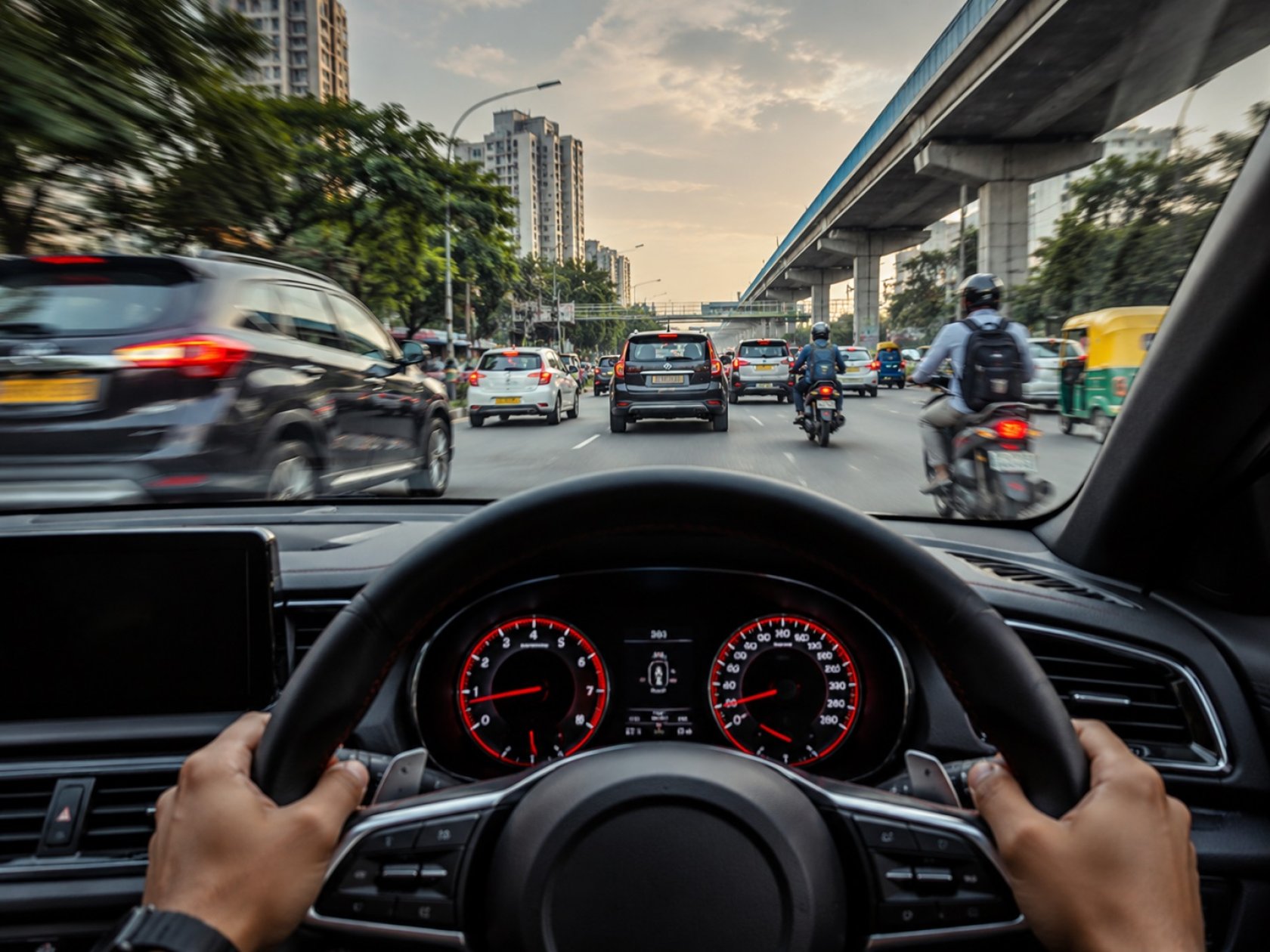
Consider the average Indian driving environment.
In cities, traffic congestion means that acceleration is often limited by the vehicle in front rather than the capabilities of the car underneath you. On busy urban roads, even getting from a standstill to 60 km/h can be more about finding a gap than having enough horsepower.
Highways offer more opportunities, but even there, speed limits, traffic, road conditions and unpredictable behaviour from other road users impose practical limits.
That does not make horsepower irrelevant. A powerful car can make overtaking easier, particularly when carrying several passengers or climbing a steep gradient. Having reserve power can also make highway driving feel less stressful.
But there is a difference between having useful reserve power and having far more performance than you can realistically exploit.
More isn’t always better
Horsepower is an easy number to market because bigger numbers sound better.
A manufacturer can advertise 200 hp instead of 150 hp and immediately create the impression of a more exciting product. The same logic applies to 300 hp, 400 hp and beyond.
But maximum power is only one part of the driving experience.
A well-engineered 150-hp car with a responsive gearbox, good tyres, strong brakes and well-calibrated suspension can be far more enjoyable on Indian roads than a 300-hp car that is constantly being restrained by traffic.
In fact, on twisty roads, the ability to carry speed through corners, brake confidently and put power down effectively can matter more than the headline horsepower figure.
There is a safety argument
This is where the debate becomes complicated.
More power can be useful for safety when it is used responsibly. Having enough acceleration to complete an overtaking manoeuvre quickly can be an advantage. The same applies when merging onto a highway or getting out of a potentially dangerous situation.
But more power can also create a temptation to use it.
A car capable of accelerating extremely quickly gives its driver an enormous margin for error — but only if that performance is treated with respect. The problem is not horsepower itself. It is the combination of excessive performance, poor judgement and public roads.
Indian roads already present enough variables: pedestrians, two-wheelers, animals, poorly marked junctions, sudden lane changes and vehicles entering from unexpected directions.
A car capable of reaching very high speeds in seconds does not eliminate those problems.
The SUV effect
There is another reason powerful cars are becoming increasingly common: Indian buyers are buying bigger vehicles.
The popularity of SUVs has changed expectations. Larger vehicles require more power to deliver the kind of performance consumers have come to expect.
Turbocharged engines have made it possible to give relatively heavy SUVs impressive acceleration without resorting to enormous engines.
Electric SUVs take this even further. Because electric motors deliver torque almost instantly, a large family SUV can sometimes accelerate with startling urgency. And that creates an interesting contradiction. We are buying increasingly large vehicles and then adding enough power to make them behave like sports cars.
But do we buy cars only for what we need?
Of course not.
If we bought only what we needed, the automotive industry would look very different.
Nobody needs a panoramic sunroof to commute to work. Nobody needs a 12-speaker audio system to get from one place to another. Nobody needs ventilated seats or a 360-degree camera.
Cars are emotional purchases as much as practical ones.
Performance is part of that emotion.
There is something satisfying about knowing your car has considerable power available, even if you rarely use it. Enthusiasts enjoy acceleration, engine response and the feeling of a machine capable of much more than everyday driving demands.
And there is nothing wrong with that.
So, how much is enough?
Perhaps the better question isn’t whether India needs 200 hp.
It is how much power is enough for the way you drive?
For someone who spends most of their time commuting in Mumbai, Bengaluru, Delhi or any other congested city, 200 hp may be difficult to justify purely on practical grounds.
For someone regularly travelling long distances on highways, carrying a full load or driving through hilly terrain, additional power can make a meaningful difference. For an enthusiast, the answer may simply be: because they enjoy it.
That is a perfectly legitimate reason to buy a powerful car.
The sweet spot
For the average Indian buyer, the sweet spot may lie somewhere between necessity and indulgence.
A car does not need 300 hp to be enjoyable. It needs predictable performance, good brakes, competent suspension, capable tyres and an engine or motor that responds when the driver asks for acceleration.
More importantly, it needs a driver who understands what the car can and cannot do.
The next time a manufacturer announces another 200-plus-hp family car, perhaps we should ask a different question.
Not “How fast is it?”
But “What does that extra performance actually add to my life?”
If the answer is safer overtaking, effortless highway driving and greater driving enjoyment, the extra power may be worth having. If the answer is simply a bigger number on the brochure, perhaps 200 hp is already more than enough.
Because on Indian roads, the biggest limitation isn’t usually what lies underneath the bonnet.
It is what lies ahead of the windscreen.