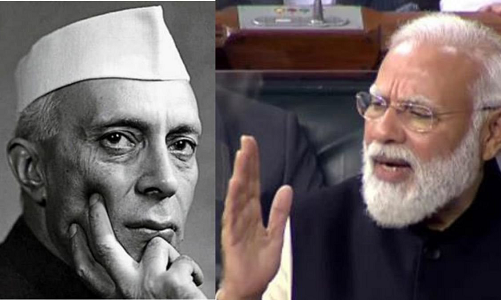
The expression “feet of clay” has become an idiom to point to a flaw of vulnerability of someone who is otherwise admirable or looks invincible. It originates from the book of Daniel in the Bible, where the prophet is called upon by king Nebuchadnezzar of Babylon which held the Jews in captivity that he saw in a dream a statue made of gold, silver, and brass, but with feet of clay. Daniel interpreted the vision to mean that the clay symbolized Empire’s vulnerability and imminent collapse. Truly indeed, the kingdom broke up into four kingdoms. Three successive kingdoms were Egypt, Syria and Rome.
The same book of Daniel also contains a vision of a beast with ten horns, but referring to the fourth of the above kingdoms, he saw a beast with toes of mixed iron and clay, anticipating the weakness that would yield to the break up of the Roman empire. It really happened between the years AD 351 and AD 476. The era of this dissolution covered a hundred and twenty-five years, from about the middle of the fourth century to the last quarter of the fifth. The map of the Roman empire during that time underwent many sudden and violent changes, and the paths of hostile nations charging upon its territory, crossed and recrossed each other in a labyrinth of confusion.
Out of the territory of Western Rome, ten separate kingdoms emerged. The ten nations which were most instrumental in breaking up the Roman empire, and which at some time held portions of Roman territory as separate and independent kingdoms, may be listed as the Huns, Ostrogoths, Visigoths, Franks, Vandals, Suevi, Burgundians, Heruli, Anglo-Saxons, and Lombards, all of them wrongly designated in many traditional western histories as “barbarians”. It was a culturally Rome-centric designation, just as Europe would later discover to its own annoyance in imperial China which looked upon the Europeans knocking at its gates as “barbarians”, along with other non-Hun ethnic groups on its borbers that it classified as Beidi or Pei-ti.
The modernity and contemporaneity with their cult of rationality and relativisation and announcement of the death of God, have not succeeded in doing away with cartomancy, or faith in the other future predicting methods of numerology, palmistry, graphology, et al. This only reveals the inner fears of human kind that despite its technological advances to master the secrets of nature, has not been able to exorcise deeper fears troubling it and threatening its triumphs. The human kind lives a permanent contradiction: It believes and works towards relativization of absolutes, but has no courage or will to relativize itself, by admitting unreservedly its contingent nature. I am reminded here of the the wisdom of the Chinese logic. Unlike the Western syllogism: All humans are mortal, Peter is human; hence, Peter is mortal, the Chinese prefer: Mao-tse-Tung died, hence we are all mortal.
There have been noteworthy philosophers of history in modern Europe (not unlike the dreaming prophets of the Bible). I may recall just two: Oswarld Spengler whose thought was inspired by the approaching horrors and consequences of World War I and led him to write The Decline of the West (1918) and Arnold Toynbee, who studied the rise and fall of 23 civilizations in his Study of History (1934-1961) till World War II. Both distinguished between Cultures and Civilizations. In their organic concept of history, all Civilizations reached the autumn of cultural growith cycle, as prelude to their decline and fall, caused largely by over-extension of power and resources, and inability to continue resisting the exploited societies.
That was the fate of all the great civilizations of the past. The autumn may at times be delayed or prolongued, but within limits. We may foresee similar approaching end of the presently dominant superpower that is beginning to be thwarted in its ambitions by multiple emerging forces that it seeks to ignore, downlplay or despise. The dominant civilization is reaching a phase of exhaustion in fighting too many fires it contributed to lit. All together, these many little and medium forces of resistance can succeed in digging its grave. We may soon see yet another beast with feet of clay going down into the litter of history, which has already collected in its bin the most powerful and apparently invincible past actors on this Earth’s surface.
What remains unexplainable is the inability of the humans to balance their ambitions with the needs of their fellow humans. The humans organized themselves into states and gave them power to check some of these self-destroying tendencies, but cultural diferences and unequal disposal of resources seem to continue to threaten us with a constant return to the law of the jungle and to the Darwinian principle of the survival of the fittest. The uplifting dictates of the reason do not seem to match the down-pull of the natural instincts.
To conclude, the ongoing threat to the democratic ideals, celebrated as the best political invention of mankind, is yet far from being achieved, because freedom turns easily into libertinism, and equality has not yet resulted into just egalitarianism, based on solidarity. Solidarity among ambitious humans will never result from demonstrations of charity, while discoursing about human rights. Sadly, the solidarity cannot be reduced to fraternising. It requires denouncing and dying for the victims of injustice.
- Teotonio R de Souza is Founder-Director of the Xavier Centre of Historical Research (1979-1994), Fellow of the Portuguese Academy of History (since 1983), retired professor of Universidade Lusófona, Lisboa (1996-2014), author of Medieval Goa (1979,1994,2009), Goa to Me (1994), Goa outgrowing Postcolonialism (2014) and a dozen of edited works and over 200 published articles