Give or take a little, when you look for studies or research on Goa, two factors stand out most prominently. Firstly, there's so little of it being conducted. Secondly, much of what gets undertaken is done from centres far away from Goa.
This does not happen by chance itself. It reflects a problem that has long gone unnoticed, and, obviously, unaddressed.
The situation is not something minor. It has a lot of implications for Goa as a society. It shapes how we see ourselves, how we understand ourselves, and the misconceptions we have about our own lives. It also determines the 'mirror' in which we view ourselves, and how distorted this can be.
Speaking in generalities, and more as an enthusiast following the field (being no expert in it), one has encountered this trend for many years. Even for decades.
In the 1960s, there were hardly any books published, and research being done, on Goa. It was an era of transition, away from Portuguese and into English. That decade was also wasted on battling whether Goa deserved an identity of its own, or was better off being part of some large, adjoining state.
This situation continued in the 1970s too, though the setting up of the Goa Board (of Secondary and Higher Secondary Education) gave some hope. It was then thought that texts created locally, and focussing on local perspectives, could trigger off a wide interest in this subject. Especially among the young. But it was not to be.
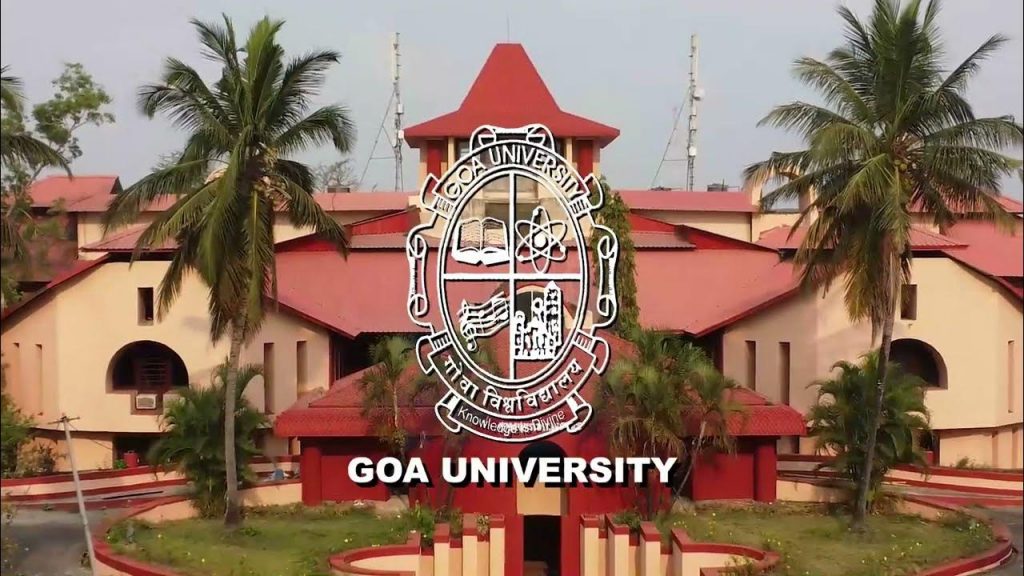
Even the launch of the university in the 1980s, which it came with a lot of hope, ultimately did not reach there.
There has been a growing interest in Goa studies over the past four or so decades. Goa University was set up with the goals inter alia “to promote interest in the life, literatures, languages and cultures of the people of the [State of Goa]” and to provide “extension and research facilities in Latin studies” (see The Goa University Act).
But, lethargy ensures that it's easier to fall back to the status quo ante. Those undertaking local research, do so largely on their own volition.
They don't do so because they have the institutional support for it; this is still largely lacking. Nor do they do so because of reminders that local research is critical for any society. Nor are we reminded that if we don't do it ourselves, it simply won't get done. Or, that someone else will do it often in a biased, stereotyped or misunderstanding-based manner, causing more problems than it solves.
This leads to a situation where our minds itself are colonised. We end up in a situation where we believe (i) that we are helpless to think for ourselves (ii) that if someone from a distant shore is doing the work, it naturally ought to be better and (iii) as a society, we don't even need to be building robust structures to understand and interpret our own society.
Why do we have such restricted quantities of local research and studies happening then? In simple terms, it's probably so much costlier, tougher and difficult to undertake local studies.
Nothing (or little) of this kind exists. It is scattered across diverse languages, dialects and scripts. Collating and building it takes time, and is costly.
By way of an example, not long back our newspapers too were filled with content from all over the world, and only very little from Goa. It was far cheaper to buy photographs and news put out by global agencies from Paris or Timbuktu (now Ouagadougou), rather than generating it from our own backyard.
If there isn't a protracted push towards building a culture of local area studies, we won't get results by accident. This is like believing that you can hunt a wild boar by simply shooting at random in the nearest jungle.
Some efforts have been made in this direction, but too little and too late. Firstly, the government cannot solve this problem by simply throwing money at it. Secondly, those who become beneficiaries of support, scholarships, fellowships and the like need to be the most suited for the post. Not just the friend of a friend, or the relative or a relative, nor even a political supporter of some sort. Politicisation should be kept totally out of such initiatives.
In addition, since some of the beneficiaries have already come from an affluent class, they should be required to 'pay it forward' for the state benefits they have received.
This concept means responding to an act of kindness not by repaying the person who helped you, but by doing a similar or greater kindness for someone else, creating a chain of generosity. Catherine Ryan Hyde wrote about this in her 2000 novel of the same name, later adapted to film. It believes that social goodwill can spread when people become agents of kindness rather than merely recipients of it.
For example, a person helped in their education can later sponsor another student. Even if critics say such voluntary acts cannot replace systemic solutions to social problems, this approach can build empathy, trust and community solidarity.
The second part of the dilemma is even more troubling. Why do so many studies on Goa get taken up by those located far from the place? One explanation would be to say that we do little of it ourselves; and a vacuum will somehow be filled.
The other reality is also that bigger cities, far older institutions and more affluent societies have greater resources to undertake this work. They also have the institutional support structure, and also prioritise such work.
Goa, meanwhile, long has this approach which says: If someone is coming here from a distant place, they must be more serious or simply better informed. It's time we rethink such a colonisation of the minds.