Dr. ALVARINHO J LUIS
For The Goan
After establishing themselves in Goa, the Portuguese built several forts to protect their holdings. They also captured forts from neighbouring rulers. Once heavily garrisoned, these fortifications reflected Portuguese military supremacy. However, by 1870, many had fallen into ruin, leaving behind reminders of Goa’s colonial past.
Fort of Aguada
Built in 1612, Aguada Fort guards the southwestern tip of Bardez and overlooks the Arabian Sea. Its fortifications extend along the coast to a rocky headland rising 79 metres above sea level. The citadel housed a lighthouse, a massive water cistern holding approximately 2.87 million gallons, barracks, prisons, magazines, and a chapel dedicated to Nossa Senhora da Boa Viagem. Its freshwater springs once supplied passing ships, giving Aguada its name, meaning watering place. One of these fountains was carved from rock in 1624, during the administration of Dom Francisco da Gama, grandson of Vasco da Gama.
Cabo Fort
Situated on the western tip of Oddavel Cape, Cabo Fort once commanded strategic coastal defences alongside Aguada and Mormugao. Conceived in 1540, the fortress eventually fell into ruin, leaving three large cisterns. However, its chapel, dedicated to Nossa Senhora do Cabo, and Franciscan convent, established in 1594, survived. The convent later served as an archiepiscopal residence before becoming the Governors’ summer palace. In the early 19th century, British forces occupied the site and built barracks and a hospital. Their presence is commemorated by a cemetery.
Reis Magos Fort
Perched on the northern bank of the Mandovi in Bardez, Reis Magos Fort was built in 1551, subsequently enlarged and reconstructed in 1707 under Viceroy Caetano de Mello e Castro. A freshwater spring flows nearby, and the Reis Magos Church, built by Franciscans in 1550, stands at its base. Reached by an elegant flight of steps, the church celebrates the Feast of Epiphany annually on 6 January. A Franciscan college once stood adjoining it, accommodating newly arrived Portuguese viceroys before they assumed office. Viceroy Dom Francisco da Gama built Gaspar Dias Fort in 1598 at Miramar on the southern bank of the Mandovi, opposite Reis Magos Fort. Named after the landowner Gaspar Dias, the fort suffered extensive damage during the 1835 military revolt, when soldiers supporting Bernardo Peres da Silva, Goa’s first native-born governor, clashed with opposing Portuguese forces. Although it was restored in 1842, it was later abandoned.
Mormugão Fort
Situated on Salcette’s northwestern peninsula, Mormugão Fort was built in 1624 during the reign of King Philip III of Portugal (1621–1640). It featured twenty bastions, rooms for ammunition, prisons, a chapel, and military quarters. Remnants of structures built in 1681 recall Portuguese plans to relocate Goa’s capital to Mormugão. The fortress also housed two freshwater fountains: Fonte de Malabar, traditionally believed to contain traces of gold, and Fonte de Santo Ignácio, whose waters were associated with sulphur deposits. Commanding the entrance to Mormugão Harbour, it was considered one of the most strategically important Portuguese fortifications.
The Rachol Fort
Situated on the southern bank of the Zuari River, Rachol Fort was captured from Bijapur by Vijayanagara forces in 1520 and subsequently ceded to the Portuguese. Once Salcette’s principal defensive stronghold, it endured repeated attacks by Muslim and Maratha forces, necessitating frequent repairs. Although most structures disappeared, the Church of Nossa Senhora das Neves, rebuilt in 1596, and Rachol Seminary survived. The Jesuits established the College of the Holy Ghost in Margao in 1574, but Muslim forces reduced it to ashes in 1579. It was moved to Rachol the following year, with its name changed to the College of All Saints. After the Jesuits’ expulsion, it became a seminary to train Catholic clergy. Its historic library housed over 5,000 volumes, while its adjoining church honours St Ignatius of Loyola.
Other Forts
Other forts include Naroa Fort, located on Divar/Dipavati, which was originally built by Muslim rulers and abandoned in 1834. The fort’s ruins are visible in the northern part of Naroa Island. Situated on Chorão Island, São Bartolomeu Fort was rebuilt by the Portuguese in 1720 on an earlier fortification. Guarding strategic waterways near Calvim, it protected the island against enemy incursions before falling into ruin by 1811. The Marquis of Castello Novo captured Alorna Fort in Pernem from the Bhonsles in 1746, returned in 1761 and recaptured it in 1781.
Perched above the mouth of the Chapora River, Chapora Fort served as a strategic stronghold against Maratha incursions and offered refuge to the people of Bardez during attacks. Sambhaji captured it in 1683, and the Bhonsles captured it in 1739, before it eventually lost its military importance after Portuguese expansion into Pernem. Further inland, the northern defences of Bardez comprised Colvale Fort (1681), Tivim Fort (1635), Quitula Fort in Aldona (1712–1717) and Corjuem Fort, captured from the Bhonsles in 1705. Colvale and Tivim formed an interconnected defensive network designed to resist invasions. Although these fortifications witnessed several military confrontations, most were abandoned during the 19th century.
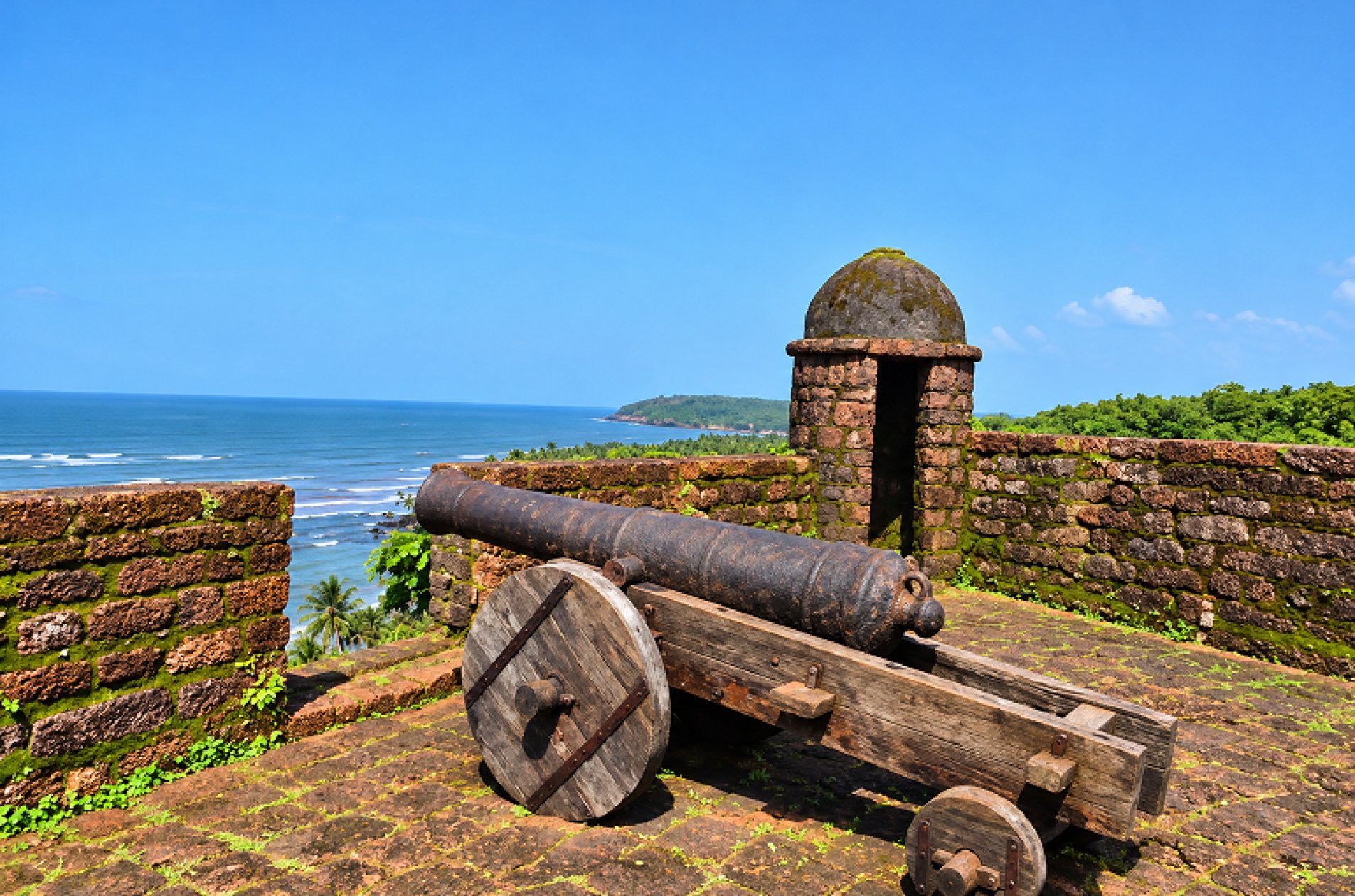
Several forts across Goa’s hinterland witnessed repeated battles between the Portuguese and neighbouring rulers. Bicholim Fort, originally held by the Bhonsles, changed hands several times between 1705 and 1781 before the Portuguese abandoned it in 1834. The Marquis of Alorna captured Sanquelim Fort in 1746, and it served as an important military outpost, while Nanuz Fort stood along the Mhadei River in Sattari. The Portuguese seized Arabo Fort in Pernem in 1746 and recaptured it in 1781. Overlooking the Tiracol River, Tiracol Fort, captured in 1776, became the site of the bloody 1835 military revolt. Further south, Cabo de Rama Fort, acquired by the Portuguese in 1763, occupied a commanding coastal headland. Besides its defensive structures, it contained a well and freshwater springs, including one traditionally believed to possess therapeutic properties owing to its sulphurous waters.
(Dr Luis is a scientist, freelancer, and son of the soil from Taleigao)