Helen Parish
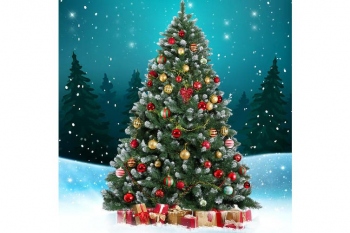
In the words of Perry Como’s classic, “it’s beginning to look a lot like Christmas”. The pandemic has got many yearning for a little festive joy earlier than usual and, for some, it started looking like Christmas in early November. Trees, lights, tinsel and baubles were already appearing in streets and houses, and Christmas shopping was well underway.
But such early holiday spirit is not always well received by those who argue that Christmas is for, well, Christmas. It wouldn’t be Christmas though without such disagreements “ they’ve been going on since early Christians started celebrating the birth of Christ.
There is no indication in the Bible of the date on which Christ was born, and no consensus in early Christianity. By the second century, it had become customary in the eastern churches to celebrate the baptism of Christ on January 6.
By the fourth century, the early January celebration of the Epiphany had become a major feast in the western European calendar, associated with the arrival of the wise men who recognised the infant Jesus as the son of God. With suggestions that the birth of Christ occurred in January, March or even June, the lack of agreement about when Christmas should be celebrated is hardly surprising.
We have Pope Julius I in 340 AD to thank for securing December 25 the day of Christ’s birth in western Christianity. A mid-winter celebration enabled the Christianisation of pre-existing winter customs. The date also aligned with ideas that Jesus died on the day of his conception in March. Nine months from March would then mean that he would have been born in December.
By the end of the century, the Christmas feast had been extended to include the commemoration of St Stephen (December 26), John the Baptist (December 27), and Holy Innocents (December 28). In 567, the Council of Tours established a 12-day Christmas feast. But in Orthodox churches which use the Roman Julian calendar, Christmas is still celebrated in January, and January 6 is known as “Old Christmas”.
Early Christmas
Christmas today can appear in our shops as early as November 1. At this point, we are used to the ever-expanding Christmas season, but this is usually only seen in commercial spaces eager to make the most of the seasonal spending. However, this year it’s come earlier to many homes too, with reports of decorations being put up as early as November.
Festive sparkle has become a way of adding joy and warmth to the gloom of pandemic restrictions. Christmas decorations bring back happy memories, and psychologists have found that those who put up their decorations early are happier than their peers and appear more sociable.
History shows that this is not the first time that Christmas celebrations have been affected by a pandemic.
News reports from 1918 point to Christmas shopping starting early during the Spanish flu pandemic, as is the case in 2020.
But the “lockdown fatigue” that prompted mass celebration of Armistice Day, Thanksgiving, and Christmas in 1918, unleashed a further wave of the Spanish flu pandemic in US cities.
Traditional views of Christmas decorations might have been overturned in 2020, but there’s still plenty of time to argue about when they should come down.
For most that is January 5, and some might argue any later than the eve of Epiphany (January 6) and you are at risk of an infestation of goblins “ either those of the Greek Kallikantzaroi persuasion or those in Robert Kerrick’s Ceremonies for Candlemas Eve. Both very much unwelcome.