


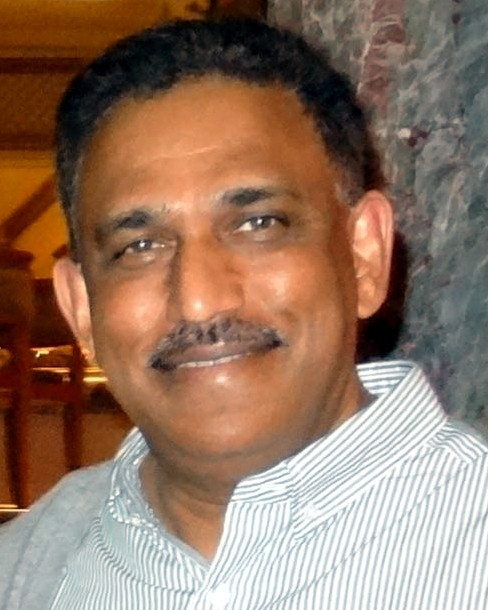
 The writer is professor at Columbia University in the USA who hails from Cortalim
In the mid-1970s, Goan families began leaving Kenya en masse. I was too young to understand why. All I knew was that families like ours were being uprooted, leaving behind homes, friendships, and memories built over decades in a country we had come to love.
There were no easy journeys then. Air travel to Goa was either unavailable at that scale or far too expensive. The Indian government pressed into service two vessels, MV Haryana and MV Karanja, ferrying people home. Our return became a 12-day voyage across the Indian Ocean, briefly halting in the Seychelles for provisions and fresh water.
For us children, it felt less like displacement and more like adventure. We explored every corner of the ship, the decks, and the galley, even trying to befriend the cooks.
We arrived at Mormugao harbour in April along with hundreds of other Goans returning home; chaos at the docks mingled with joy and the sadness of parting. Our arrival coincided with the fruit season in Cortalim. Mangoes, cashews, jackfruit, Kandas, Chunnas, it felt as though the land itself had prepared for our return. These remain among my earliest memories of Goa.
But what awaited us inside our home left a deeper impression.
OUR HOME, OUR FIRST DAYS IN GOA
While we were in Kenya, our ancestral house had been cared for by my father’s close friend, Ramachandra, a widower who, with my elderly uncle, tended to it as if it were his own. He lived nearby with his daughter Rohini, a newly minted schoolteacher with a quiet presence, her gold-rimmed glasses on her fair, porcelain-skinned face, lending her an air of gentle authority.
The house had been freshly whitewashed. The family altar was arranged with care, the ivory crucifix behind statues of St Francis Xavier, St Anthony, Our Lady, and the patron saints of our village, St Philip and St James, all polished and luminous. As we entered our home for the first time, Ramachandra lit the candles. Then, he and Rohini stood beside my family and joined in prayer, not as a gesture but as something entirely natural. It was never explained. It simply was.
Rohini became our guide to this rediscovered home. We explored the market, walked past temples, churches, and chapels in Cortalim and Sancoale, climbed hills to gather cashews, and passed homes with Tulsi Vrindavans and grottos of Our Lady. These were not boundaries. They were expressions of a shared landscape of belief.
Faith was visible everywhere, in feasts, rituals, bhajans and the tolling of bells at dusk, yet it never demanded attention. It was simply part of the air we breathed.
By the end of that summer, Rohini persuaded my father to enrol us at Loyola High School in Margao. On the first day, she walked us to the bus stop at Thana. Before the bus arrived, she quietly took out a packet of agarbatti and led us across a culvert to a small roadside shrine that also doubled as the site of the annual Sarvajanik Ganesh festival. She lit the incense and said she was praying for our school year to go well. There was no contradiction in that moment. Only care.
At school, our struggles were immediate. We could neither read nor write Hindi. Once again, Rohini stepped in. Patiently, each evening after her own school day, she began teaching us Devanagari script, letter by letter, sound by sound. At night, as we struggled through unfamiliar sounds, AAH, EEE, OOOH, AYE, AIYEH, AAHWOO, the distant howls of foxes in the hills behind our home seemed to echo the lessons she had begun.
She introduced us to our neighbours. We entered each other’s homes without hesitation. Fruit was shared across compound walls, sustained by trust. Before the monsoon, we made pickles together; dried fish, chillies, kokum, and tamarind in courtyards; and braided onions from the Friday market. At Christmas and Diwali, we grated coconuts, rolled dough, shaped nevrios, and stood over hot oil as they crisped to perfection. These were not merely gestures of tolerance. They were habits of belonging.
UNDERSTANDING NOW TESTED
Looking back, I realise those early days were not just about returning home. They were about being received by people, by place, and by a way of life that did not draw boundaries around care, faith, or responsibility. That, in many ways, was Goa. What held Goa together was not sameness, but understanding. People knew where the lines were, and more importantly, they knew not to cross them. It was not enforced. It was lived.
That understanding is now being tested. In recent days, we have seen how quickly tensions can rise. A few words, a performance, a deliberate crossing of boundaries, and almost instantly the response follows. Complaints are filed. Groups mobilise. Narratives harden.
What we are witnessing in Goa in recent days is not accidental. It is deliberate provocation by those who build their relevance on disruption. They understand what will trigger a reaction, and they rely on that reaction to amplify their presence.
This time, we were baited. And we fell for it. Instead of containing the moment, we expanded it. What could have remained a passing incident became a public confrontation, on the ground and online, drawing in more voices, more emotion, and more division. In doing so, we shifted the focus away from who we are to what has been said or done to us.
This is a dangerous shift. Goa’s strength has never been in how loudly it reacts. It has been in how quietly it holds its ground. There is a difference between protecting harmony and performing outrage. One preserves. The other escalates.
And in the process, we take our eyes off what truly matters. The rising cost of living. Homes that are no longer affordable for young Goan families. Wages that do not keep pace with everyday realities. The slow erosion of our environment, contamination of our water, the strain on our land, growing lawlessness, and roads that feel more dangerous with each passing year. These are the concerns that shape our daily lives.
Perhaps what we are losing is not just calm, but memory, the memory of a place where a man like Ramachandra could care for another family’s home, prepare their altar, and stand beside them in prayer without a second thought.
I lost touch with Rohini after she married and moved away. But I often think of her. I would like, someday, to meet her children and grandchildren and tell them what remarkable human beings their parents and grandparents were. I would like to tell them that there was a time when none of this needed explanation. No one spoke about faith. No one defended it. It simply lived.
And perhaps that is what we must remember. Because Goa does not need to prove its identity. It needs to protect its harmony. And once that harmony is lost, we do not just lose an argument. We lose a way of being that once came to us so effortlessly.


