Past victories show the party must pair coastal strength with hinterland gains to return to power
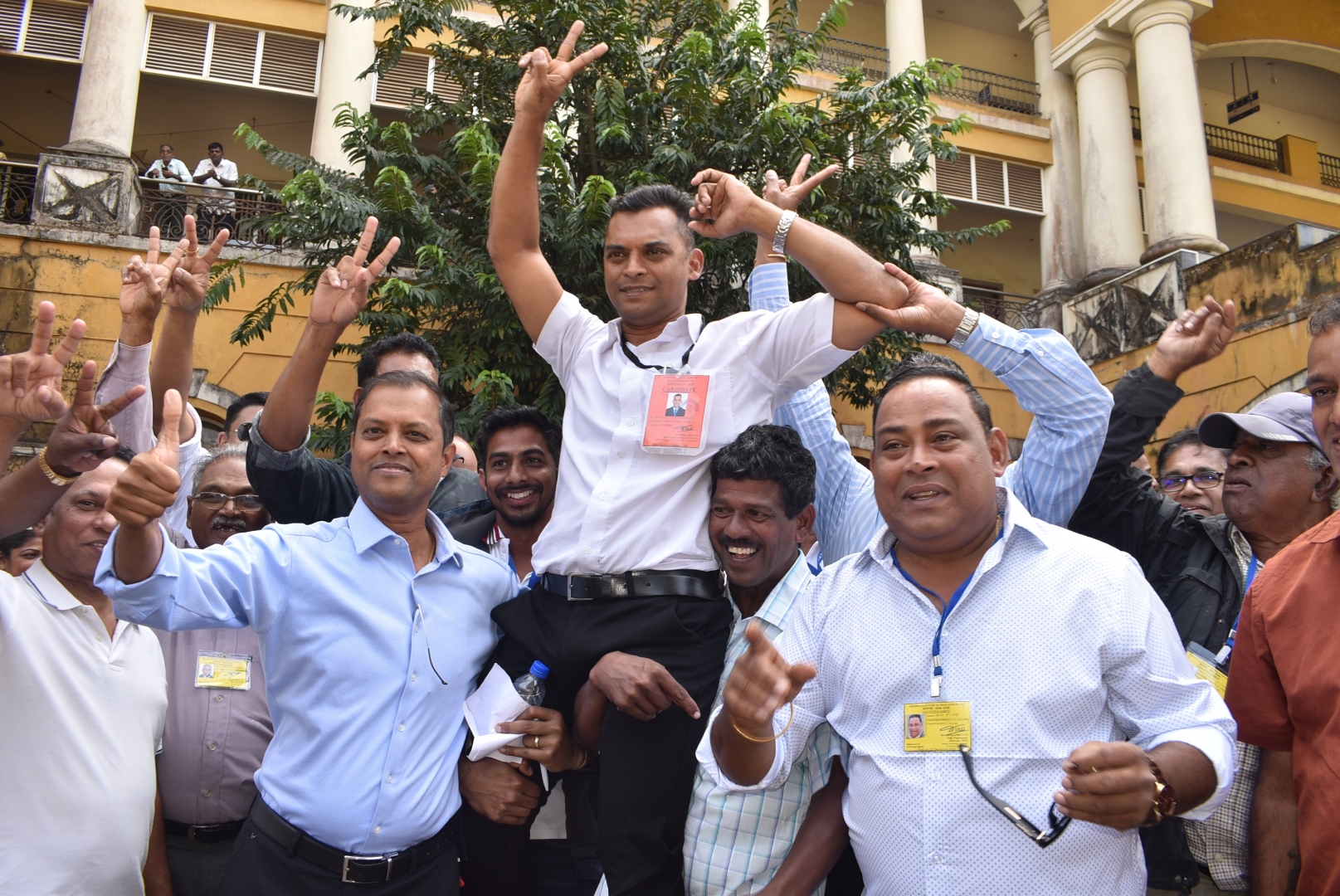
Congress leaders and workers celebrating the victory of party candidate Anthony Braganza after winning the Nuvem ZP seat.
MARGAO
The sustained surge of Congress in Salcete — beginning with the 2024 Lok Sabha elections and continuing through the just-concluded Zilla Panchayat polls — should offer encouragement to party leaders and the rank and file ahead of the 2027 Assembly elections.
History suggests that the Congress has returned to power in Goa whenever it has put up a strong performance in Salcete, where as many as eight crucial Assembly seats are at stake.
This latest surge is particularly significant given the crowded political field in the Zilla Panchayat elections. Despite multiple candidates and parties in the fray, voters in Salcete largely rallied behind the Congress–Goa Forward alliance. This consolidation may have come as a relief to party leaders, as vote division in the past has often derailed the party’s bid to return to power.
However, the Congress leadership and its alliance partners face a critical question: can the party or the alliance secure enough Assembly seats outside Salcete to reach the magic figure of 21 MLAs?
Salcete alone cannot deliver power, even if the Congress were to sweep all eight seats in the taluka. The writing on the wall is clear — unless the Congress expands its footprint and makes meaningful inroads into the hinterland talukas, the alliance cannot realistically hope to reclaim power in 2027.
The recent South Goa Zilla Panchayat elections underline this challenge. The Congress performed strongly in Salcete, winning seven of the nine seats, with its alliance partner securing one more. The party also wrested the Khola seat from the BJP, taking the Congress–Goa Forward tally to nine — still four short of forming the South Goa Zilla Panchayat.
The shortfall was due to the alliance’s inability to penetrate the South Goa hinterland, which accounted for the remaining 15–16 seats and ultimately handed the BJP an advantage in the numbers game.
Political observers say that a similar pattern could emerge in the 2027 Assembly elections. While the Congress camp is in a jubilant mode, party leadership, analysts say, needs to understand that unless the Congress makes a decisive breakthrough beyond its Salcete stronghold and across the rest of the State, the numbers required to form the next government may once again remain out of reach.
Take, for instance, the 2022 Assembly election. The Congress was left stranded midway with just 11 seats — 10 short of forming the government — after losing ground in Salcete and failing to make significant inroads elsewhere in the State. Of the eight Assembly seats in Salcete, the Congress managed to win only three, with two seats going to the Aam Aadmi Party and one each to the BJP, Goa Forward Party and an Independent.
Looking further back to the 2007 Assembly election, the Congress had romped to power after a clean sweep in Salcete, supplemented by wins in a few other constituencies, including Ponda and Sattari.
That’s not all. Following the party’s 2012 electoral debacle, the Congress staged a comeback in the 2017 Assembly elections with another sweep in Salcete, but failed to form the government due to leadership issues, paving the way for the return of former Chief Minister Manohar Parrikar with the support of the Goa Forward Party.
The bottom line is loud and clear for the Congress if it hopes to return to power in 2027: retain its dominance in Salcete while crafting a strategy to secure a handful of additional seats elsewhere in the State to cross the magic figure of 21.