


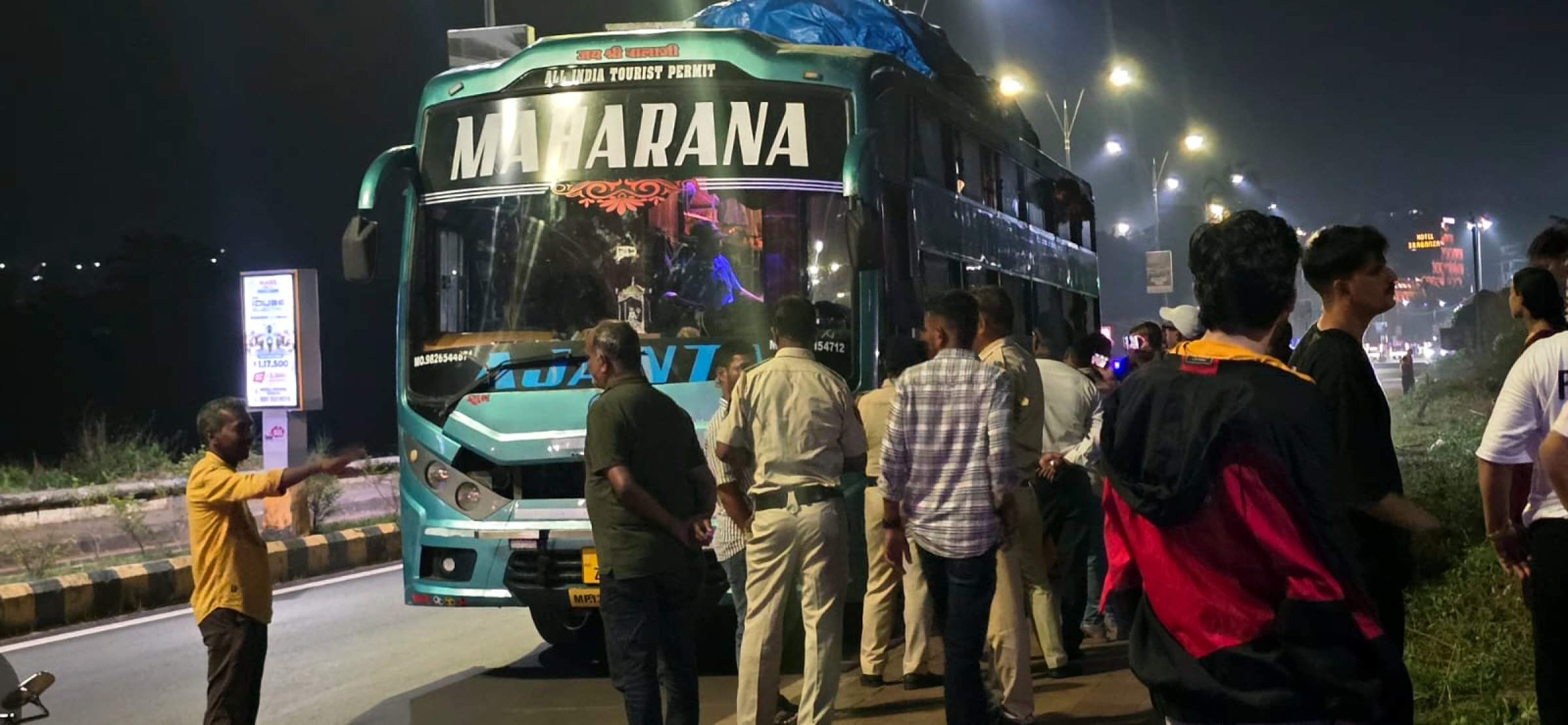
 The bus was intercepted near Shri Dev Bodgeshwar temple and shifted to the new KTC bus stand.
MAPUSA
As many as 140 migrant workers, including women, elderly persons and children, were left stranded in Mapusa in the middle of the night after the traffic police seized an overcrowded interstate bus with a seating capacity of just 48.
The bus was intercepted near Shri Dev Bodgeshwar temple and shifted to the new KTC bus stand. A challan was issued to the driver, directing him to appear before the court. The passengers alleged that the driver abandoned them without arranging alternative transport or shelter. They were neither refunded their fares nor assisted in continuing their journey.
Workers from Nepal and Uttar Pradesh employed across Goa are travelling home for Diwali. Passengers said spaces meant for two people accommodated seven to eight, with each paying Rs 4,000 for the hazardous journey.
The driver allegedly admitted that the Madhya Pradesh-registered seater-cum-sleeper bus had operated on the interstate route for four years and routinely resumed journeys after being intercepted at check-posts. He claimed the operator paid Rs 30,000 to Rs 40,000 whenever the bus was detained. “We pay the fine and continue our business,” the driver reportedly said. The claim raises questions about enforcement and possible collusion involving officials responsible for transport regulation.
Who takes responsibility?
While police action prevented a potentially dangerous journey, it left 140 paying passengers stranded without assistance, exposing gaps in passenger protection.
Assistant Director of Transport (North) Oswin Carvalho said the department’s enforcement team had detected violations and issued a challan. A show-cause notice would also be served on the vehicle owner.
However, Carvalho clarified that the operators had paid the applicable tax at the border check-post, not a fine as claimed by the driver.
The incident highlights the exploitation of migrant workers by private operators and the need for greater accountability and safeguards to protect passengers.


