ASHLEY DO ROSARIO
PANAJI
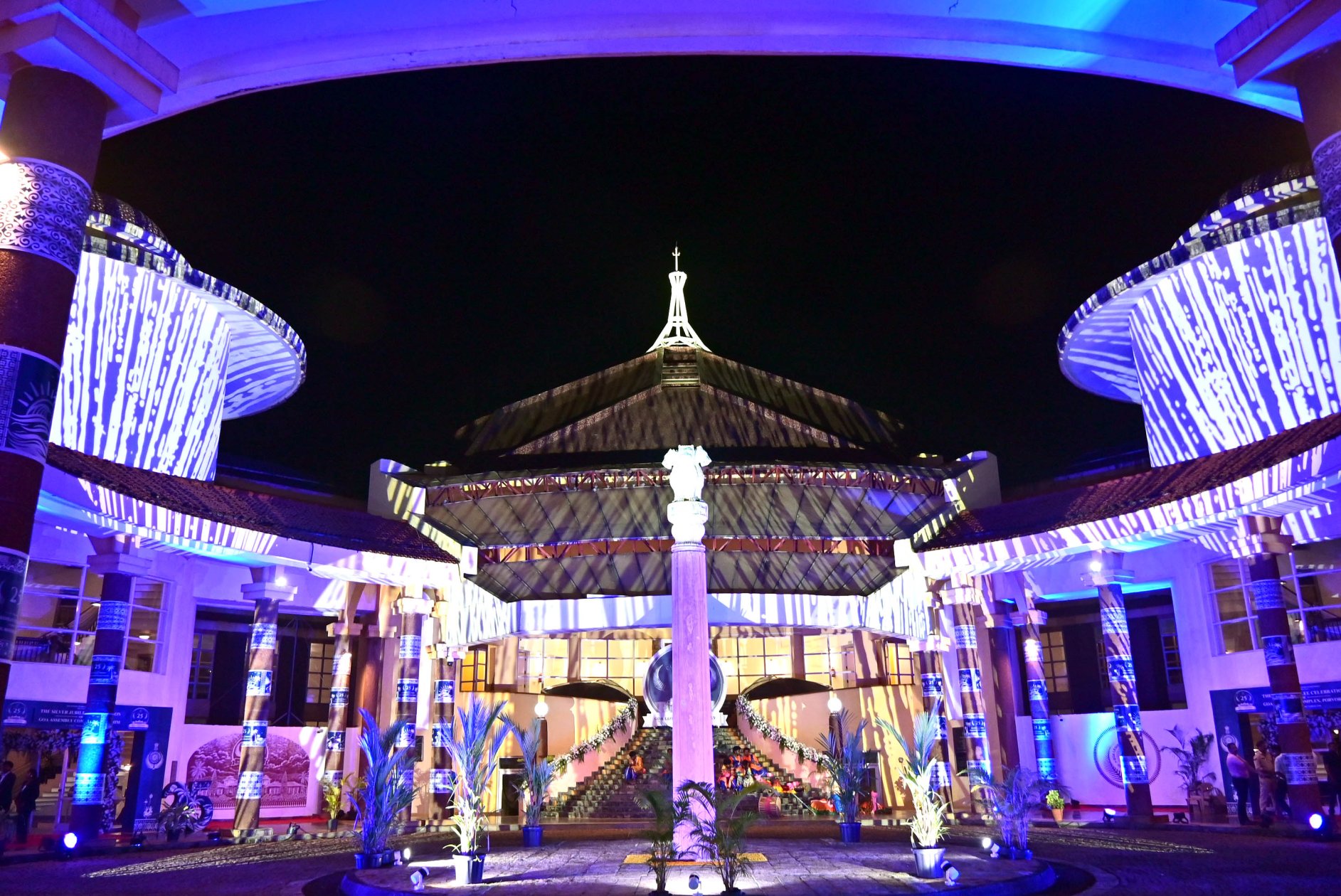
The silver jubilee celebrations of the Goa Legislative Assembly Complex kicked off at Porvorim on Tuesday, marking more than a quarter century since the landmark institution was inaugurated by former Prime Minister Atal Bihari Vajpayee.
The four-day public outreach programme, though arriving about a year after the completion of 25 years of the complex, seeks to showcase the Assembly's journey as the centre of Goa's democratic and legislative evolution.
The celebrations were inaugurated in the presence of Lok Sabha Speaker Om Birla and senior State dignitaries. A commemorative postal stamp and a coffee-table book chronicling the Assembly's history were unveiled, while a photographic exhibition highlighting key moments in the institution's evolution was opened to the public.
Both the Assembly complex and the exhibition will remain accessible to visitors until October 9.
The imposing Assembly complex at Porvorim was inaugurated in March 2000 during the tenure of then Chief Minister Francisco Sardinha.
The event assumed national significance with Vajpayee's presence, symbolising the importance of Goa's relatively young State legislature, which had functioned from the 'Adil Shah palace' before shifting to this purpose-built complex on the Porvorim plateau.
Over the past 26 years, the Assembly has witnessed some of the most significant political developments in Goa's history, including frequent changes of government, intense debates on mining, tourism, infrastructure and environmental issues, as well as important legislations.
The institution's history since its inauguration has been shaped by governments led by Francisco Sardinha, Pratapsing Rane, Digambar Kamat, Laxmikant Parsekar, four administrations headed by the late Manohar Parrikar and, more recently, two successive governments led by Chief Minister Pramod Sawant.
Parrikar's tenure in particular left an indelible mark on the Assembly's proceedings. He presided over key policy initiatives and often commanded spirited legislative debates.
The Assembly also witnessed significant political transitions, when Parrikar was dislodged amid bedlam in the House in 2005 when Pratapsing Rane replaced him mid-term but not before a brief stalemate which forced President's rule and the logjam broken by bye-elections to five seats.
Later when results of the 2007 came in, Digambar Kamat took over reigns, navigating the Assembly through a period marked by economic and developmental challenges.
Then came Parrikar's profound come-back in the 2012 elections but then too his term was interrupted by his Delhi stint as Defence Minister in which he was replaced by Laxmikant Parsekar.
Under Sawant, the House has debated issues ranging from post-pandemic recovery and infrastructure expansion to governance reforms.
The Assembly's early years were not without controversy. One of the first major disputes arose at the inauguration itself when former Member of Parliament Amrut Kansar, seated in the galleries, objected to the presence of the then Advocate General Atmaram Nadkarni inside the House during Vajpayee's address.
Kansar argued that the Advocate General's presence in the chamber was contrary to established legislative practice and constitutional provisions. According to him, the State's top legal officer was entitled to participate in Assembly proceedings only when specifically called upon by the House to provide legal or constitutional clarification, including during legislative scrutiny or procedural deadlocks.
The Sardinha government, however, dismissed the objection, maintaining that the Advocate General was entitled to a seat inside the House. The issue generated debate at the time but failed to gain further traction, allowing the focus to return to the grandiose new legislative complex.
Another major controversy was the entry of police officers inside the House during the 2005 acrimony when Parrikar was dislodged. At least half-a-dozen policemen including senior officers in uniform walked into the House and physically bundled out former minister Filipe Neri Rodrigues. The incident raised a huge controversy as it was unprecedented for policemen to be used in the House for a task normally assigned to designated marshals.
Even amid the criticism, the jubilee celebrations offer an opportunity to reflect on the Assembly's role as the heart of Goa's democracy and its evolution through more than two decades of constant political change.