Godwin Fernandes
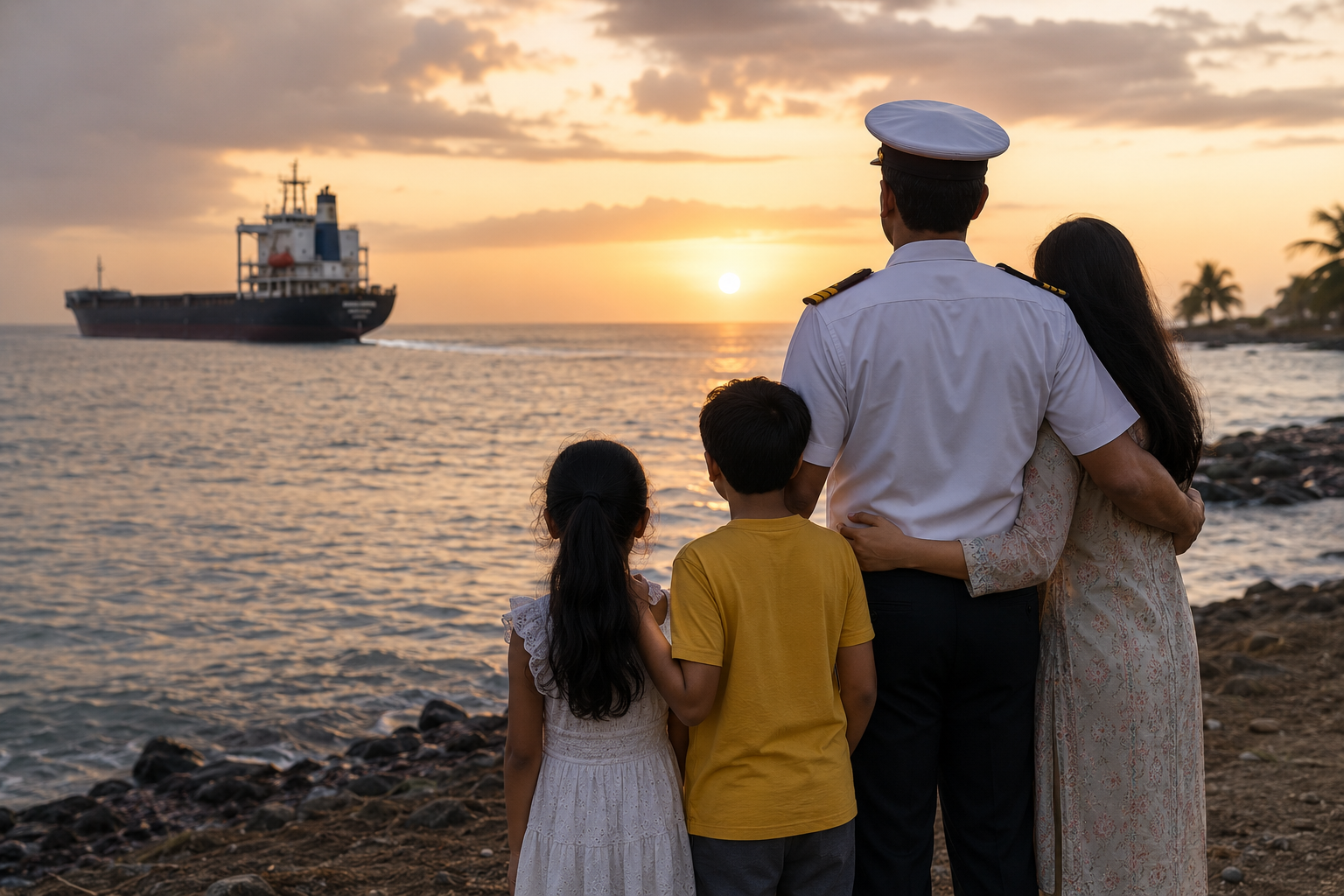
Goa has always shared a deep bond with the sea through its coastline and maritime traditions. With nearly 43,000 certified seafarers, thousands of families across the State have an even more personal connection to life at sea. For many spouses and children, life is shaped by a cycle of reunions and farewells, and much of the emotional strain they endure remains unseen.
Goa has one of the highest numbers of seafarers in proportion to its population. Yet, while much attention is given to the economic benefits of this profession, the human cost is often overlooked. Behind the opportunities and financial security lies a career marked by long separations, demanding working conditions, isolation and considerable psychological stress.
Many of the challenges faced by seafarers’ families remain invisible to those outside their close circles. Because seafarers spend months away from home, family life develops in unusual ways. Maggie (name changed), whose husband has worked on a cruise ship for the past 10 years, says, “It is always a happy moment when we know he is coming home. But the moment he arrives, we begin thinking about the day he will leave again. Two months pass quickly. In the last 10 years, he has spent more time on the ship than with us.”
Long absences often force spouses to become completely independent, managing the household, children and careers on their own. Fiona (name changed), the wife of a seafarer from South Goa, says, “I feel very supported when he is home. Otherwise, I have to manage my work, parents and children on my own.”
Spouses of seafarers can also feel socially isolated. Women with young children may have fewer opportunities to socialise and may feel uncomfortable attending events without a partner. Many believe their lifestyle is not fully understood by women whose partners work ashore, which can deepen their sense of isolation.
Children, too, learn to grow up in the absence of a parent and may come to accept a single-parent reality. This can sometimes lead to emotional distance from the seafaring parent. A young adult whose father worked at sea recalls, “The first few days after my dad came home were always fun. He made sure he brought our favourite things. But the joy was short-lived. We were used to having mum around all the time, so dad’s instructions and questions did not feel normal.”
Spouses and children may also experience anxiety, stress and sleep disturbances, especially during periods of global uncertainty. Recent tensions in the Middle East, concerns over disruptions to shipping routes and reports of disease outbreaks have heightened fears among families waiting for loved ones at sea. Such situations add to the emotional burden of prolonged separation.
A seafarer is someone’s spouse, parent, sibling or child back home. Many speak of the pain of missing important milestones in their children’s lives and finding it difficult to reconnect after months away. Some struggle with feelings of being less involved or needed when they return home.
Seafarers themselves often need time to recover from the pressures of shipboard life. Many report difficulty adjusting their sleeping patterns and routines to fit those of their families.
While many seafarers take pride in having partners who can manage the home and family independently, those same strengths can create challenges when they return. Seeing that life has continued smoothly in their absence can leave some feeling displaced or unimportant within their own households.
Advances in communication technology have made it easier for seafarers and their families to stay in touch and have helped bridge the distance. Yet, regular calls and messages cannot replace the comfort of physical presence.
As we mark the International Day of the Seafarer, it is important to remember that behind every seafarer is a family that waits, supports and prays for the safe return of a loved one facing the uncertainties of the sea. There are spouses, parents and children who hope that the repeated goodbyes will one day give way to a lasting reunion, even as they take pride in their close connection to the ocean.
Their resilience deserves recognition, as does access to mental health support when the emotional burden becomes overwhelming. As we honour seafarers, we must also acknowledge and support the families who stand beside them, often from afar, through every voyage and every homecoming.