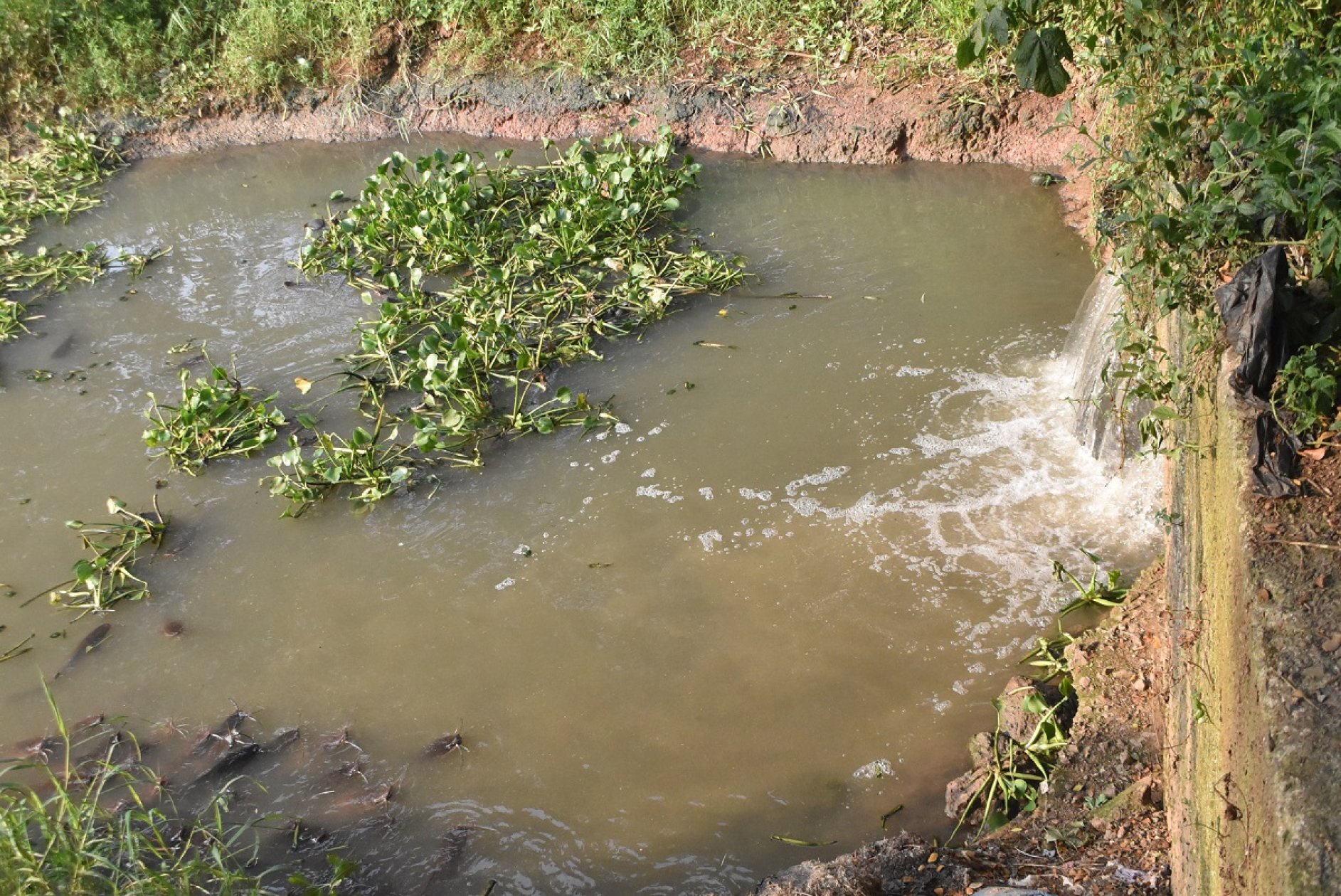
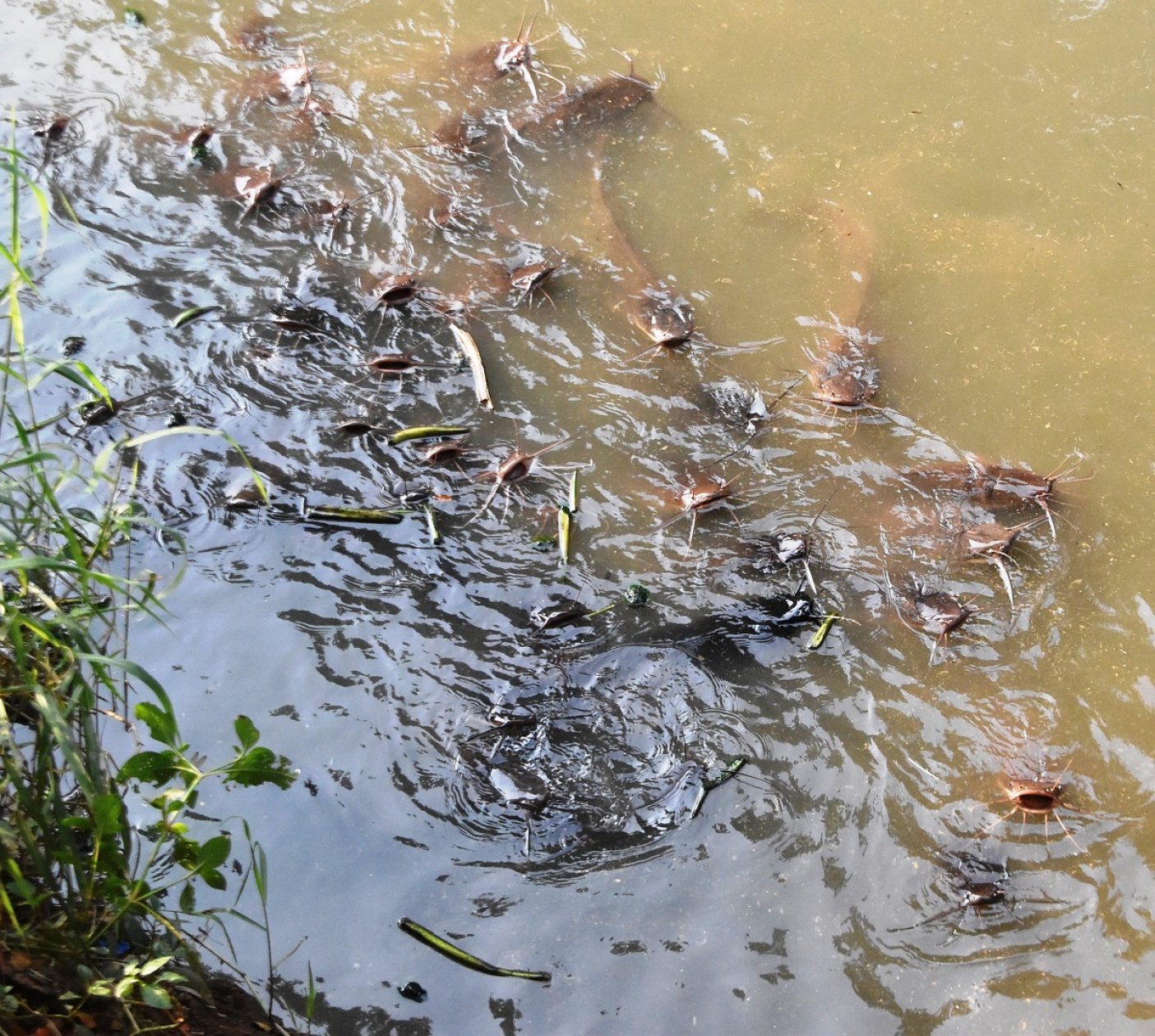
Tigurs (cat fish) could be seen in the stormwaternullah at Comba.
MARGAO
Margao city may not have witnessed heavy rains for several days, but the Comba storm-water nullah cutting across the Margao ring road remains full to the brim, with water flowing continuously through the channel before eventually making its way into the River Sal.
A closer look at the water flowing through the nullah is hardly necessary. Regular commuters along the Comba ring road have been comparing the situation to Bandra in Mumbai, as foul-smelling, sewage-laced water envelops the area.
The situation has once again brought into focus the government’s data on sewage treatment plants (STPs) discharging treated water into rivers and nullahs. This assumes significance against the government’s observation that there have been no Goa State Pollution Control Board (GSPCB) reports of raw sewage discharge from any STP in the State, including the STPs in Marago, during the past three years.
Welcome to the commercial capital. While GSPCB records may indicate that no untreated sewage has been discharged from the Margao STPs during the last three years, the ground reality suggests otherwise, with the River Sal continuing to bear the brunt of what appears to be a 24x7 discharge of sewage and wastewater from the Margao Municipal Council area.
Officially, the two STPs at Sirvodem, Margao, are treating around 20 MLD and 6.5 MLD of sewage every day. Sources, however, claim that millions of litres of untreated sewage continue to find their way into the River Sal through several stormwater nullahs and drains.
The issue had come to the fore last month when an official reportedly admitted that sewage was being diverted into stormwater nullahs at two locations after the two STPs were unable to handle the inflow because of malfunctioning pumps.
The Comba ring road stormwater nullah offers a telling example. Black-coloured water was seen flowing through the nullah on Thursday, indicating that little has changed since last month, when the official admission was made regarding the discharge of sewage into the nullah to tide over problems caused by the malfunctioning pumps.
Another stormwater nullah running alongside the Hospicio South Goa District Hospital had also come under scrutiny last month after local residents complained of the rampant discharge of raw sewage.
The extent of the problem had already been highlighted through a survey initiated by Benaulim MLA Venzy Viegas last year. A private agency was engaged to use drones to map stormwater nullahs discharging sewage into the River Sal. The survey reportedly identified a series of discharge points along the river stretch from Fatorda to Navelim.
Around the same period, an inspection by the GSPCB also found stormwater nullahs carrying sewage into the River Sal. The pollution control board subsequently directed the Margao Municipal Council to identify the sources of raw sewage entering the nullahs.
However, there appears to have been little progress on the ground. A municipal official, speaking on the issue, reportedly questioned the practicality of identifying individual sources when a majority of the nullahs and drains in the municipal area are allegedly carrying sewage and wastewater into the river.
More recently, the Water Resources Department has mooted setting up of a pilot STP at Khareband, just to treat the sewage water flowing into the River Sal via the storm water nullah, suggesting that there’s no stop to the continuous discharge of raw sewage into the river.
The continuing flow of black water through the Comba nullah, despite the absence of heavy rainfall, has once again raised questions over the effectiveness of Margao’s sewage management system — and whether official data on STP performance reflects the reality on the ground.