


MARGAO
Public Works Department (PWD) Minister Deepak Pauskar might have rushed to claim credit for the government after the National Green Tribunal-appointed 10-member panel recommended construction of 980 metres of the western bypass along the Seraulim-Mungul stretch on stilts.
The ground reality, however, doesn’t seem to show that successive BJP governments ruling the state over the last half-a-decade had ever made a strong case for the construction of the 2.75 km stretch of the bypass on stilts.
Leave alone the PWD Minister, who had inspected the flood plains of the river Sal in recent past after taking over the reigns of office from his predecessor in 2019, even former chief ministers Laxmikant Parsekar and late Manohar Parrikar, besides incumbent Chief Minister Pramod Sawant failed to mete justice to the villagers of Benaulim and Seraulim waging a sustained struggle in support of the construction of the 2.75 km bypass on the elevated road.
On the other hand, the government and PWD, NH tried to bulldoze with the project on the pretext the bypass project has come under the High Court scanner, but villagers of Benaulim and Seraulim stood their ground in support of their demand.
Otherwise, consider this. There’s been no dearth of Gram Sabha resolutions at the Seraulim and Benaulim panchayats over the last decade, demanding the bypass on stilts, but in vain.
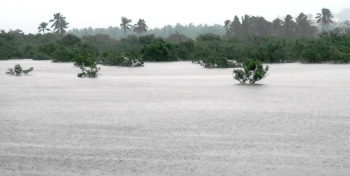
That’s not all. If the government was in favour of the bypass on stilts, villagers from Seraulim and Benaulim would not have descended on the low-lying fields on umpteen times to scuttle the government’s attempts to bulldoze with the bypass without examining the serious issue of inundation of the flood plains and threats of ecological disaster along the river Sal flood plains.
Former Chief Minister Laxmimant Parsekar had personally descended on the ground to inspect the bypass alignment during his stint in office, but his government could not come out with any relief to the agitating public demanding the bypass on stilts.
Parsekar’s successor, the late Manohar Parrikar, who assumed office in 2017 with the support of the Goa Forward party, did sympathize with the public sentiment against building the bypass with landfilling. Take note, it was at Parrikar’s initiative the government floated a separate tender for the construction of the bypass with a host of additional drainage culverts along the 2.75 km stretch for Rs 148 crore. The government, however, conveniently ignored the public sentiment to build the bypass on stilts.
The Pramod Sawant government repeatedly rejected the villagers demanding the bypass on stilts. In fact, the government tried to push the issue to the background by coming out with the river Sal desilting project as a means to control floods along the flood plains, indicating that the bypass on stilts did not find favour with successive BJP governments over the last five years.
Why didn’t govt act after WRD report?
MARGAO: Whether PWD Minister Deepak Pauskar is aware or not, the government could have acted on the comprehensive report compiled by the Water Resources Department (WRD) in May last and given relief to the villagers by recommending the construction of the 2.75 km bypass on stilts.
For, the WRD had exposed how the bypass sans stilts will affect river Sal and the flood plains.
In fact, perhaps for the first since the agitation against the bypass was launched around half a decade ago, the WRD report had brought to light startling disclosure that the bypass alignment had mooted filling up of the river Sal for a length admeasuring 200 metres. The report had highlighted how the bypass road was running on the banks of the river Sal for a distance of another 260 meters. The report was clear in its finding that the earthen embankment running parallel to the river Sal would divide the flood plains and will have a damning effect on the flood water.
The WRD report, however, did open the government’s eyes to see reason and go for the bypass on stilts, forcing Benaulim resident Royla Fernandes to knock on the doors of the National Green Tribunal (NGT) in support of the villagers' demand for a bypass on stilts.
In fact, the WRD report came as a lethal weapon in the hands of the villagers to intensify its agitation and move the NGT for relief, since it was for the first time an official agency had come out with damning revelations on the bypass alignment.
The 10-member panel constituted by the NGT almost confirmed the findings of the Water Resources Department, before recommending the construction of the bypass on an elevated road spanning a distance of 980 meters along the Seraulim-Mungul stretch.
What stopped WRD from recommending
bypass construction on elevated road?
MARGAO: What had stopped the Water Resources Department (WRD) to recommend the construction of the bypass on the elevated road when the ground reality showed otherwise, particularly on the Seraulim-Mungul stretch?
Consider this: The WRD report did not recommend filling up the river Sal for a distance of 200 metres and disturbing its regime. Instead, the report had recommended the construction of a proper bridge over the river, by maintaining the flow area.
In fact, the WRD report was categorical in saying that any change in the alignment of the river will switch the flow dynamics, but somehow the report remained silent on the construction of the bypass on stilts.


