MARGAO
Could robots offer a solution to Goa’s growing shortage of coconut pluckers? The question is likely to spark debate across Salcete, where coconut plantations cover nearly 6,000 hectares and growers increasingly struggle to find workers to harvest their crop on time.
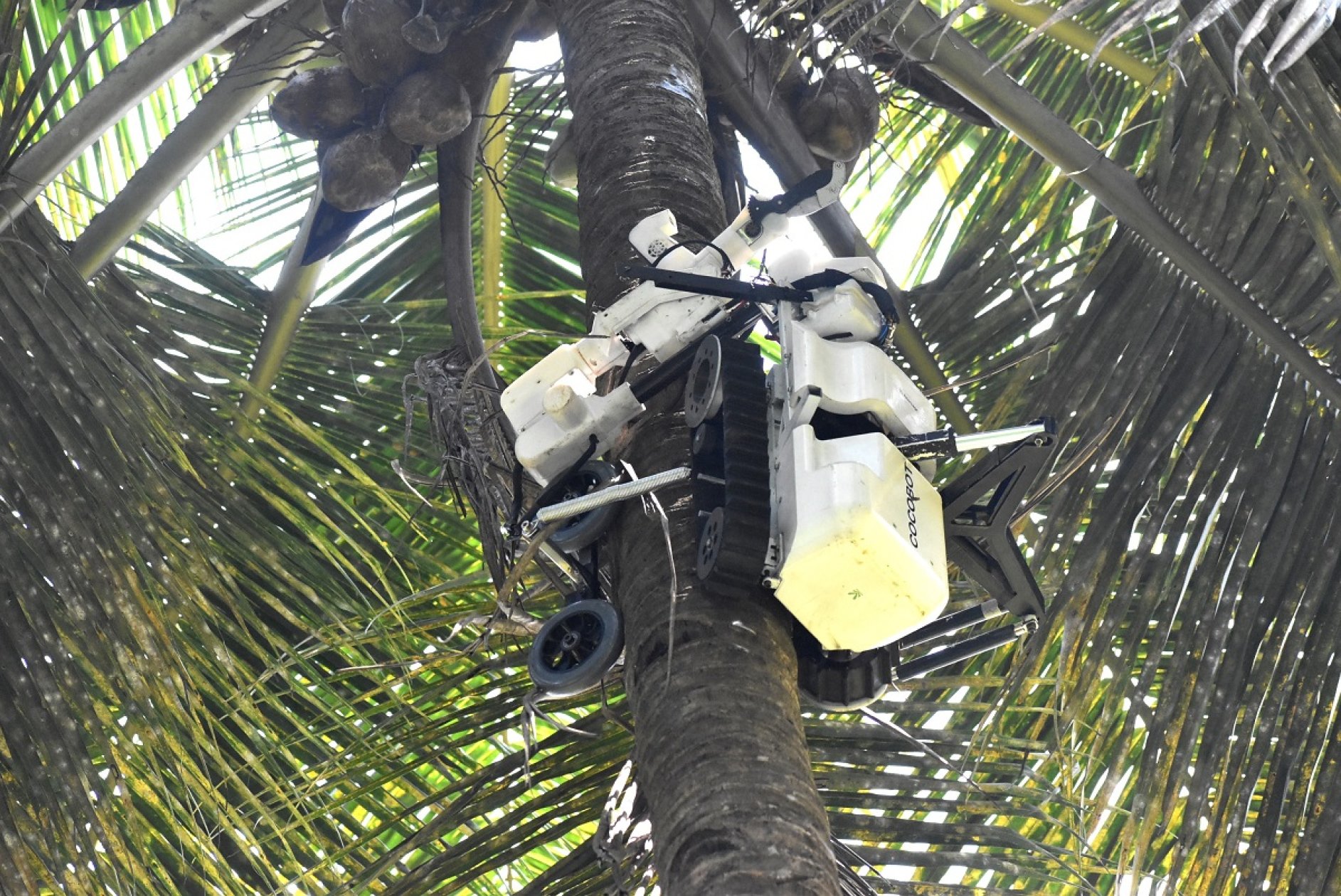
In a move that could signal a new chapter in coconut farming, the Krishi Vigyan Kendra (KVK), South Goa, organised a demonstration of Cocobot, billed as the world’s first commercially viable coconut-harvesting robot. Designed to climb trees and harvest coconuts, it can be operated remotely from the ground.
However, invitees could not witness a complete demonstration after a technical snag developed in one of the machine’s sensors.
KVK officials said the technology could help address the shortage of coconut pluckers, which has been delaying harvesting across the State.
“Depending on the success of the demonstration, we may recommend to the government that the robot be approved for use, enabling farmers to benefit from subsidies,” an official said.
The robot can be operated by a single person using a remote control and is designed for rapid deployment. It can reportedly climb a 20-metre-tall tree in about a minute.
Equipped with sensors, Cocobot can assess whether coconuts are tender or mature enough to be harvested. Its cutting blades can also trim leaves and clean the tree, officials said.
Representatives of Altersage, the company behind the robot, said agricultural operations such as coconut harvesting continue to depend on workers manually climbing tall trees. Variations in tree structure and the risks associated with working at considerable heights make the task hazardous, while skilled-labour shortages drive up harvesting costs.
The company said these challenges limit the scalability of traditional harvesting methods, creating opportunities for automation in plantation agriculture.
For Goa’s coconut growers, Cocobot could offer relief from the persistent difficulty of finding skilled pluckers, agriculture officials said.