PANAJI
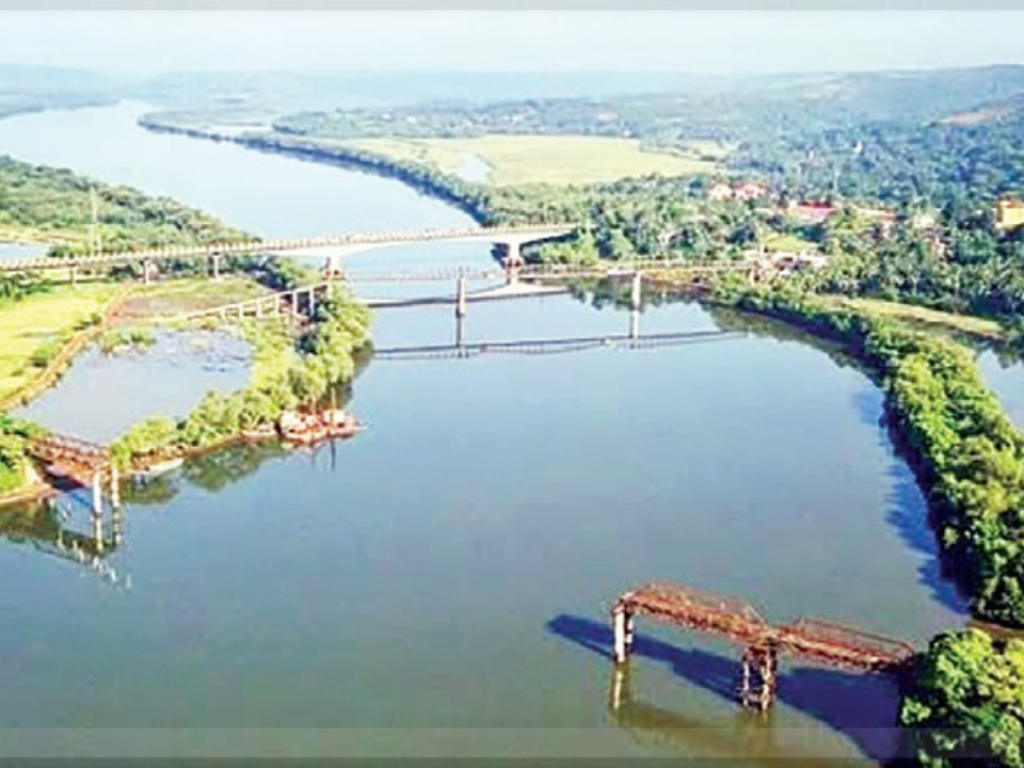
The High Court of Bombay at Goa on Thursday granted interim protection to landowners opposing the proposed Borim bridge project, staying the implementation of the land acquisition declaration issued under Section 3-D of the National Highways Act and restraining the authorities from taking possession of the notified land, commencing construction, or creating any third-party rights until further orders.
The order, however, leaves the door open for the government to pursue statutory clearances, including Coastal Regulation Zone (CRZ) approval, and other preparatory work.
The Division Bench of Justice Valmiki Menezes and Justice Hiten Venegavkar pronounced the order on a writ petition filed by Salvador Alves and 39 other petitioners challenging the land acquisition process for the proposed bridge project.
The Bench observed that while the project is an important public infrastructure initiative, environmental safeguards and the legality of the acquisition process also require protection pending final adjudication.
Addressing the State's objection to the delay in filing the petition, the Court noted that although the petitioners had not separately challenged the proceedings under Section 3-C, they had approached the Court before possession was taken, before construction began, and before the contract was awarded.
“The delay issue is important, particularly in a public project. The Petitioners had, however, raised objections under Section 3-C. They filed this Petition before possession was taken, before construction began and before the construction contract was awarded. No third-party construction rights are shown to have arisen in the meantime. Final CRZ clearance is still pending,” it said.
“The failure to separately challenge the Section 3-C orders may affect the challenge to the acquisition up to that stage. It does not, at this stage, defeat the separate contention that a necessary clearance was not obtained before the Section 3-D declaration.”
The Court acknowledged that public infrastructure projects should ordinarily not be stalled through interim orders, but held that the present case warranted limited protection. “We are conscious that the proposed bridge is a public infrastructure project. Such a project should not be delayed by an interim order as a matter of course. The Court must consider public inconvenience, increase in cost and the other prejudice caused by delay,” the Bench observed.
At the same time, it added that public interest also requires compliance with environmental safeguards and the law governing compulsory acquisition. “Any interim protection must therefore be limited to what is strictly necessary,” it added.
Explaining why interim relief was warranted, the Court said the bridge and its approaches were being treated as a single integrated project and that allowing possession or construction before the legal issues were decided could render the petition ineffective. “At present, the Respondents (Ministry of Road, Transport and Highways, and seven others) have not shown that construction can be divided into independent parts without creating irreversible rights or affecting the pending environmental appraisal,” the Bench noted.
It further held that if possession is taken or further rights are created under Section 3-D before the legal issue is decided, the Petition may become largely ineffective. On the other hand, the Respondents can continue to obtain all statutory clearances, carry out non-invasive preparatory work and proceed with the tender process at their own risk.
Hence, the Court stated that pending final disposal of the Petition, the further operation and implementation of the declaration dated October 11, 2024 issued under Section 3-D shall remain stayed. “The Respondents shall not take physical possession under Section 3-E, dispossess the Petitioners, commence construction or developmental activity upon the notified lands, or create contractual or third-party rights founded upon the said declaration,” reads the order.
The Bench clarified that the interim order would not prevent the authorities from moving ahead with statutory approvals.
The matter has been made returnable for final hearing on October 12, 2026. The Bench has also granted liberty to the respondents to seek modification or vacation of the interim order if the requisite statutory clearances are obtained or if there is any material change in circumstances.