MARGAO
The Citizens for Democracy Goa has once again called upon the Government of Goa, the Ministry of Road Transport and Highways and the National Highways Authority of India to immediately commission an independent engineering and road-safety audit of the NH-66 drainage and elevated footpath works at Cuncolim, following repeated accidents and serious concerns over the safety of the design.
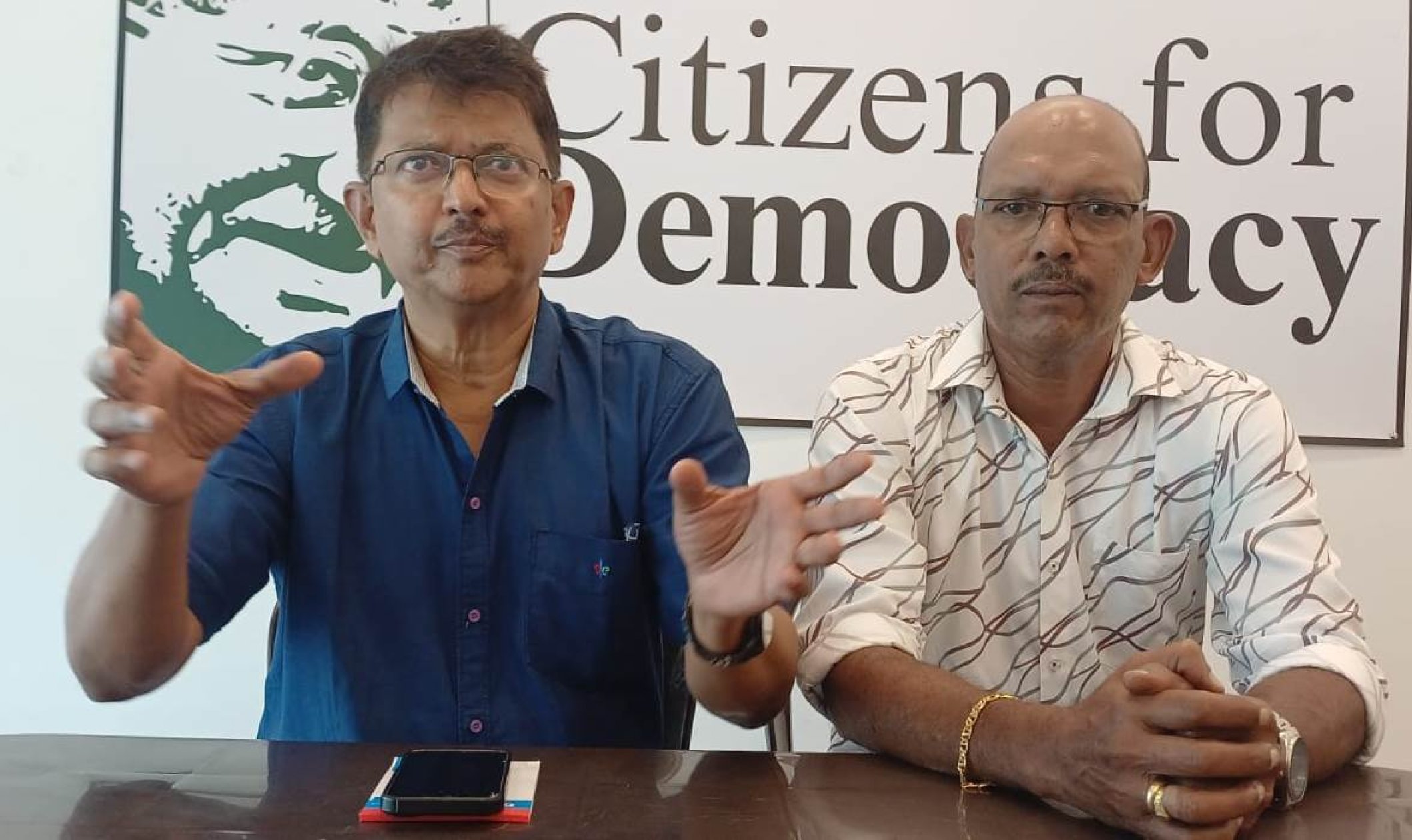
Addressing the media, Citizens for Democracy convenor Elvis Gomes said that a representation has been addressed to the Chief Minister, the PWD Minister, MoRTH and NHAI, repeatedly citing safety concerns at Cuncolim, but had not received even an acknowledgement.
The concerns relate particularly to the narrow paved surface, inadequate or absent of protective barriers, the proximity of the drainage structure to the carriageway, visibility and the overall configuration of the roadside infrastructure.
He said an accident involving a car and a motorcycle on 20 September 2026 at Cuncolim has once again highlighted the risks, pointing out that following the recent fatal crash at the Porvorim elevated corridor, the government has sought expert advice from IIM Nagpur and sought to know why a similar request for Cuncolim was neglected.
“We have been asking for an independent engineering audit of the Cuncolim works by NIT Goa, since its campus itself is located along the NH-66 corridor. Our requests have not even received an acknowledgement,” Gomes said questioning whether the people of Cuncolim should have to wait for another fatal tragedy before the authorities undertake an independent assessment.
The organisation also referred to the fatal Bambolim accident in November 2025 in which Yogender Singh Dahiya, President of the Sepak Takraw Federation of India, and international referee Ankit Baliyan were killed after a tanker crossed the divider and struck their vehicle. Following that tragedy, measures including stronger barriers, speed cameras and additional signage were reportedly recommended after the Chief Minister himself had visited the site.
Gomes said the Bambolim incident demonstrates why safety assessment must be preventive rather than reactive, particularly where deviations from approved or original designs create additional risks.