


MARGAO
Expressing serious concerns over the implementation of the National Education Policy (NEP), Goa Forward Chief Vijai Sardesai on Tuesday demanded the NEP must be implemented only after ensuring that all these stakeholders are adequately prepared and their fears and doubts are eliminated.
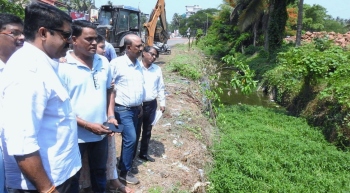
Highlighting several issues that question Goa’s readiness for such a policy, with the media on the sidelines of de-silting works in Fatorda, Sardesai accused the government of showing undue haste in implementing the NEP and reiterated his demand for its postponement.
"In the last assembly session in March of this year, opposition MLAs had unanimously demanded that the NEP implementation be postponed until the government was certain that the State is adequately prepared, as is the case with other states," he said, citing the announcement made by the Secretary Education Prasad Lolienkar regarding the postponement of the academic year to July 3.
Though this delay was intended to provide some breathing space for teachers to undergo necessary training, Sardesai argued that this allocated time is insufficient for the required comprehensive training.
He raised the major issue of lack of consultation with stakeholders, especially with the parents, pointing out that they are not prepared for the changes brought about by the NEP.
"With the elimination of exams and the increased emphasis on continuous evaluation, parents may face difficulties in assessing the progress of their child. This situation may adversely impact working parents and those who are less educated," he said.
Sardesai also criticised the government for implementing NEP for primary school students before the Samant Committee completes its work and submits the report. The report is expected to cover topics such as culture, history, and the nature of Goa.
Sardesai expressed the need for academicians and experts to review the report before its implementation to ensure a comprehensive and well-informed approach.
He also raised concerns about the non-translation of the National Curriculum Framework For Foundation State (NCFFS) into Konkani and Marathi.
This omission results in the lack of a structural syllabus for teaching. Without proper translation, teachers may face challenges in effectively implementing the NEP, he added.
Considering the unpreparedness of all the major stakeholders ““ schools, parents, teachers, and students, Sardesai cautioned that the government must not rush in the implementation, adding that a systematic approach is essential to safeguard the future of children, who are the pillars of our society.


