


THE GOAN NETWORK
MARGAO
With Goa reeling under an intense heat wave and the southwest monsoon yet to make a meaningful impact, farmers are struggling to keep their paddy nurseries alive, resorting to costly and labour-intensive irrigation methods to prevent seedling loss.
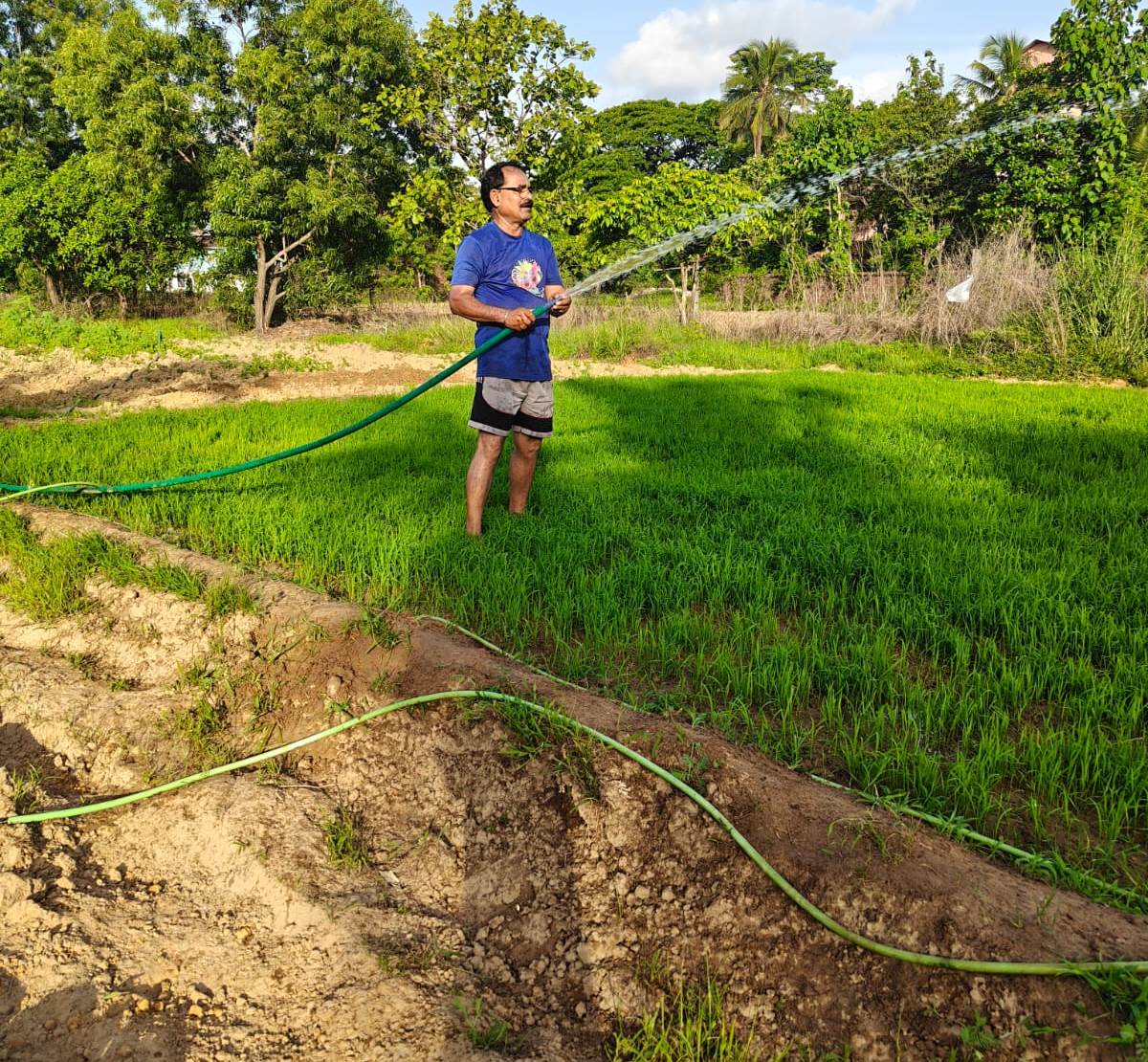
In an unprecedented situation that many farmers say they have never witnessed in recent times, paddy nurseries that would normally thrive on early monsoon showers are now being sustained with water drawn from wells, ponds and other available sources using pumps, pipes, buckets and pots.
The prolonged dry spell has disrupted the traditional agricultural calendar, leaving cultivators anxious about the fate of the upcoming kharif season. Farmers with access to wells have installed pipelines and pump sets to irrigate their nurseries, while those without such facilities have been forced to manually fetch water from nearby sources.
In areas where farmers lack access to well water, several have approached the Margao Zonal Agriculture Office seeking compensation for the losses and additional expenses incurred due to the delayed rains. However, officials have informed them that compensation schemes may be considered only if the government formally declares drought conditions.
Agriculture officials acknowledged the severity of the situation. One senior officer revealed that he personally spent around Rs 5,000 to purchase water pipes to connect his well to a seedling nursery in order to save the crop.
“The situation is challenging. A number of farmers have approached us to inquire about schemes for petrol-operated pump sets. We have already processed a couple of applications under the government subsidy programme, which provides 50 per cent financial assistance for the purchase of such pumps,” the officer said.
Curtorim MLA Reginaldo Lourenco described the situation as alarming, noting that farmers are being forced to adopt extraordinary measures to keep their nurseries alive.
“The delay in the monsoon has compelled many farmers to fetch water from wells and ponds using buckets and pots. Others are irrigating their nurseries with pumps and pipelines. Those who cannot afford such equipment are depending entirely on manual labour. The situation is indeed alarming,” Lourenco said.
At Colmorod in Navelim, farmer Vithu Sukhadkar has been irrigating his paddy seedlings with water drawn from a well using a pump set.
“I have no choice but to irrigate the nursery myself. If I do not provide water, the seedlings will die. The extreme heat has already affected their growth and they have not developed according to schedule,” Sukhadkar said.
Agriculture experts warn that continued delay in the arrival of monsoon rains could have serious implications for paddy cultivation across the state. While farmers are trying their best to preserve nurseries, prolonged dependence on artificial irrigation will increase production costs and place additional pressure on already strained farming households.


