PANAJI
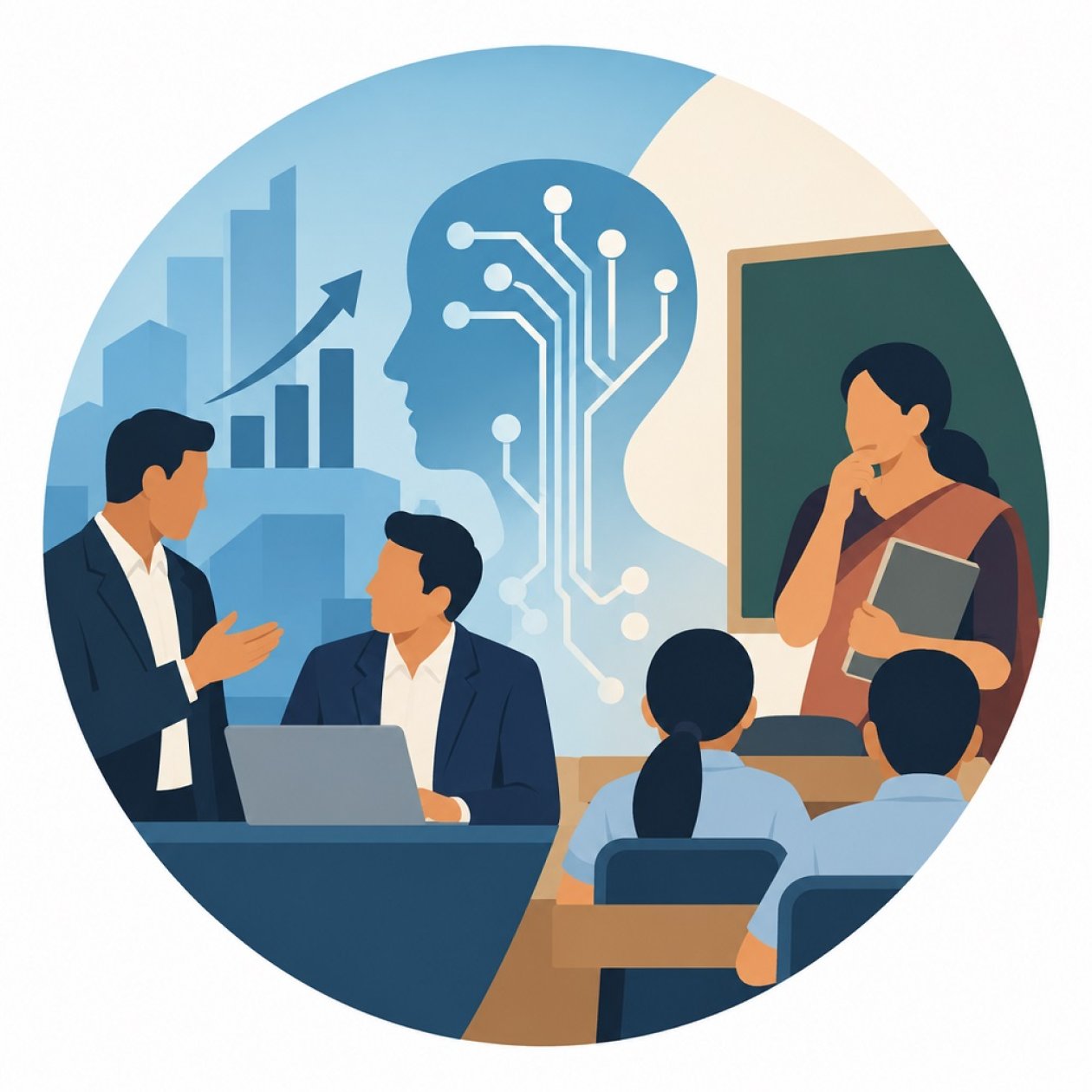
Goa’s Rs 250-crore push to build an artificialintelligence (AI) economy has won industry support, but the government’s planto make AI compulsory from Class VI to XII by the 2027-28 academic year hasraised concerns over teacher preparedness, students’ academic workload and thepace of implementation.
Unveiled at the Goa AI Tech Conclave lastweek, the Goa AI Policy 2026-2029 has set out an ambitious three-year roadmapto integrate AI into the State’s economy and public services.
The Goa Chamber of Commerce and Industry(GCCI) welcomed the policy, saying it could position Goa as a centre forknowledge-driven industries and innovation. GCCI president Pratima Dhond saidthe Goa AI Mission 2026 marked an important step towards building atechnology-led economy by drawing on the State’s existing strengths in tourism,healthcare, environmental systems and creative industries.
“The proposed Rs 250-crore Innovation Fundover five years and the target of creating 50,000 AI-ready professionals by2030, with women accounting for at least 20 per cent of the target, is awelcome move,” she said.
GCCI Director General Sanjay Amonkar describedthe policy as a “forward-thinking blueprint” that could position Goa as alaunchpad for high-value technology entrepreneurs. He identified the policy’sproposed financial support and efforts to create demand for locally developedtechnology as key strengths. The Rs 250-crore fund would provide early-stagecapital, while the “99 Problem Statements” initiative would allow innovators todevelop AI solutions for challenges identified across 35 government departments.
However, Amonkar cautioned that the policy’ssuccess would depend on implementation rather than ambition alone. “Successwill hinge on cutting bureaucratic red tape in government procurement, ensuringseamless fund dispersal, and successfully converting transient remote workersinto permanent local stakeholders,” he added.
Former National Chairman of the MSME sectorManguirish Pai Raiker said the policy provided a progressive framework with theflexibility to accommodate changing industry requirements and technologicaladvances.
Govt cautionedagainst rushed rollout
While industry leaders have welcomed thepolicy’s economic ambitions, retired Education Department director andeducationist Anil Powar has cautioned against introducing AI in schools withoutadequate preparation.
“The idea is not bad, but it cannot beimplemented without keeping certain things in mind. I am always for education,but it cannot be abruptly implemented,” Powar said, calling for a phasedrollout backed by proper planning.
He questioned whether the government wouldadequately train teachers and introduce the subject gradually or across all thedesignated classes at once.
“There is already enough academic burden onchildren. We should not burden them with something else unless the new subjectis optional. Students and parents should get a choice. They should understandthe new subject before being forced into it,” he said.
Under the policy, the government plans tointroduce AI as a compulsory subject from Classes VI to XII from the 2027-28academic year and establish AI laboratories in 50 government schools. It alsoaims to certify all technical graduates by 2028 and train 50,000 AI-readyprofessionals by 2030, with at least 20 per cent participation from women andyouth.
“If the government really intends to make AI acompulsory subject, it should first take into account the views of students,parents and teachers. We understand that technology will play a crucial role instudents’ futures, but the subject should not be imposed without adequatelypreparing them for it,” a retired IT director and educationist said, requestinganonymity.
The policy proposes three Centres ofExcellence focusing on coastal and environmental systems, healthcare and lifesciences, and tourism and hospitality. It also envisages AI-enabled publicservices and a Konkani Large Language Model in collaboration with Bhashini.
Dhond welcomed the proposed Konkani languagemodel, the school laboratories and the planned Centre of Excellence incollaboration with BITS Goa, saying these initiatives could strengthen linksbetween industry and academia, widen access to AI education and preparestudents and professionals for emerging employment opportunities.