


the goan I network
MARGAO
Do the flood plains of River Sal in the villages of Benaulim and Seraulim, which are not only low-lying, but water catchment areas, not come under the ambit of wetlands?
This question is being asked by activists and environmentalists demanding the construction of the western bypass, passing through the 2.75 km stretch on stilts on grounds that building the bypass via land filling will not only cause inundation, but damage to the ecology.
The question further assumes significance and comes against the backdrop of reports that the Goa State Wetland Authority (GSWA) has informed the National Green Tribunal to complete work on identifying the wetlands within one year.
With the National Institute of Oceanography already identifying around 35 wetlands and is on the job to identify the remaining wetlands, local activists and environmentalists are bracing to approach the Goa State Wetland Authority to identify and declare the entire stretch along the river Sal as a wetland so that the PWD is prevented from burying vast tracts of low lying fields with mud to pave way for the Western bypass along the 2.75 km stretch.
Incidentally, the report compiled by the high level committee headed by then Margao deputy Collector Sanjit Rodrigues has categorically stated that the western bypass alignment is passing through the low lying fields of Benaulim and Margao, which has over the years acted as a water catchment area.
It is not out of place to mention that the high level committee which had gone into the causes of flooding in Margao and surrounding areas in 2000, had suggested that the government do a rethink of construction the western bypass through the flood plains of river Sal.
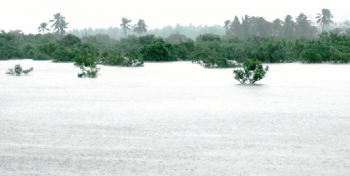
Activists informed that the vast tracts of low lying areas of Benaulim and Seraulim, which are located on the banks of river Sal, have been acting as the water catchment areas for centuries for monsoon water flowing down right from Verna, Betalbatim and Nuvem.
“We will knock the doors of the Goa State Wetland Authority with a plea to ask the NIO to also conduct a study on these low lying fields whether or not they qualify as the wetlands before irreparable damage is caused to these areas by land filling to make way for the bypass,” sources informed.
The Goa State Biodiversity Board has already conducted a detailed study of the entire stretch of the bypass alignment passing through the Benaulim areas, especially the Tolleabandh lake which plays host to rich flora and fauna, besides migratory birds.


