MARGAO
The debate rages unabated -- whether it would be Manohar alias Babu Ajgaonkar this time in Margao or Digambar Kamat, affectionately known as Baba, will maintain his winning streak in the city. Also, will Vijai Sardesai play his third successive innings from Fatorda or will Damu Naik stop his arch-rival from scoring a hattrick of sorts?
As the Sewerage Corporation is bracing up to close down the road to lay the trunk line between the Matanhy Saldanha Administrative complex and the Old market circle, Madgavkars and Fatordekars wonder whether the elected representatives will ensure the completion of the sewerage project and stop the stormwater nullahs from carrying raw sewage water in River Sal this monsoon.
The Sewerage Corporation and the PWD have 3-4 months at their disposal to expedite the ongoing work of the North main trunk line, connecting Fatorda to the sewage treatment plant at Sirvodem. The delay over the completion of the main trunk line from Fatorda to Sirvodem is being attributed to the cause behind the sewage water finding its way into the stormwater nullahs.
Otherwise, consider this. It’s now a couple of months since the monsoon had retreated last year. The unseasonal rains too had stopped around November last. Sadly, the stormwater nullah at Comba along the ring road is still carrying water. That the entire area stinks of sewage odour bears the testimony that the nullah does not play host to the rainwater, but sewage water.
The Water Resources Department (WRD) in a report submitted to the South District Collector last year pointed out how the stormwater nullahs in the city -- right from Dovondem to Kharebhand -- carry sewage water into River Sal.
A senior PWD official in private said the only solution to the problem of sewage discharge into the river is early commissioning of the North main trunk line and the sewerage network in the city. In fact, he said the government should do a review of the progress of work from the concerned departments and the contractors for early commissioning of the project.
“Work on the North main trunk line was initially scheduled to be complete last year, but the deadline has been extended. Completing the work on the line from the Matanhy Saldanha complex to the Old market circle, and the construction of the sewage chambers near the STP plant should be the top priority of the government as well as the contractors”, the official informed.
He added: “We can at least commission the main truck line before the onset of monsoons if the stretch from Matanhy Saldanha complex to Old market circle is completed, and the chambers put in place”.
Hotelier and activist, Serafino Cota made an impassioned plea to the powers that be and the officials to complete the Margao sewerage project at the earliest.
“I happened to be on the banks of River Sal around the Benaulim and Varca stretch and it was indeed sad to see the state of the river with stink pervading all around”, he said.
Traditional fishermen from the riverine villages of Assolna, Ambelim too have called for measures to plug the discharge of sewage from Margao into River Sal.
“We appeal to the authorities as well as the politicians from Margao to find a way out and resolve the sewage problem. Discharge of raw sewage into the river has devastated Sal over the years. No amount of rejuvenation will bear fruit unless the discharge of sewage into the river is plugged and stopped”, Roy said.
No end to sewerage imbroglio in Fatorda
MARGAO
There’s no stop to sewerage issues plaguing Fatorda, which has been the worst-hit area in the commercial capital with sewage water from residential buildings and the damaged sewerage underground line finding its way into fields and ponds.
A resident of Fatorda, Nitin Nagwekar, has lodged a formal complaint with the Margao Urban Health Centre to initiate action against the owner of a residential building for the discharge of sewage water and contaminating a pond known as Dambabachi Tali.
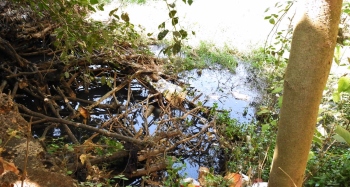
In his complaint, Nitin claimed that the Dambabachi Tali has been left devastated and highly polluted by the discharge of sewage from a residential building. The Tali also serves as a grazing ground for cattle and aquatic life, posing a health hazard to human and animal life.
“The water body is stinking of sewage. It has become a breeding ground for mosquitoes and vector-borne diseases”, Naik said, who has demanded that the authorities block the drainage and clean the water body as per the law in force.