


MARGAO
Even as Margao’s waste imbroglio took the centrestage on the floor of the House on Friday over the efficacy of the bio-methanation plants, Margao councillors are meeting on Monday to discuss before giving a nod to the civic body to float tenders for the door-to-door waste collection for the coming financial year at a whopping cost of Rs 6.73 crore.
Take note, the MMC had outsourced the work of door-to-door waste collection to two private contractors at a cost of over Rs 5 crore, throwing up a moot question “ whether the city is free from waste and litter, more so when the civic body is spending crores of rupees on waste collection?
This question should certainly come to haunt the Margao councillors when they meet on Monday to discuss the question of giving a nod for the door-to-door collection tender.
For, while there is no opposition to the outsourcing of the door-to-door waste collection in the commercial capital, questions are raised in the corridors of the civic body and outside, whether the councillors and the Municipal babus have adopted checks and balances to ensure the contractors execute the job of waste collection in both letter and spirit.
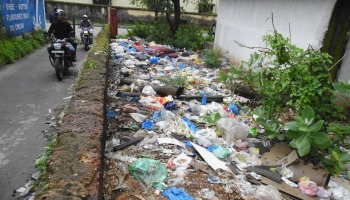
One of the tender conditions inserted by the Margao Municipal Council relates to the waste collection to not only door-to-door, but waste from the dark spots as well as from the open spaces, besides roadsides. On the eve of Gandhi Jayanti, The Goan had carried photographs exposing the waste pile up at the dark spots and along roadsides at many places across the city, indicating the city is lacking monitoring mechanism to get the contractors clear the waste on a daily basis.
Take note, the civic body is making the payments to the two contractors per worker deployed to collect the waste, mandating the Municipality to check the waste collection on a day-to-day basis.
Questions are further raised whether the Municipality checks and verifies the number of workers actually drafted by the contractors on the ground for the waste collection. No doubt, the contractors are liable to deduct payments of the workers towards the Provident Fund, but period head count of the workers employed by the contractors will help maintain a check on the actual workforce deployed for the multi-crore job.
A section of the councillors in private argue that the Municipality does not bear the financial liability towards the payments on door-to-door waste collection since the payments are directly made through the funds of the 14th and 15th Commission grants. Sources in the know, however, are quick to point out that the funds under the Commission also constitute the tax payers money and called for its judicious utilisation.
“Outsourcing of door-to-door waste collection is a norm now than an exception considering the workforce that civic bodies need to recruit manpower. At the same time, the local bodies ought to ensure that the funds are utilised judiciously and the private contractors comply with the clauses in the work in both letter and spirit,” remarked an official.
Transportation to Cacora comes with a price: GWMC raises `21.87 lakh bill for 3 months
MARGAO: Margao Municipal Babus and councillors must have heaved a sigh of relief last year after the High Court issued directions to the civic body to transport the daily wet waste, around 30 tons, to the Cacora waste treatment plant for disposal for want of a mechanism to treat the city waste.
But, transportation of the city waste to Cacora waste treatment plant has come with a price. For the three months of September, October and November, the Goa Waste Management Corporation (GWMC) has raised a transportation bill of Rs 21.87 lakh. Take note, the cash-strapped MMC has now decided to seek administrative approval from the government to use 14th Finance Commission funds to fund waste transportation from Margao to Cacora at whopping cost of Rs 57.27 lakh for the period from December 2023 to March 2024.
Taken together, the MMC will be spending a whopping Rs 79.14 lakh for transportation of the city waste to Cacora for a period of seven months, beginning from September 2023, throwing up a debate of sorts whether transportation of the city waste to Cacora is economically viable over the treatment of the waste by the civic body with its own waste treatment plant at Sonsodo.


