MARGAO
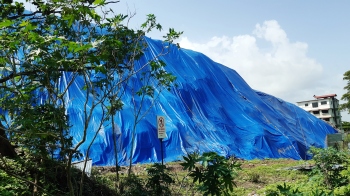
With just days to go for the monsoon to set in, the Sonsodo legacy dump played host to the annual ritual “ covering the site with tarpaulin to prevent seepage of leachate during the rains.
Covering of the dump means that the bio-remediation of the legacy dump has almost come to a halt and will only resume later around October-November.
While a group of workers were on the job to cover the legacy dump with tarpaulin, heavy earth moving machinery was loading RDF into waiting trucks for transportation of the plastic waste to the cement factories in Karnataka.
Inquiries have revealed that legacy waste dump is being covered to prevent flow of leachate underground. The Sonsodo legacy dump is being covered every year for over a decade now prior to the monsoons as per the High Court order to ensure that leachate does not flow underground.
Given that the Sonsodo site is in possession of the Goa Waste Management Corporation, the work of covering the dump is being executed by the Corporation.
Meanwhile, GWMC Managing Director Levinson Martins has said the Corporation is laying more stress on the transportation of the RDF to the cement factories before the onset of monsoons. “Transportation of RDF to Karnataka-based cement factories had stopped during the lockdown, throwing our program haywire. We want to send as many trucks as possible to Karnataka from Sonsodo before the onset of monsoons”, he said.
Martins added: “Around 25,000 of RDF generated during the bio-remediation process is awaiting disposal at Sosnodo. Whatever RDF that cannot be sent to Karnataka will be covered with tarpaulin”.
Welcoming the decision of newly-elected MMC Chairperson Lyndon Pereira to provide site for the disposal of inert waste from Sonsodo, Martins said the inert can be transported to the site even during the monsoons.