SATURDAY, 19 SEPTEMBER 2026

New licence rejection renews pollution concerns of existing fish meal units

Residents seek clarity on regulatory compliance and monitoring at Cuncolim IDC

New licence rejection renews pollution concerns of existing fish meal units
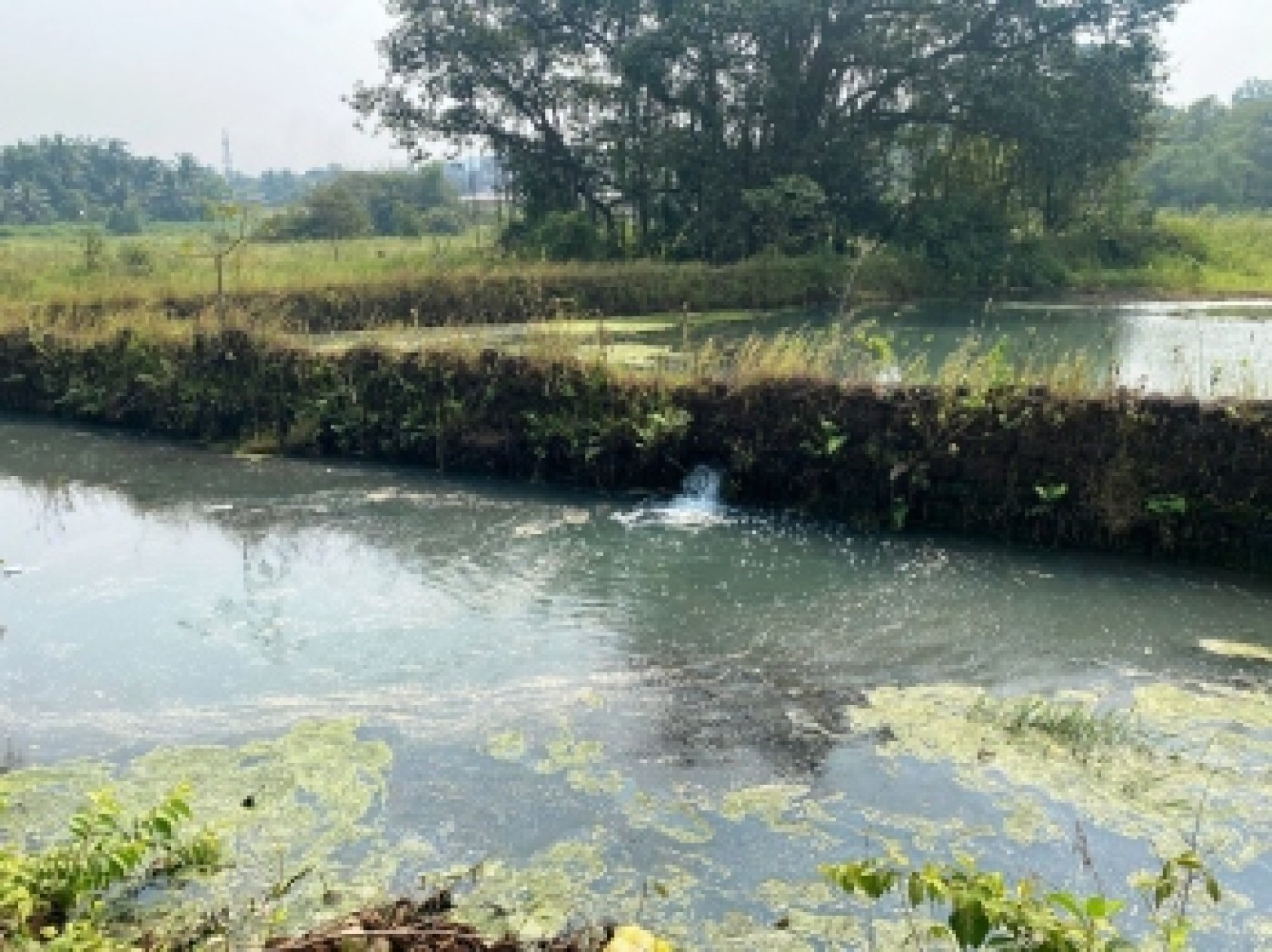
File photo of effluents discharged from Cuncolim IDC to adjoining water bodies.

MARGAO

The Cuncolim Municipal Council’s decision to reject an application seeking a construction licence for a proposed fish meal plant may have come as a relief to local residents who have been waging a sustained campaign against fish meal and fish processing units operating at the Cuncolim Industrial Estate.

However, the decision has also brought renewed focus on a larger and more contentious question confronting the residents of the area: What is the status of the existing fish meal and fish processing units operating at the industrial estate, and are they complying with prescribed pollution-control norms?

Residents have for years raised concerns over alleged air and water pollution emanating from some of the fish meal and fish processing units at the Cuncolim Industrial Estate. They fear that permitting additional units of a similar nature could further aggravate the problems they say they have been facing over the years.

The rejection of the construction licence application has therefore not brought the issue to an end. Instead, it has intensified the debate over the functioning of the existing units and the regulatory mechanisms in place to monitor their operations.

Leader of Opposition Yuri Alemao, who has described the municipal council’s decision as a victory for the people of Cuncolim, may now also face questions from residents and stakeholders on what further steps should be taken to address their concerns regarding the existing units.

At the heart of the issue are several questions. Are the existing fish meal and fish processing units operating strictly in accordance with the pollution-control norms and conditions prescribed by the Goa State Pollution Control Board (GSPCB)? Have they complied with the conditions attached to those permissions? And does the GSPCB have an effective mechanism in place to regularly monitor emissions, effluents and other environmental impacts from the units operating at the Cuncolim Industrial Estate?

These questions have continued to trouble residents since fish meal and fish processing activities were established at the industrial estate.

Local residents say, the controversy essentially has two distinct but interconnected aspects.


Pollution Board’s fish unit directions face reality check

MARGAO: Has the Goa State Pollution Control Board (GSPCB) conducted a reality check on compliance with the key directions issued to fish meal and fish processing units operating at the Cuncolim Industrial Estate?
With fishing activity at its peak following the commencement of the new fishing season on August 1, questions are being raised over whether the GSPCB has conducted an on-ground assessment of compliance with the directions issued to these units.
The GSPCB had issued a host of directions, including a mandate that fish be transported only in insulated vehicles to prevent deterioration during transit.
The Board had also directed that all wastewater generated during transportation be discharged only at the respective processing plants and treated in their Effluent Treatment Plants (ETPs), rather than being released along roads or into drains.
Significantly, the Board had prohibited the processing of spoiled or decomposed fish, making it clear that only fresh fish should be accepted and processed by the units.
With the fishing season now underway and activity intensifying, the key question is whether these directions are being effectively enforced on the ground and whether the GSPCB has carried out inspections to verify compliance.

GSPCB’s handling and transport norms
Among the key recommendations:
Fish must be transported only in insulated vehicles
All wastewater generated during transportation must be discharged at the plant and treated in the ETP
The company should consider creating a standby raw material storage facility of adequate capacity
Only fresh fish must be processed; processing of spoiled or decomposed fish is strictly prohibited
Additionally:
All vehicles exiting the premises must be thoroughly washed in a designated contained area
A fully operational wheel-washing system must be used before vehicles leave the facility
The unloading area must be equipped with a berm to prevent runoff
All wastewater must be channelised to the ETP for treatment


SHARE ON

Cuncolim house looted while inmates away

Burglars decamp with gold and cash worth Rs 20 lakh

The Goan Network
Published Sep 19, 2026, 12:35 AM IST
SHARE ON
Cuncolim house looted while inmates away

MARGAOBurglars struck in Cuncolim after unknown thieves decamped with gold ornaments and cash worth over Rs 20 lakh from a residential house at Demani.The incident sent shock waves across Cuncolim as the burglary took place in broad daylight on Thursday evening while the inmates were away.The owner later realised that his house had been burgled after finding the premises ransacked and the gold and cash missing.The incident has sparked outrage in Cuncolim as the house is…

READ MORE

Keep Reading — More from GOA NEWS

1 more related stories queued · tap to continue reading

Home HOME News GOA NEWS Global GLOBAL GOENKAR Search SEARCH