AGNELO PEREIRA
MAPUSA
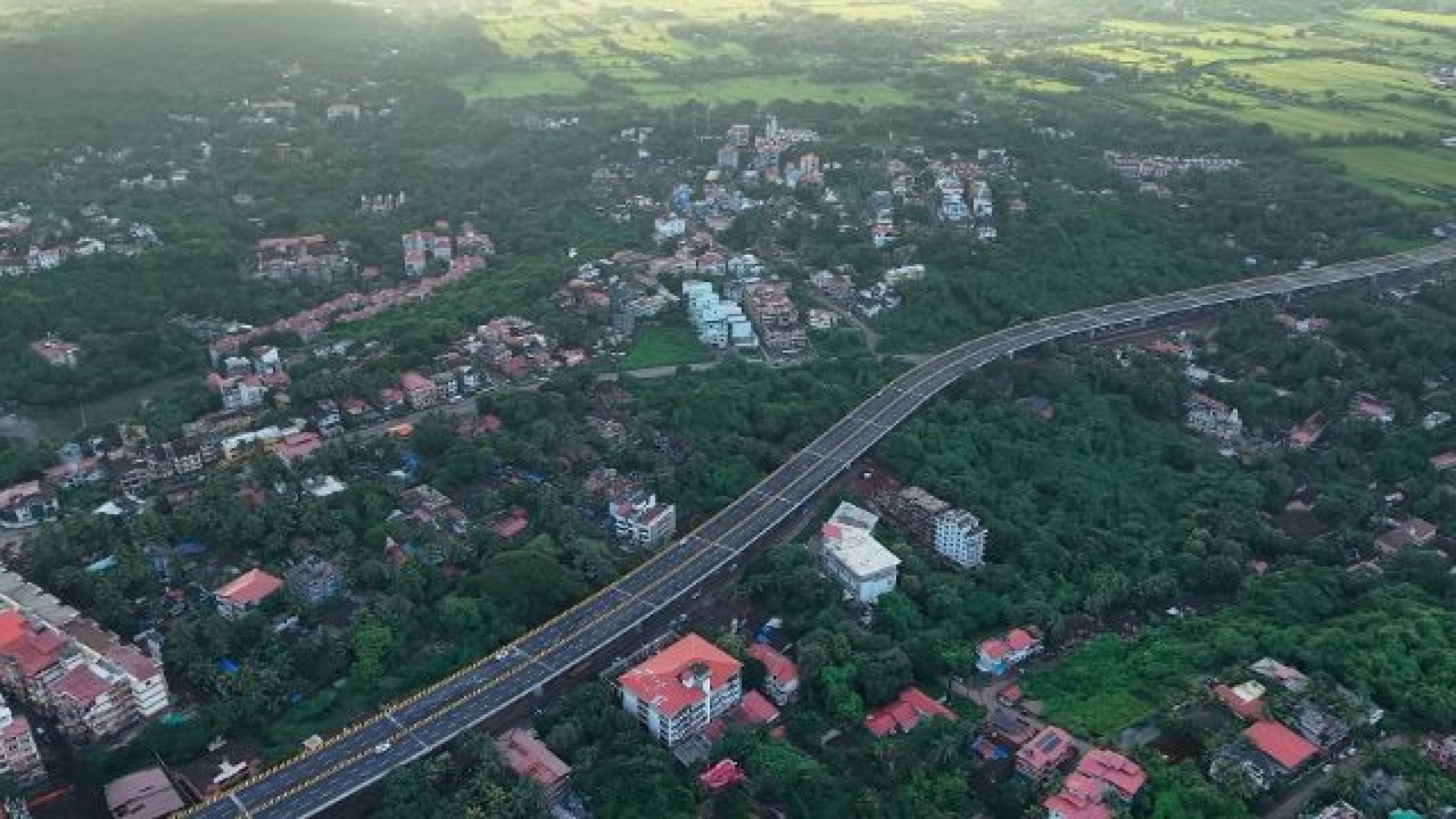
The engineering challenge of building Porvorim's 5.15-km elevated corridor may be nearing its end, but the bigger test for the project is only about to begin – what happens when tens of thousands of vehicles actually start using it.
The six-lane elevated corridor, to be inaugurated on September 9 and opened to traffic on September 11, is expected to carry at least 70,000 to 80,000 vehicles a day, according to PWD (NH) Executive Engineer Gajanan Desai. The projected traffic volume is expected to eventually cross one lakh vehicles in coming years, he said. But whether the new road will finally eliminate Porvorim's notorious congestion – or merely shift pressure to other points on the road network – will become clear only once regular traffic begins flowing. The immediate concern is not necessarily the elevated stretch itself, but what happens at its entry and exit points and beyond. One of the critical pressure points could be towards Panaji, where traffic leaving the elevated corridor will eventually converge towards the Mandovi bridges. Even today, during morning and evening peaks, queues are frequently seen near the junctions leading towards the bridges.
The elevated corridor can therefore move vehicles rapidly through Porvorim, but will it create bottlenecks near the junction leading to the two Mandovi bridges?
This raises a crucial question for the new traffic system: will a faster movement of vehicles through Porvorim simply result in a larger volume of traffic arriving more quickly at the next bottleneck? North Goa Traffic DySP Sudesh Narvekar, however, said the corridor had been conceived specifically to reduce congestion and travel time and that the department was not anticipating a congestion problem on the elevated stretch.
“We don’t foresee any congestion as of now, but only after traffic starts moving on the corridor will we come to know if there are any problem areas,” Narvekar said.
The response reflects one of the biggest unknowns surrounding the project: the actual traffic behaviour can only be assessed once the corridor is operating under normal conditions.
PWD, meanwhile, maintains that the road has been designed with the future in mind.
Desai said the elevated corridor had been designed and constructed with a foresight of 25 to 30 years, with traffic projections of more than one lakh vehicles.
The department is also preparing for the traffic that will continue to use the road below the elevated structure.
Desai said adequate precautions had been taken for the smooth movement of vehicles on the existing road, including proper lane arrangements and junction crossings. Traffic lights have been installed at critical junctions, though they have not yet been activated. While through traffic is expected to use the elevated section, local traffic will continue to depend on the existing road network, making the functioning of the junctions underneath and around the corridor an important part of the project's success. Desai said a vehicle travelling at 60 kmph could cover the entire 5.15-km elevated stretch in about five minutes.
However, the actual journey time for motorists will ultimately depend not only on how quickly they travel on the elevated road, but also on how efficiently they can enter it and, more importantly, leave it. The project will also introduce a new traffic-management challenge at elevated level.
Desai said all categories of vehicles – including buses, trucks, tankers, heavy commercial vehicles and two-wheelers – would be permitted to use the corridor.
At present, however, the elevated road does not have CCTV cameras. Desai said the government was planning to install cameras to monitor traffic movement.
The absence of CCTV monitoring at the time of opening could assume significance given the volume and mix of traffic expected on the six-lane structure. Any breakdown, collision or obstruction on the elevated road could have consequences beyond the vehicle directly involved, particularly during peak hours.
For the authorities, therefore, September 11 will mark more than the opening of a new road. It will be the beginning of a live test of the entire traffic system around Porvorim.
For years, motorists have experienced congestion because traffic was forced through the same surface network. The elevated corridor now provides a separate route for through traffic.
The question is whether that additional capacity will translate into a genuine reduction in journey times and congestion across Porvorim – or whether pressure will simply emerge at the points where the elevated and surface networks meet.
After years of construction, diversions and disruption, the physical structure is finally ready.
The real test, however, begins when Porvorim wakes up to its first normal weekday morning with the new road carrying traffic.
2-day corridor walk cut to just one day
The much-awaited opportunity for citizens to walk on the newly constructed Porvorim elevated corridor has been cut short, with the planned two-day public access now restricted to Monday alone.
PWD (NH) Executive Engineer Gajanan Desai said citizens will be allowed to walk on both sides of the corridor from 10 am to around 8 pm on Monday.
Desai said the decision to curtail the two-day programme was necessitated by preparations for the inauguration of the project.
“Although we had announced that people would be allowed to walk over the corridor for two days, it will be restricted to a day because we need to erect the stage for the inauguration of the project,” he said. Desai, however, cautioned that once the corridor is opened to vehicular traffic, pedestrian movement will not be permitted on the elevated stretch.