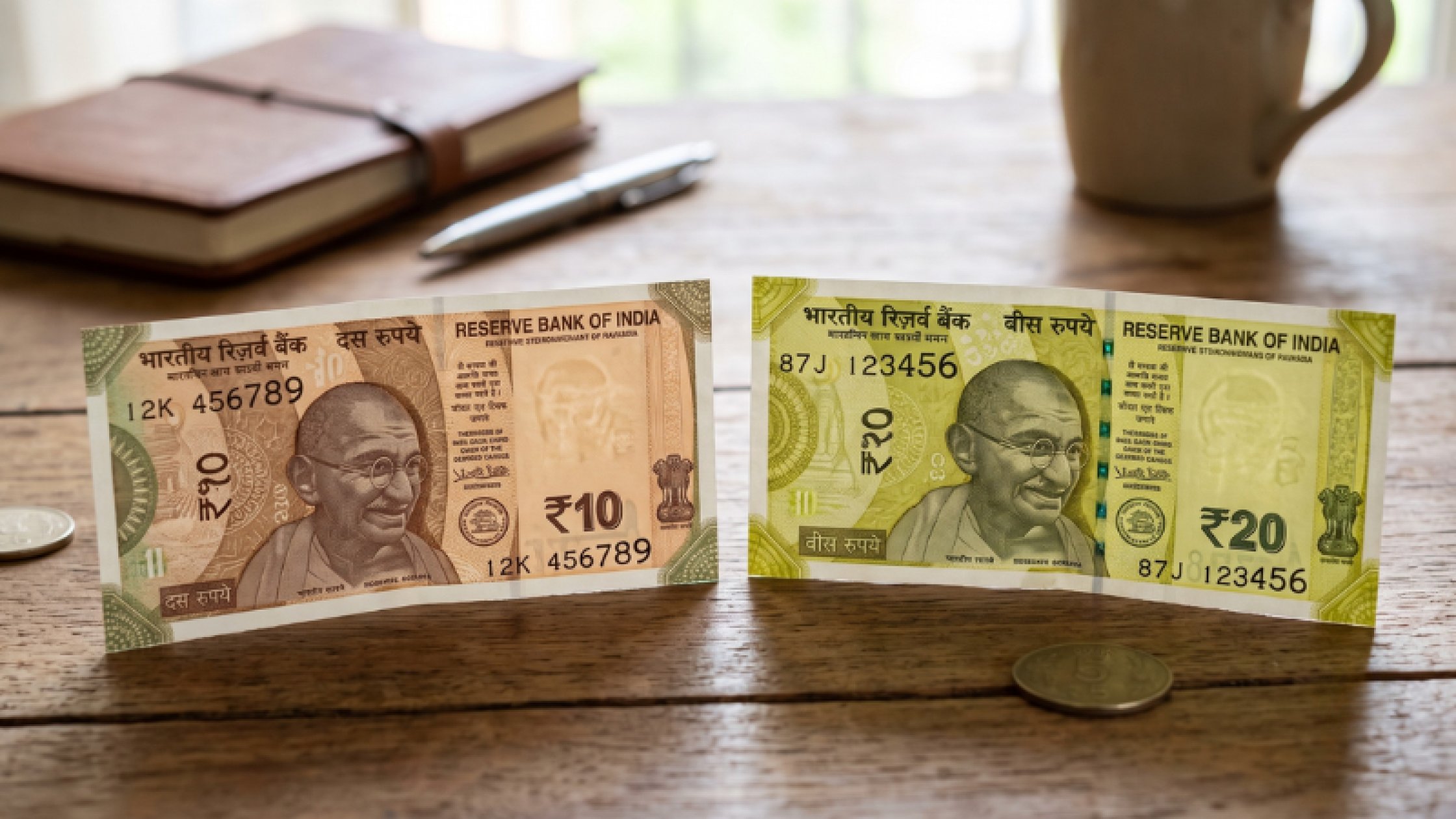
PANAJI: Plastic currency notes could begin circulating in India at the start of the next financial year, subject to the successful completion of ongoing field trials, Reserve Bank of India (RBI) Governor Sanjay Malhotra said on Wednesday.
Addressing the media after the Monetary Policy Committee (MPC) meeting, Malhotra said the RBI aims to introduce polymer banknotes in the Rs 10 and Rs 20 denominations by the beginning of the next financial year.
"We are targeting that they are in circulation, as per plan, at the beginning of next FY," he said.
The RBI had proposed the introduction of polymer banknotes on a trial basis after receiving the Centre's approval, reviving a plan that was first announced over a decade ago but was never implemented.
Explaining the move, Malhotra said polymer notes are significantly more durable than conventional paper currency and are particularly suited for lower-denomination notes, which are handled more frequently in daily transactions.
"Polymer notes enhance durability and life. They are relevant for lower denominations because of their higher velocity of circulation, and therefore their lifespan is lower," he said.
Currency notes in the Rs 10 and Rs 20 denominations typically wear out faster due to frequent use. Polymer notes are expected to have a longer lifespan, reducing replacement costs and improving the efficiency of currency management.
Last month, the Central government approved the RBI's proposal to print one billion polymer notes each in the Rs 10 and Rs 20 denominations for field trials. A decision on large-scale issuance will be taken after evaluating the outcome of these trials.
The proposal gained momentum after Bharatiya Reserve Bank Note Mudran Private Limited (BRBNMPL), an RBI subsidiary, invited tenders for polymer substrates required to print the trial banknotes.
The government has clarified that the approval is limited to field trials and that there is currently no proposal to replace all existing paper currency notes with polymer banknotes.