VALPOI
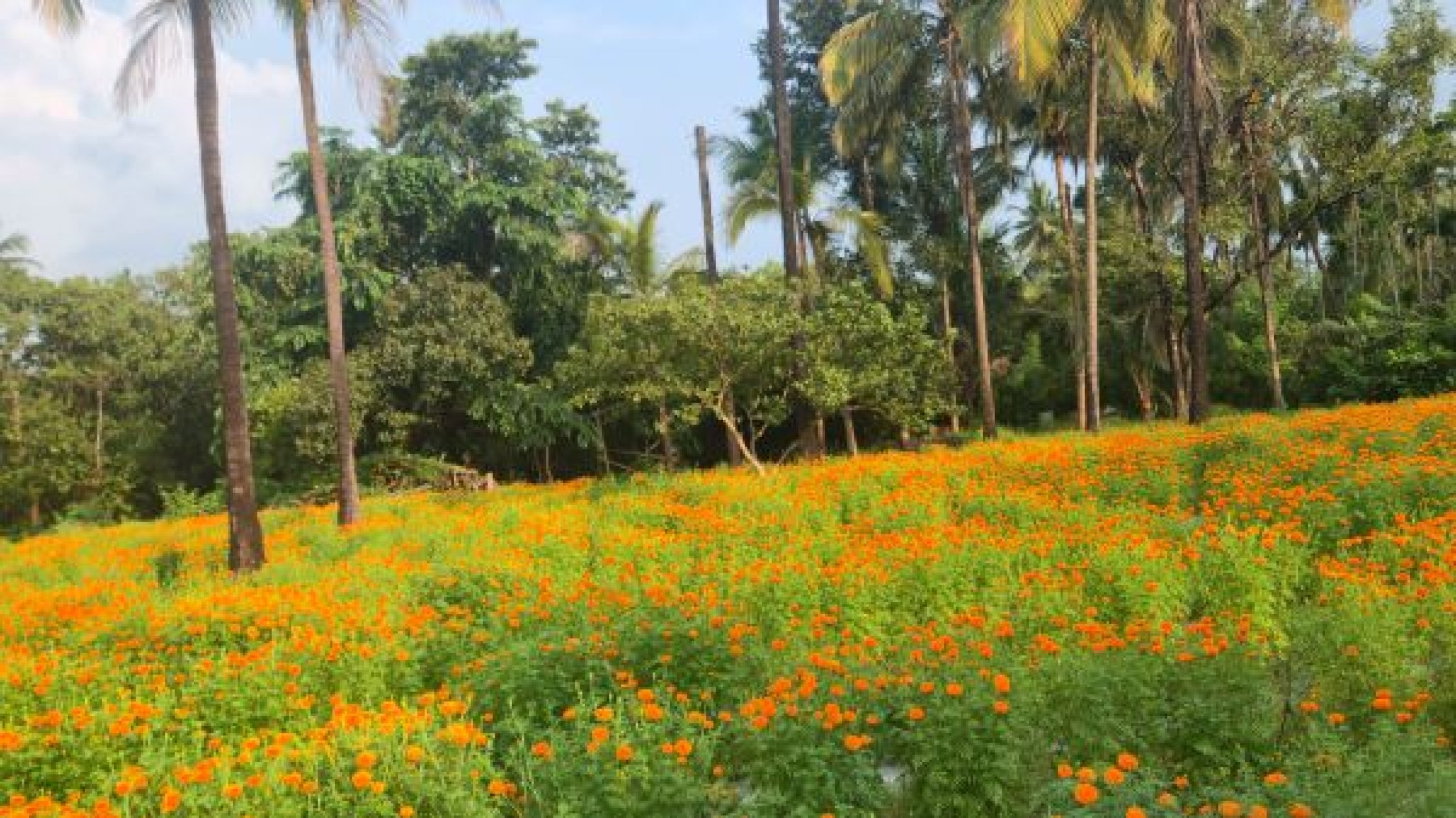
Marigold cultivation covered around 25 hectares in Sattari this year, yielding an estimated 20 tonnes of flowers against the expected 35 tonnes, as prolonged dry conditions and irregular rainfall affected crop growth. Despite the nearly 40 per cent shortfall, local sales helped farmers secure good returns, with flowers fetching Rs 100 to Rs 120 per kg.
This was stated by Vishwanath Gramse, Valpoi Divisional Agriculture Officer, who said the extended break in rainfall and shortage of water affected plant growth and reduced flower yield.
Several farmers sold their produce within their respective villages instead of transporting it to Valpoi, reducing dependence on middlemen and ensuring better returns. This also made fresh flowers readily available to local consumers.
1.20 lakh saplings distributed
The Agriculture Department has been promoting marigold cultivation in Sattari under the ATMA scheme. The region's soil and climatic conditions are favourable for the crop, which produces healthy plants and larger flowers.
This year, the Valpoi Divisional Agriculture Office distributed around 1.20 lakh marigold saplings to farmers. Progressive growers, women's self-help groups, mahila mandals and water distribution associations participated in the cultivation, contributing to the expansion of the crop.
According to Gramse, a single plant can yield up to three kg of flowers under favourable conditions. Based on this potential, the department had expected production to exceed 35 tonnes. However, the prolonged dry spell affected plant growth, restricting the actual harvest to around 20 tonnes.
Several farmers took up commercial marigold cultivation for the first time this year and earned encouraging returns. While some sold their produce in bulk through agents, others opted for direct sales from their farms or within their villages.
Gramse said this localised marketing was also the reason locally grown flowers were not available in large quantities in the Valpoi town market. The arrangement helped growers retain a larger share of the sale proceeds while providing fresh flowers to consumers within their villages.
Focus on reducing imports
Over the past five years, the Agriculture Department has been promoting marigold cultivation as part of the broader Atmanirbhar Bharat and Swayampurna Goa initiatives. The objective is to reduce Goa's dependence on flowers brought from other states and create additional income opportunities for local farmers.
Marigold flowers enjoy considerable demand during Diwali, Dussehra and other religious and cultural occasions. Their use in temple celebrations, religious ceremonies, garlands and home decorations makes the crop commercially attractive during the festive season.
Gramse said farmers could take up marigold cultivation even on small plots, making it a suitable supplementary source of income. Women's groups and farmer associations could also participate collectively to strengthen cultivation and marketing.
Timely distribution of saplings, adequate water availability, improved cultivation practices and proper market linkages are essential to increase production.
Although irregular rainfall affected this year's yield, the response from farmers has encouraged the department to continue promoting the crop. Citizens have also been urged to prefer locally grown flowers to help expand cultivation, improve farmers' earnings and strengthen Sattari's rural economy.