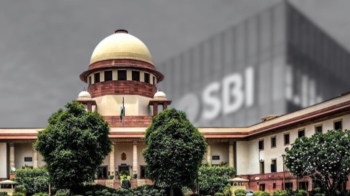
The Supreme Court on Monday firmly rejected the State Bank of India's (SBI) request for an extension to disclose details of the electoral bonds scheme, mandating that the bank share the information with the Election Commission of India (ECI) by tomorrow (Tuesday). The court emphasised that the ECI must publish these details on its website by 5 pm on Friday, warning of potential contempt proceedings against the government-run bank if it fails to comply.
The SBI had sought additional time, aiming to disclose the information by June 30, but the court, which had earlier nullified the electoral bonds scheme on February 15, stood firm on its directive for the details to be made public by March 13.
During the hearing, Senior Advocate Harish Salve, representing SBI, explained the challenges faced by the bank, stating, "We need a little more time to comply with the order. We are trying to collate the info, and we are having to reverse the entire process. We, as a bank, were told that this is supposed to be a secret."
Chief Justice of India DY Chandrachud pressed the bank on its actions over the past 26 days, expressing concern over the lack of information provided by SBI. Furthermore, Justice Sanjiv Khanna emphasised the straightforward nature of the task, stating, "You have to just open the sealed cover, collate the details, and give the information."
In response to the court's queries, Salve assured that the bank possessed comprehensive details about the electoral bonds, including donor information, money sources, and political party transactions. However, he noted that the process involved crosschecking and collating data, which would take an additional three months to complete.
Despite Salve's concerns about potential lawsuits from donors, the Chief Justice reiterated the court's stance, emphasizing that the bank had not been directed to undertake a matching exercise. The court directed SBI to comply with the judgment promptly.
It was also highlighted that a senior official of SBI had filed an affidavit seeking modifications to the Constitution bench's judgment, prompting the Chief Justice to acknowledge the gravity of the situation.