MARGAO
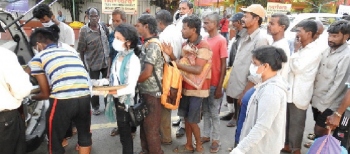
In the absence of a dedicated home to house beggars as well as people without shelter, the whip cracked by the police and district authorities against beggars, who have made the Margao Municipal Council garden as their make-shift shelter, has come to haunt the authorities.
While the Margao police have gone about keeping the benches of the MMC garden free from beggars and miscreants, these people, whose number is pegged at over 200, have spread all across the city.
In fact, the familiar faces, who were driven away from the MMC garden, MMC building and Comunidade square, have now occupied the footpaths and vacant spaces all over the city, right from the heart of the town to the Old Market area.
That’s not all. Margao police action against sex workers on the Station Road has thrown up another problem. While the entrance gate to the railway property stands closed, the sex workers are now seen around the MMC building, sources said.
The area near Salgaocar chambers, meters away from the MMC building and the Old Market area, has now become a shelter for these people.
Sources informed that the police had cracked a whip against the beggars and miscreants without zeroing in on any space to house them.
Officials pointed out that the District Collector has asked the police to identify a suitable place which would be utilized to house these people temporarily.
“We are right now on the job of identifying a suitable place in the city where all the people without shelter can be accommodated,” informed a police officer. The officer pointed out that the police are on the ground to explore the possibility of housing these persons at different locations.
Incidentally, the Margao Deputy Collector’s office had last month identified the Nehru Stadium, Fatorda, as a potential site that could be used to house the homeless people.
Though the office of the Deputy Collector had submitted the details to the office of the Collector South, nothing has been heard on the matter to date.
Incidentally, Collector Ajit Roy has now issued directions to the Salcete Mamlatdar to survey the beggars and other homeless persons and also find out whether any government structure is available to house them temporarily.