MARGAO
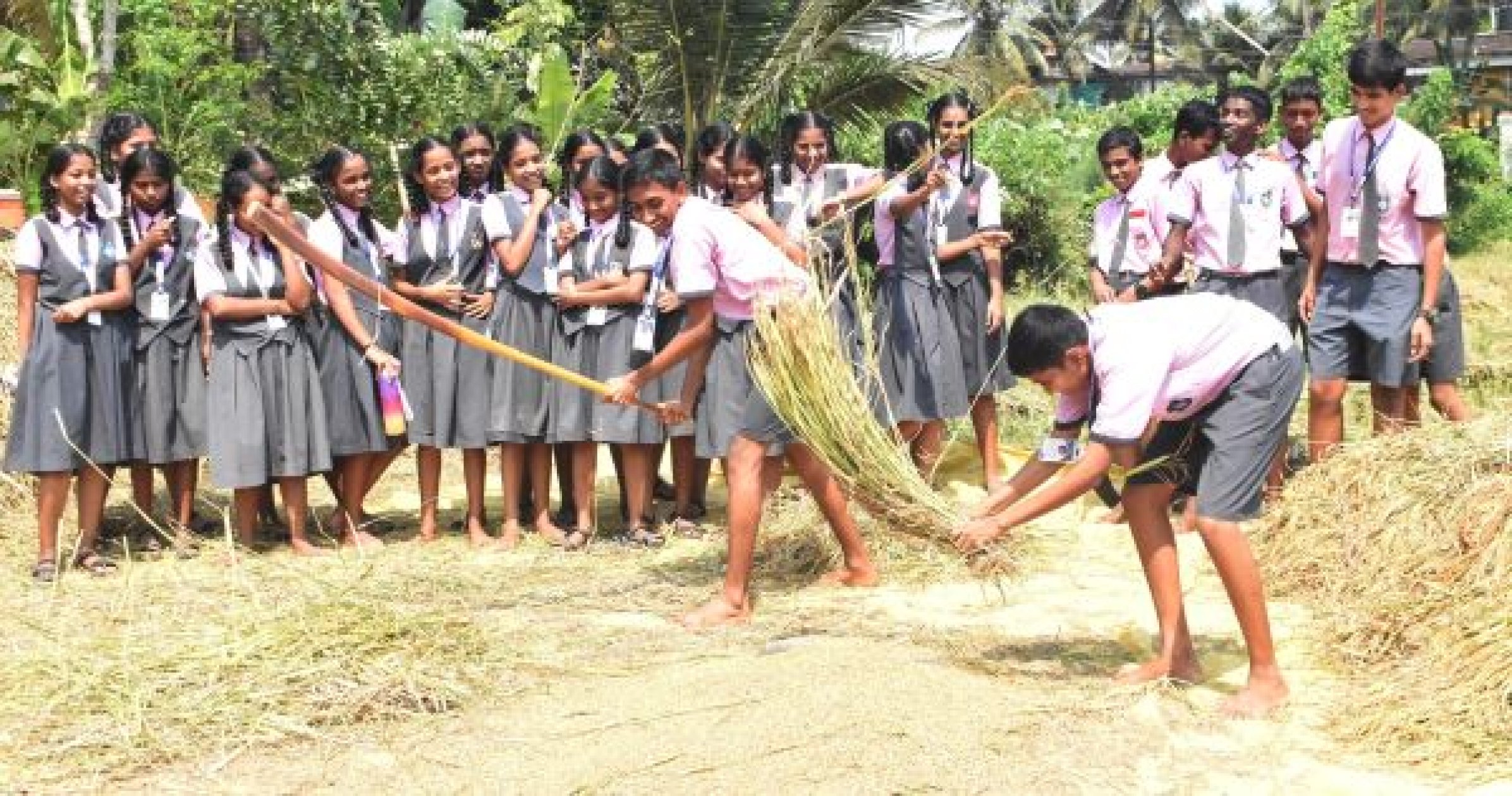
Students from four schools got a hands-on experience of traditional farming practices, including manual harvesting and threshing of paddy, at an agricultural awareness programme organised by young progressive farmer Claudius Dias at Aquem Baxio village on Monday.
The programme provided students with an opportunity to understand the various stages of traditional rice cultivation and gain first-hand knowledge of agricultural practices that have been passed down through generations. Moving beyond classroom learning, the students actively participated in harvesting and threshing paddy, gaining practical insights into the effort and skills involved in traditional farming.
A special highlight of the programme was a demonstration of the traditional method of steaming rice, conducted by Dias. The demonstration was intended to familiarise the students with the process through which paddy is traditionally processed to obtain rice, particularly the brown rice used in preparing kanji, a staple rice gruel.
The students were also treated to a traditional meal of kanji and mackerels baked in papaya leaves, giving them a taste of local culinary practices associated with Goa's agrarian heritage.
Speaking about the objective of the annual initiative, Dias said the programme was organised to introduce students to traditional agricultural operations and ensure that the knowledge and experience accumulated by earlier generations are not lost.
Emphasising the importance of engaging young people in agriculture, Dias said students represented the future of the state and the country, and it was essential to familiarise them with the value of traditional farming.
The programme also featured an interaction with agriculture department officials, who briefed farmers and students on new rice varieties introduced in Goa and their suitability to local agro-climatic conditions.
Margao Zonal Agriculture Officer Sheriff Furtado and Project Director Shivram Gaonkar were among the senior agriculture officials present. They highlighted the performance of newer rice varieties, including Ratnagiri 7, which has reportedly adapted well to local weather conditions and shown potential for good yields.
The interaction provided an opportunity for farmers to learn about the performance of these varieties and understand how suitable crop selection could contribute to improved agricultural productivity.