PANAJI
A whistleblower's allegations of corruption and selective disciplinary action in the Traffic Police have reached the State's highest administrative levels, with the Home Department asking the Director General of Police to take action on a complaint seeking an independent inquiry against Superintendent of Police (Traffic) Prabodh Shirvaikar over allegations of bribery, abuse of authority and institutional cover-ups.
The Home Department's communication was prompted by a representation by a policeman, who accused the Traffic Police's disciplinary machinery of operating on two different yardsticks -- swift punishment for some personnel and protection for others allegedly favoured by the leadership.
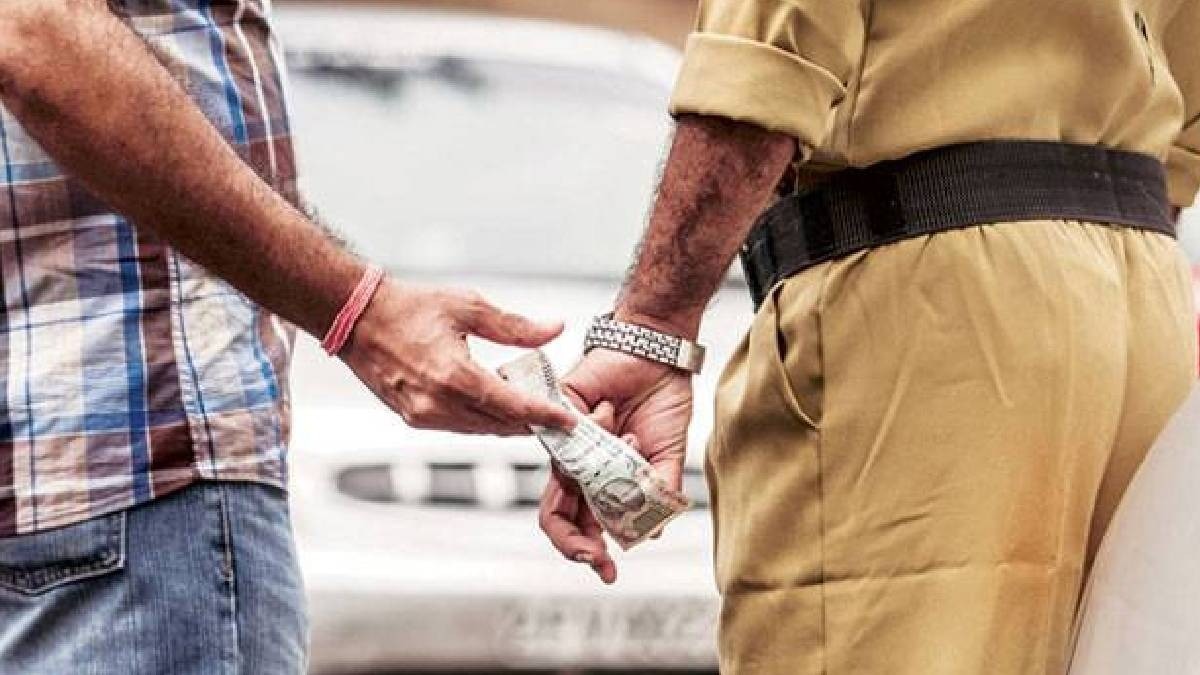
The complaint traces the controversy to a string of covert recordings made in October 2024 by a Delhi resident, Asim, that allegedly documented traffic police personnel accepting bribes at various locations across Goa.
Those recordings, the representation stated, led to immediate suspensions of personnel from the Anjuna and Porvorim Traffic Cells after they were allegedly caught accepting Rs 300 and Rs 200, respectively.
But the whistleblower contended that the most serious episode -- involving the Calangute Traffic Cell -- met an entirely different fate.
Four traffic personnel posted at Calangute were allegedly filmed accepting a bribe of Rs 10,000. Instead of triggering disciplinary proceedings similar to those initiated elsewhere, the complaint alleges the case was quietly neutralised through the intervention of senior officers.
The representation goes further, alleging that an internal inquiry into the incident uncovered an arrangement under which then Calangute Traffic Cell in-charge Police Inspector Sachin Narvekar, Police Constable Rajesh Gawade and Home Guard Joseph allegedly pooled Rs 6 lakh to avoid departmental action.
It claimed Narvekar contributed Rs 2.5 lakh, Gawade Rs 2 lakh and Joseph Rs 1.5 lakh, with the money allegedly delivered to SP (Traffic) Prabodh Shirvaikar through one of his close aides. In return, the complaint alleged, every officer seen in the Calangute sting video was spared disciplinary proceedings.
The allegations have not been independently verified, and the Home Department has recorded no findings.
Beyond the bribery allegations, the whistleblower also questioned the integrity of the departmental inquiries themselves. The representation alleged that personnel facing disciplinary proceedings were denied the opportunity to cross-examine witnesses or the complainant, effectively depriving them of safeguards ordinarily associated with principles of natural justice.
It further recounted an Orderly Room hearing in which, according to the complaint, the SP (Traffic) told personnel seeking leniency that he had himself spent 13 years facing disciplinary action by his seniors and had been denied rewards during that period -- a statement the complainant cited as evidence that personal experiences influenced official decisions.
The representation, also submitted to the Chief Secretary and police higher-ups, also pointed to a separate controversy against the Ponda Traffic Cell, where a video purportedly showing corrupt practices circulated widely on social media. Despite the video's circulation, the complaint alleged no action followed for more than a month because the personnel concerned were closely associated with the SP. Another allegation related to an earlier GPay fraud case at the Anjuna Traffic Cell. The complainant argued that Shirvaikar, having conducted the preliminary inquiry while serving as Deputy Superintendent of Police, should have recused himself after becoming the disciplinary authority. Instead, the representation alleged, he proceeded with the case and exonerated three officials with whom he was closely associated despite a conflict of interest.