MARGAO
The 10-member National Green Tribunal seemed to have recommended construction of the western bypass on stilts on a 980-metre stretch, between Seraulim and Mungul, primarily to avoid filling of a water body and part diversion of the river Sal.
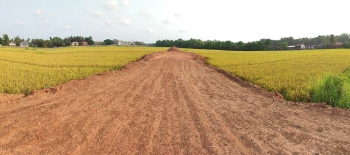
Benaulikars waging a sustained battle in support of the construction of the bypass on stilts passing through the village have a pointed question to ask “ why didn’t the expert panel consider their claims for the bypass on stilts when the 60-metre wide road will pass through water bodies and low-lying cultivated agricultural fields, which has been acting as water catchment areas along the flood plains of river Sal?
That’s not all. Questions are being raised why the panel did not recommend stilts on the Benaulim stretch when a December 2019 inspection report by the Water Resources Department has categorically stated that the possibilities of minimising the filling area needs to be worked out by the PWD department by proposing the road on stilts as an alternate case by considering the long term damage to the agricultural land and bio-diversity.
While the petitioner before the National Green Tribunal, Royla Fernandes and the farmers have vowed to continue their battle for construction of the stilts along the Benaulim stretch as well, inspection reports compiled by the government authorities including the Water Resources Department, Town and Country Planning have confirmed beyond doubt that the Benaulim stretch of the bypass is passing through areas comprising of water bodies, low-lying agricultural fields, etc.
In fact, while the 10-member panel may have cited their own reasons before recommending stilts along the 980-metre stretch between Seraulim and Mungul, which does not include Benaulim, a glance at the inspection report carried out on December 13, 2019 shows that the bypass is passing through low-lying areas and water bodies of Benaulim.
In fact, a glance at the Water Resources Department report shows that the entire Benaulim stretch is low-lying and comprises of water bodies. Take the case of land in Survey No. 140. The WRD report says the area can be clearly classified as a low-laying area compounded and protected by the bundh on all the sides. The proposed NH bypass road is passing through this survey, divides the property into two unequal parts.
That’s not all. The reports states that land in Survey No. 132 is a low-lying paddy field and contains many ponds (water bodies) within it. The report further states that Survey No. 135, 136 and 137 are low-laying paddy fields.
The report says Survey No. 134 is a low-laying field having two water bodies which are harvesting water for the paddy fields. One of these ponds will be filled up completely and the others will be affected partly on account of proposed NH bypass road.
A glance at the report further reveals that Survey Nos. 100, 101 and 117 are also low-laying paddy fields, having a water body in Survey No. 117, which will be affected completely after construction of the NH bypass road.
In another damning observation, the WRD reports states that of the 2.70 km length of the bypass, around 90 per cent of the proposed NH bypass is passing through the property in all above mentioned survey numbers, of which the Survey Nos. 100, 101, 117, 137 and 140 forms the border edge of the River Sal.
“All these survey numbers forms the room for harvesting the water during the intense precipitation and control the flooding in the surrounding area, especially during the high tide when the flood discharge is restricted into the Sal river,” the WRD report stated.
Says Royla: “We welcome the recommendations of the expert panel to build the bypass on stilts along the 980-metre stretch between Seraulim and Mungul. However, all these findings by the WRD and other agencies in 2019 only goes to show that the area in Benaulim which is sought to be filled up to pave way for the bypass are low-lying water catchment areas and water bodies. These findings are a fit case for the government to build the bypass on stilts along the entire 2.75 km stretch.”
2019 WRD recommendations & suggestions