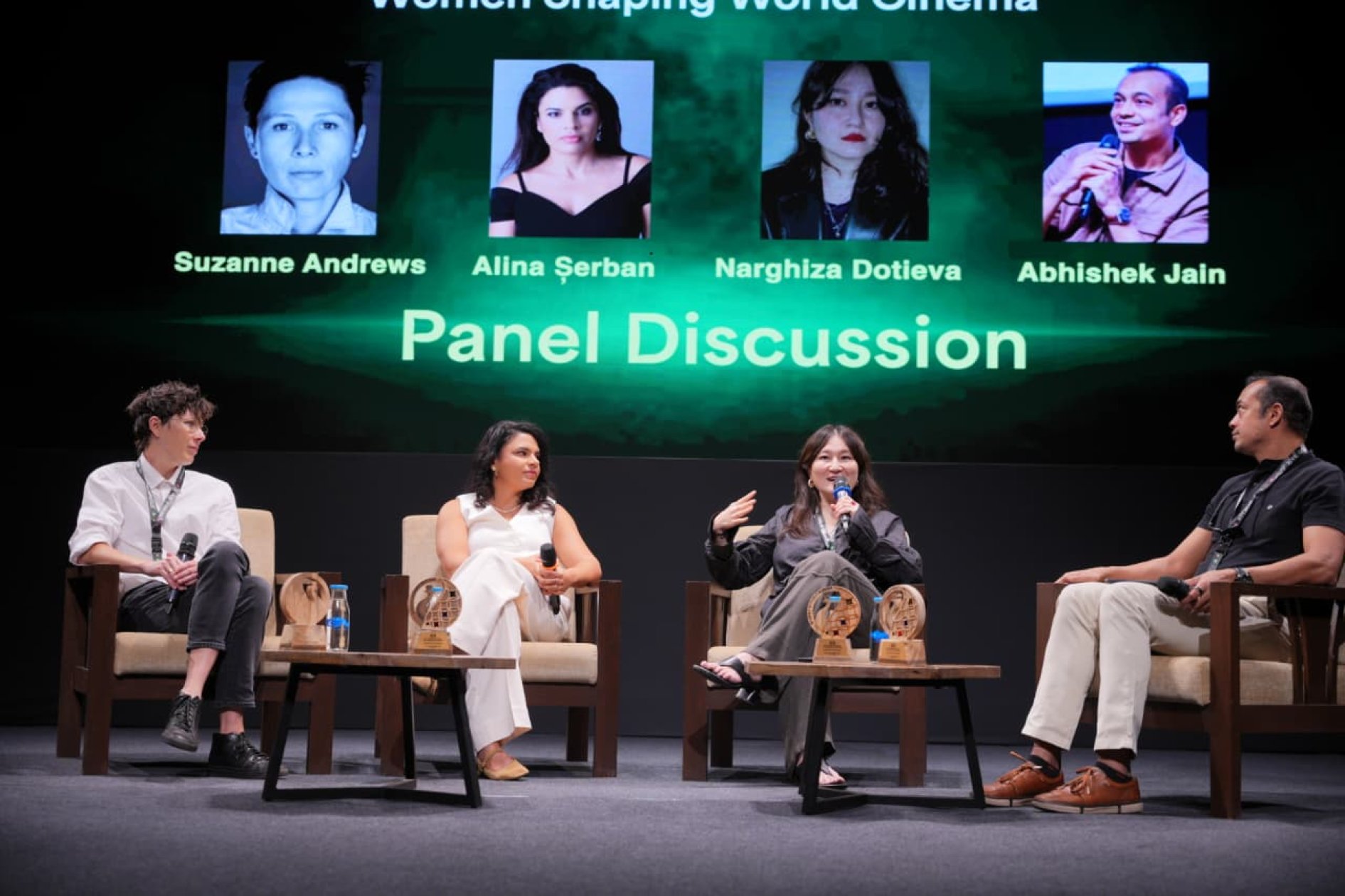
PANAJI: How do women filmmakers reclaim their narratives in an industry shaped by stereotypes, funding barriers and unequal opportunities? This question formed the crux of a panel discussion titled ‘Her Lens, Her Legacy, Her Liberty: Women Shaping World Cinema’, held on the sidelines of the 57th International Film Festival of India (IFFI) in Goa.
The session brought together Kyrgyz writer-director Narghiza Dotieva, Romanian-Roma actress and filmmaker Alina Șerban, and Mexican-American writer-director Suzanne Andrews Correa. Moderated by Indian filmmaker Abhishek Jain, the discussion explored the intersection of cultural identity, personal experiences and creative freedom in filmmaking.
Speaking about the influences behind her work, Dotieva recalled growing up in a small lakeside fishing town in Kyrgyzstan, where her grandfather's recitations of traditional oral poetry introduced her to the art of storytelling. After working in advertising, she ventured into filmmaking by funding her initial projects independently.
Her films draw from Kyrgyzstan's literary and cultural heritage, including the epic Manas. Her feature debut, Skylark, explores borderland histories while engaging with emotions that transcend geographical boundaries.
For Șerban, participating in IFFI was an emotional experience that brought her closer to her ancestral roots. Born into a Roma family in Bucharest, Romania, she spoke about the historical connections between the Roma community and Rajasthan, including linguistic links that point to their Indian origins.
Having faced prejudice and marginalisation during her childhood, Șerban turned to theatre and cinema as platforms to challenge stereotypes. Through her work, including her feature directorial venture I Matter, she seeks to give the Roma community greater agency in telling its own stories, focusing on resilience, dignity and identity.
Correa, meanwhile, spoke about the long creative process behind her directorial debut, La Cazadora (The Huntress). Set in Ciudad Juárez, Mexico, the film was inspired by real-life incidents of femicide and violence against women. What began as an expression of anger gradually developed into an empathetic portrayal of desperation, survival and women's agency.
The filmmakers also examined the institutional and financial barriers that continue to affect independent cinema. Correa pointed out that producers are often reluctant to invest in stories dealing with difficult or uncomfortable subjects, preferring narratives considered commercially safer. Women directors, she said, also face the additional burden of having to repeatedly establish their credibility.
Șerban shared her experience of receiving funding rejections because her scripts did not conform to stereotypical representations of the Roma community. Both filmmakers emphasised that women and filmmakers from marginalised communities must be recognised for their artistic merit rather than included merely to fulfil representation quotas.
Dotieva stressed the importance of film festivals and audiences in supporting distinctive voices and stories emerging from culturally diverse and underrepresented regions.
The discussion concluded with a message to aspiring filmmakers to draw from their own experiences and remain connected to their cultural and emotional identities. The panellists observed that stories rooted in specific communities and local realities can connect with audiences across borders when told with honesty and authenticity.