For a mine to produce one ounce of platinum, rock drillersoperating 50-pound hand-held machines must break about 10 tons of raw ore,sometimes more than a mile underground. For decades in the grim, dusty platinumbelt north of Johannesburg, locals have been displaced, had their farmlandtaken away and seen jobs being offered mainly to migrant laborers. As thepopulation of single men in the area has grown, social problems ” violence,prostitution, HIV/AIDS and alcohol abuse ” have seethed to the surface like thesewerage around the growing number of shack settlements.
South Africa now faces a challenge of a similarly gravenational scale to restore social harmony in the wake of the killing by policeof 34 striking miners at Marikana on August 16. Like no other event, the lethaloperation has thrown into sharp focus the fragile relationship established atthe end of apartheid in 1994 between government, employers, labor unions, lawenforcers, the justice system and ordinary people. The fields that hold anestimated 80 percent of the world's platinum reserves are emerging as thetesting ground on which the country's democracy will stand or fall.
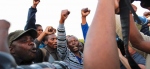
"What we have seen is that if you do not stand up as apeople, nothing is going to change," mineworker Thebe Seshanke told reportersvisiting the Lonmin mine at Marikana. Ten people ” including two policeofficers and two security guards ” died there in the six strike days leading upto the barrage of gunfire that left 34 dead, 78 injured and led to 270 arrests.And the crisis is not over. "We cannot go back to work. It would bedisrespectful to the people who died," Seshanke said.
The wildcat strike at Marikana began when 3,000 rockdrillers demanded three-fold pay increases to bring their monthly wages to12,500 rand ($1,470) but were not supported by the dominant National Union ofMineworkers (NUM). In a sector with no central bargaining arrangement, violencewas sparked by rivalry between labor unions and, according to some reports,jealousy of higher-paid subcontractors.
The world's three largest platinum producers ” AngloAmerican Platinum, Implats and Lonmin ” employ about 135,000 people between themin South Africa. Lonmin, the third largest, laid off 9,000 of its 34,000workers at Marikana last year. It was looking to follow an industry trend andcut production in the face of a continuing slump in demand and price since the2008 recession. Earlier this year, rival platinum belt company Impala fired17,200 workers, 13,000 of whom had embarked on a strike for better pay.
In tandem with the rise and fall of platinum, the AfricanNational Congress government's credentials to govern have been sliding. Aroundthe country, violent service delivery protests have become a daily reality.Beset with crime and unemployment rates exceeding 50 percent, townshipresidents have lost patience with corrupt local politicians who have failed todeliver water, sanitation or textbooks.
The disconnect between the South African people and theestablishment was made complete at Marikana through the scenes of highlyequipped police opening fire on men carrying traditional clubs and spears. Theimpact on public opinion of the three-minute blast of gunfire was all thegreater because the recipients of the bullets, who according to autopsy resultsleaked to The Star newspaper were mostly shot in the back, were migrant workerssupporting extended families all over the country.
As if to introduce a final alienating wedge between SouthAfricans and the authorities, the state prosecutor last week invoked a legaltool often used in the apartheid era ” the '"common purposedoctrine." He used it to upgradethe 270 detained miners' charges from public order offenses to the murders oftheir 34 colleagues. After an outcry, the charges were dropped on Sunday, September2, but prosecutors said the miners could be charged again later.
President Jacob Zuma has indicated he would like to keep hisseat when the ANC holds leadership elections in December. The judicial inquiryhe has commissioned into the killings at Marikana is not due to report untilthe end of January. But that may not save him. Marikana has potential to be theevent that sparks South Africa's long-talked-about "secondtransition," the point at which the country reappraises the compromisesand deals that were struck to secure the peaceful passage from apartheid toblack majority rule in 1994.
The Marikana killings brought South Africa face to face withan ugly picture of itself as a place in which poor workers find themselvesranked against an unholy alliance of the government, the National Union ofMineworkers, Lonmin, the police and the judiciary. Now this young democracy,just 18 years old, must decide how high a price it is prepared to pay for everyounce of precious mineral it extracts from its subsoil.