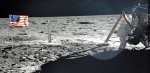
The blank check from government that financed adventures inthe Cold War-era is no longer available, with today's missions depending moreon the private sector and international cooperation -- often because of budgetconsiderations. Armstrong, who died on August 25, criticised President BarackObama in 2010 for cost-cutting plans that, in part, retired the US spaceshuttles -- effectively ending the American role in sending humans out ofEarth's orbit.
Now, US astronauts -- whose predecessors worked feverishlyto beat Russia's efforts to the moon -- ride as passengers on Russianspacecraft, and hopes for NASA's own future manned flights to the InternationalSpace Station are pinned on private companies, which are trying to buildcheaper shuttle alternatives. Armstrong feared becoming reliant on othernations for spaceflight and that private companies would take too long to developnew space-worthy vehicles.
US analysts, however, say the country's space program had nochoice but to change, given new global realities. "The world evolves,humanity evolves, our capabilities evolve. And the future of space exploration,therefore, must also evolve," said Jeff Foust, an aerospace consultant andthe editor of TheSpaceReview.com.
But there are no footsteps on Mars, and many other hopesthat were dreamed of when Armstrong and Apollo 11 crewmate Buzz Aldrin helpedmankind make its "giant leap" in 1969 are still unrealised. RogerLaunius, senior curator and historian at the Smithsonian National Air and SpaceMuseum, noted that Obama's cuts at NASA follow two decades of financialslashing since the Cold War ended. Still Launius insisted the US space programcontinues to make important gains -- not least of which was landing theCuriosity rover on Mars last month. These missions, however, have often failedto stoke the public's imagination the way Apollo's astronauts once did.