


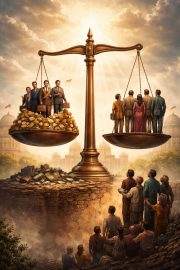
At present, “double-engine” governments appear effective and proactive, no doubt. Yet, despite welfare efforts, poverty and inequality remain serious challenges. This suggests that benefits do not reach all sections of society equally. We often say that government is “of the people, by the people, for the people”. But are people truly benefiting and satisfied today? Benefits should reach citizens fairly, in line with provisions such as the 7th Pay Commission and future pay revisions.
Abraham Lincoln’s phrase describes democracy as a system meant to serve its citizens through active participation. While modern governments introduce welfare schemes and public services, their effectiveness varies. Issues such as inequality, corruption, and uneven implementation raise doubts about whether these measures truly serve the common person. Governments run various schemes, public services, and social security programmes to improve quality of life. However, are people satisfied? For instance, schemes like the Grih Aadhar programme are revived every six months. Why is this necessary? Do beneficiaries stop needing support after six months, or does their income suddenly improve?
Regular elections, as in India, give citizens the power to choose their representatives and take part in governance. This should ensure that public voices shape policy. But do these policies satisfy the common person? Governments may be proactive, but effectiveness must be judged by outcomes. Efforts in infrastructure, education, and healthcare do contribute to public welfare. In places like Goa, some of these policies have been implemented well. However, there are also concerns that, at times, decisions favour powerful groups rather than the general public.
There are frequent concerns about misuse of power, lack of accountability, and governments acting in their own interest rather than that of the people. While democracy provides the framework for a government that serves its citizens, real success depends on transparency, accountability, and active public engagement. Government schemes are meant to meet the needs of different sections of society and uplift the nation. Social security is important, but people must receive real and adequate benefits. After all, the government exists because of the people”that is the true meaning of democracy. It must serve and satisfy the public honestly and effectively.


