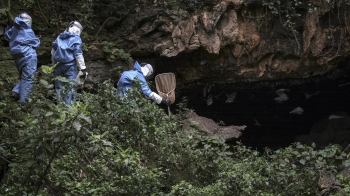
Guinea confirmed a case of Marburg disease, the World Health Organization said on Monday, the first recorded in West Africa of the lethal virus that’s related to Ebola and, like Covid-19, passed from animal hosts to humans. The virus, which is carried by bats and has a fatality rate of up to 88 per cent, was found in samples taken from a patient who died on August 2 in southern Gueckedou prefecture, the WHO said.
“The potential for the Marburg virus to spread far and wide means we need to stop it in its tracks," said Dr Matshidiso Moeti, WHO Regional Director for Africa. The discovery comes just two months after the WHO declared an end to Guinea’s second outbreak of Ebola, which started last year and claimed 12 lives. In Geneva, the WHO said it considered the threat “high" at the national and regional level, but “low" globally.
WHAT IS MARBURG VIRUS?
Marburg is a highly virulent disease that causes hemorrhagic fever and is in the same family of viruses that cause Ebola. According to WHO, two large outbreaks that occurred simultaneously in Marburg and Frankfurt in Germany, and in Belgrade, Serbia, in 1967, led to the first recognition of the disease.
The outbreaks were part of laboratory work using African green monkeys (Cercopithecus aethiops) imported from Uganda. "Human infection with Marburg virus disease initially results from prolonged exposure to mines or caves inhabited by Rousettus bat colonies," WHO said.
Once an individual is infected with the virus, Marburg can spread through human-to-human transmission through direct contact, with the blood, secretions, organs or other bodily fluids of infected people, and from surfaces and materials contaminated with these fluids.
HISTORY
The first epidemic occurred in Germany and Yugoslavia after infected green monkeys were imported to those countries. There was a 23% fatality rate there among 31 patients. The worst epidemic was in Angola in 2005, with 252 infections and a 90% death rate. This epidemic spread through the reuse of contaminated transfusion equipment in a paediatric ward. As with Ebola, transmission can occur at funerals and in handling bodies. There was one report of sexual transmission.
Two notable illnesses occurred among tourists who had gone caving in Uganda in 2009, Forbes reported. The first was a Dutch woman who died after being “bumped” by a bat. The second was a Colorado woman who developed a febrile illness and became critically ill after a trip to Uganda. While initially no diagnosis was made, she requested retesting after learning about the Dutch woman; both had been in the same cave. She was subsequently diagnosed with Marburg.
HOW DOES IT SPREAD?
Marburg virus is usually associated with exposure to caves or mines housing colonies of Rousettus bats. Once caught by a human, it is spread through contact with bodily fluids of infected people, or with contaminated surfaces and materials, according to the WHO. There have been 12 major Marburg outbreaks since 1967, mostly in southern and eastern Africa.
Both the Marburg case and this year’s Ebola cases were detected in Guinea’s Gueckedou district, near the borders with Liberia and Ivory Coast. The first cases of the 2014-2016 Ebola epidemic, the largest in history, also were from the same region in south-eastern Guinea’s forest region.
SYMPTOMS
The person infected with the virus will experience high fever, severe headache and severe malaise accompanied by Muscle aches and pains. Meanwhile, severe watery diarrhoea, abdominal pain and cramping, nausea and vomiting will begin on the third day, which can persist for a week. "The appearance of patients at this phase has been described as showing “ghost-like” drawn features, deep-set eyes, expressionless faces and extreme lethargy," WHO said.
Fatal cases usually have bleeding, often from multiple areas including vomits and faeces often accompanied by bleeding from the nose, gums and vagina. Involvement of the central nervous system can result in confusion, irritability and aggression, the global health agency said.
Death usually occurs between 8 and 9 days after onset, usually preceded by severe blood loss and shock.
TREATMENT
WHO said that it can be difficult to clinically distinguish Marburg virus disease from other infectious diseases such as malaria, typhoid fever, shigellosis, meningitis. The diagnostic of the virus can be done using antigen detection tests, serum neutralization tests, virus isolation by cell culture or through RT-PCR.
While a range of potential treatments including blood products, immune therapies and drug therapies are currently being evaluated, there is no proven treatment or vaccine available for Marburg virus disease. Rehydration with oral or intravenous fluids can be analysed to delay the outcomes.
There are no known effective antivirals or vaccines and treatments for Ebola are not effective in Marburg. Supportive hospital therapy should be utilized, which includes balancing the patient’s fluids and electrolytes, maintaining oxygen status and blood pressure, replacing lost blood and clotting factors, and treatment for any complicating infections, says CDC.