THE GOAN
PANAJI
As the First World Konkani Music Mega Convention organisedby Mandd Sobhann in Mangaluru draws to a close on November 15, Goan groups arepreparing to take centre stage on its final day. Part of an ambitious GuinnessWorld Records attempt to bring Konkani singers together, the convention hasbrought together voices from different regions to celebrate the language andits music. For the participating Goan groups, the occasion is not just abouttaking part in a record attempt, but also about sharing their music,traditions, and cultural identity with a wider audience.
Musical Sisters
The Sisters of the Congregation of the Holy Family of Nazareth, Sancoale,came together in June 2026 following an initiative by Goa Co-ordinator MichaelGracias. Despite their teaching responsibilities and commitments in theircommunities and parishes, the sisters practised twice a week, with memberstravelling from Canacona, Anjuna, Navelim and St Estevam, among other places.“I could see the zeal and enthusiasm of the group to get the right pitch andrhythm,” said Sr Jyoti Joanita D’Costa. She added that the sisters feel proudto represent Goa and the Konkani language on a global platform.
Mando traditions
The Sant Antonicho Svadik Nad Majorda Mando group, led by Albino Fernandes,has been participating in the Mando Festival organised by the Goa Cultural andSocial Centre, Panaji, since 2008. The experience has helped the membersunderstand the nuances of Mando and Dulpods, including their styles, music andsinging traditions. “It is a great honour for me and my team to take part inthis Konkani singing event,” said Fernandes, adding that the group haspractised extensively for the performance. He also thanked Michael Gracias forhis composition and arrangements, and Mandd Sobhann for the opportunity toperform on the final day.
Generations together
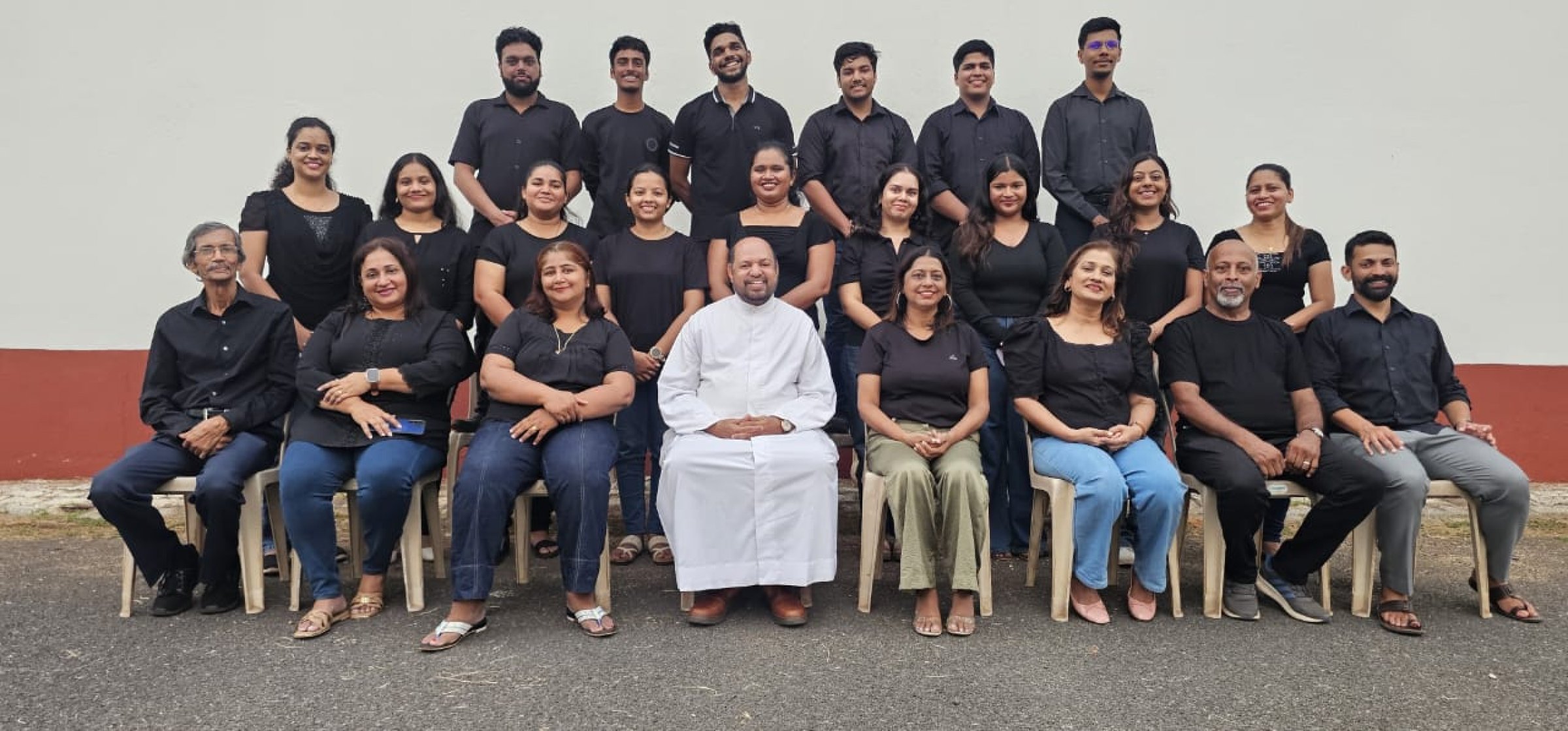
Bringing together generations of singers is the St Sebastian Church choir,coordinated by Philoo Cardozo with the support of parish priest Rev Fr UbaldoFernandes. The group comprises senior and junior choir members, along withmusicians Shane Fernandes, Jyoti DaCosta, Ronan, Kingsley, Rayhann and Dasha.Many are also part of ‘Aquemchim Surgam’, the Mando group founded by Cardozo.Their performance will feature original compositions by Fr Ubaldo Fernandes andPhiloo Cardozo, traditional Mandos, a song on Goa with lyrics by DebsterAlmeida and music by Rayhann Cardozo, as well as the hymn dedicated to theirpatron, St Sebastian. One of the senior-most choir members, Felix Dias, isequally excited to perform with the group.
Cultural legacy
Another Goan contingent, Kala Niketan, brings with it a long associationwith Konkani theatre and culture. Formed in 1991, the group has worked inKonkani tiatr, Goan folklore, literature and cinema, performing across Goa andbeyond. Its production ‘Goycho Saib’ drew over 3,000 spectators at Vamanjoor,Mangaluru, while its staging of ‘Cavelchi Sundori’, the first tiatr by PaiTiatrist Joao Agostinho Fernandes, took the production to Goa, Sindhudurg,Mangaluru, Pune and Mumbai. Its 28-member team has been rehearsing with a liveband since May 2026. “Through our performance and involvement in this event, weare strengthening the efforts of building a cultural bridge between Goa andMangaluru,” said Michael Gracias, who is also the Goa team coordinator and anExecutive Committee Member of Mandd Sobhann. Kala Niketan is the first Goanteam to register for the record attempt and will be the last Goan group toperform, as well as the second-last act on the schedule.
Beyond records
As the final performances bring the convention to a close, the comingtogether of these groups is a reminder that Konkani music is carried forwardnot just by individual artists, but by choirs, cultural organisations,religious communities and generations of passionate performers. Beyond thenumbers and the record attempt, the hope is that this gathering will encouragemore such platforms for artists to learn from one another, preserve traditionalforms and introduce Konkani music to newer audiences. After all, a record maycapture a moment in history, but it is the music, memories, and shared love forthe language that will keep it alive long after the curtains come down.