


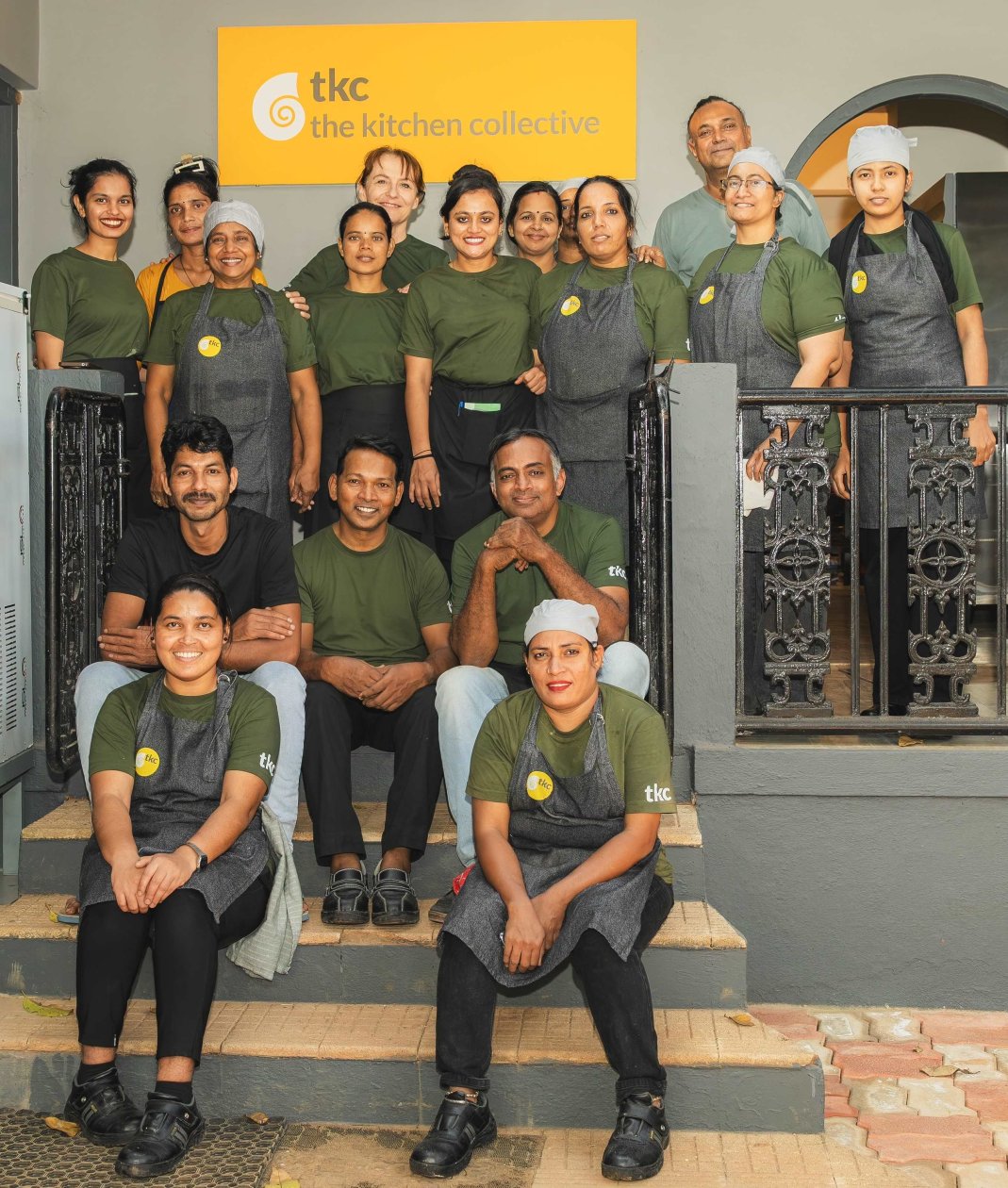
At The Kitchen Collective (TKC) in Sangolda, food is only part of the story. At its heart is a deeply committed attempt to turn everyday cooking skills into sustainable employment, personal independence and, eventually, long-term entrepreneurship for women.
A shared vision
Founded by Solomon Premnath and Sandra Rothboeck, TKC is a women-led community restaurant and professional culinary training centre. Both come from backgrounds in vocational training, with their collective work focused on connecting practical skills with valuable livelihood opportunities.
The couple spent several years in Bengaluru, working with social enterprises involving blue-collar workers, before moving to Switzerland for consulting. When their daughter went to France to study, they began considering a return to India. Goa, a place they had long loved, finally became home.
“We met a whole bunch of people who were doing different things, and then we thought this is an area where we could create an impact,” Solomon says. In Goa, they explored ways of working with young people before food emerged as a natural fit, deeply rooted in the rich diversity of people and food traditions. TKC focuses on food from Goa and the wider Konkan region, including Maharashtra, Mangalore and Kerala.
Training women
The women who come through the programme have varied backgrounds. Some come from economically weaker families, while others are from middle-class homes. What they share is a genuine interest in food and the pressing need for a livelihood opportunity.
“The idea is not to train people and just make them employees,” Solomon says. “We also want to help them become beneficiaries of an independent enterprise.”
TKC’s training goes far beyond basic recipes. Developed carefully with professional chefs, the competency-based programme covers hygiene, food safety, ingredients, cooking techniques, preparation, consistency, portioning and the practical functioning of a professional kitchen.
While many participants know how to cook at home, running a professional kitchen demands different skills, from maintaining consistency to handling customers and using point-of-sale systems efficiently.
The women are also trained to clean every part of the operation, from the kitchen and floors to the restaurant, toilets, and dishes. “If they want to run on their own, they better be prepared to do everything,” Solomon says.
Building independence
Participants receive a stipend during training and a bonus after completing six months. After formal training, they spend time in a culinary residency programme, learning to work as a team and understand the demands of a professional kitchen. They will then be assigned to work as a team in a satellite outlet of TKC in partnership with another entrepreneur.
The longer-term goal is to become a part of a collective enterprise. TKC hopes to partner with entrepreneurs looking to start food outlets. The entrepreneur would provide part of the investment and location, while TKC would provide trained women and operational support under a revenue-sharing model. It invites other local partners to co-invest in the satellite outlets. One outlet in Sangolda is already operating, another is underway, and a third is being planned.
Overcoming hurdles
Transportation remains a major hurdle in Goa, as women often struggle to reach Sangolda early in the morning. TKC initially reached out to self-help groups and panchayats, while word of mouth, social media, and news coverage now help bring in eager applicants.
Food and heritage
Food at TKC is rooted in knowledge and authenticity. The team works with people from different communities to understand traditional preparations. “You may find a recipe online, but you still don’t understand the taste profile,” Solomon says. “You need somebody from that community to tell you.” A woman from the Mangalorean Bunt community spent a week helping them understand the cuisine, and someone from Kerala assisted during Onam.
For Solomon, preserving that knowledge also means recognising the women who have traditionally carried it. “Women’s work is always hidden,” he says. “Some of the best food in the world is made by women, but all the glory often goes to the men.”
A trusted kitchen
TKC opened towards the end of December, serving delicious breakfast and lunch. Customers return because they deeply trust the food and hygiene. That cleanliness is deliberate; customers can see into the kitchen and observe food handling. Hygiene and personal cleanliness are taught as habits rather than practices followed only when watched.
The challenge now is financial sustainability. Solomon and Sandra have invested personal funds, but the social enterprise also needs steady revenue from the food business. The training is also partly supported by well-wishers in the community, who sponsor the training of the women.
Growing the model
The ambitious plan is to build multiple successful outlets, with the main central kitchen handling extensive preparation and smaller satellite kitchens focusing on finishing and service. The menu changes with the seasons and includes fish, vegetarian preparations, combo plates, and regional specials from the Konkan region. TKC also hosts food festivals regularly.
For Solomon and Sandra, the local restaurant is ultimately a means to a larger end: creating a safe space where women can take something they already know- cooking- and turn it into professional experience, steady income, and potentially a thriving business of their own.


