


THE GOAN
PANAJI
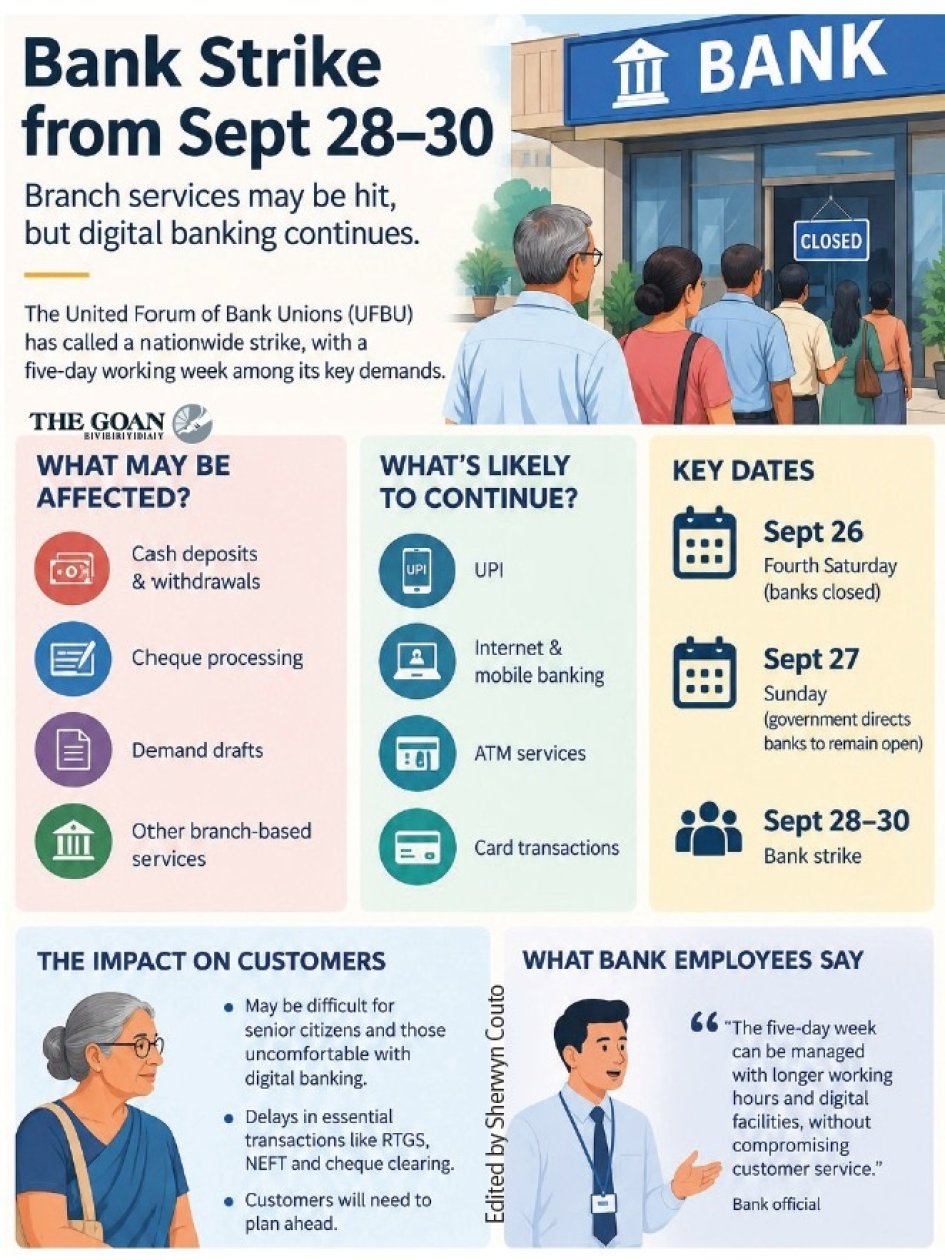
For those who still prefer walking into a bank rather than tapping through an app, three days without regular branch services can mean putting off a cash withdrawal, cheque deposit, or other essential transaction. This could concern customers, as the United Forum of Bank Unions (UFBU) has called a nationwide strike from September 28 to 30, with a five-day working week among its key demands.
The strike could affect over-the-counter services, cash deposits and withdrawals, cheque processing, demand drafts and other branch-based services. Digital services such as UPI, internet and mobile banking, ATMs and card transactions are expected to continue, although services requiring staff intervention could face delays. With September 26 being the fourth Saturday and September 27 a Sunday, the government has directed public sector banks and regional rural banks to remain open on Sunday, September 27, in an effort to reduce inconvenience to customers. A similar one-day nationwide bank strike was held on September 11, when public sector bank branch operations were affected in several parts of the country.
Senior citizens
Going on strike for a single day is one thing, but a strike extending over several days can be particularly inconvenient, especially for older people and those who are not comfortable using ATMs or e-banking and prefer visiting a bank for essential financial transactions. “For many people, especially senior citizens, visiting the bank in person is still the easier and more reliable option,” said Evelyn Siqueira, a corporate employee. This becomes more difficult when customers have to visit a branch for services such as RTGS, NEFT and cheque-related transactions, she noted, adding that prolonged closures could leave such customers with fewer convenient options for getting their banking work done.
For senior citizens like Martha Vaz from Margao, online banking is still not an easy alternative. She admits that while visiting a bank can mean waiting or even being sent from one counter to another, she still finds it more reliable than navigating online systems. “While we often have to wait or they keep sending us back and forth, it seems more reliable to me than whatever online system they have,” she said.
Timing concerns
Customers who have branch-based work pending will face inconvenience due to the timing of the strike, with the closure coming immediately after the weekend. While some transactions can simply be postponed, others may have to wait until branches reopen, leaving customers to plan their banking accordingly.
However, retired bank employee Aleixo Francis Vaz feels the impact of the strike on the public may be limited, given the number of banking services now available outside branch premises. “Definitely, the bank strike will hurt society at large,” he said, while pointing out that the demand for a five-day working week is an old one. He noted that institutions such as LIC, RBI and government offices have remained closed on Saturdays for years, while ATMs and cash vending machines continue to operate even on regular holidays. With digital payment platforms such as GPay and Paytm also widely used for everyday purchases, he feels the strike may not significantly disrupt the public. At the same time, Vaz said he sees the demand from bank employees as genuine. “As a former bank employee, I feel the upcoming strike is a very genuine demand,” he said, adding that bank employees have had to repeatedly agitate to have their demands addressed.
Banking side
From the banking side, Senior Manager Ajinkya Ramakant Tawde said the strike may inconvenience customers who depend on branches for cash transactions, clearing work and documentation, though digital banking, UPI, ATMs and other facilities have reduced the need for physical visits. On the five-day work week, he said banks could compensate by extending daily working hours. “Our representative unions have already provided their willingness to increase daily working hours to compensate for the remaining Saturdays,” he said, adding that digital channels and self-service facilities would help ensure essential services continue. “It has always been the primary objective of bank employees to provide uninterrupted and convenient customer service,” he said.
For customers, the three-day strike could therefore come down to how much they still depend on a physical branch. While digital options can cover many routine transactions, those who are less comfortable with them may find the closure harder to navigate. At the same time, bank employees maintain that the proposed five-day week can be managed without compromising customer service, with longer working hours and digital facilities helping bridge the gap.


