


THE GOAN
PANAJI
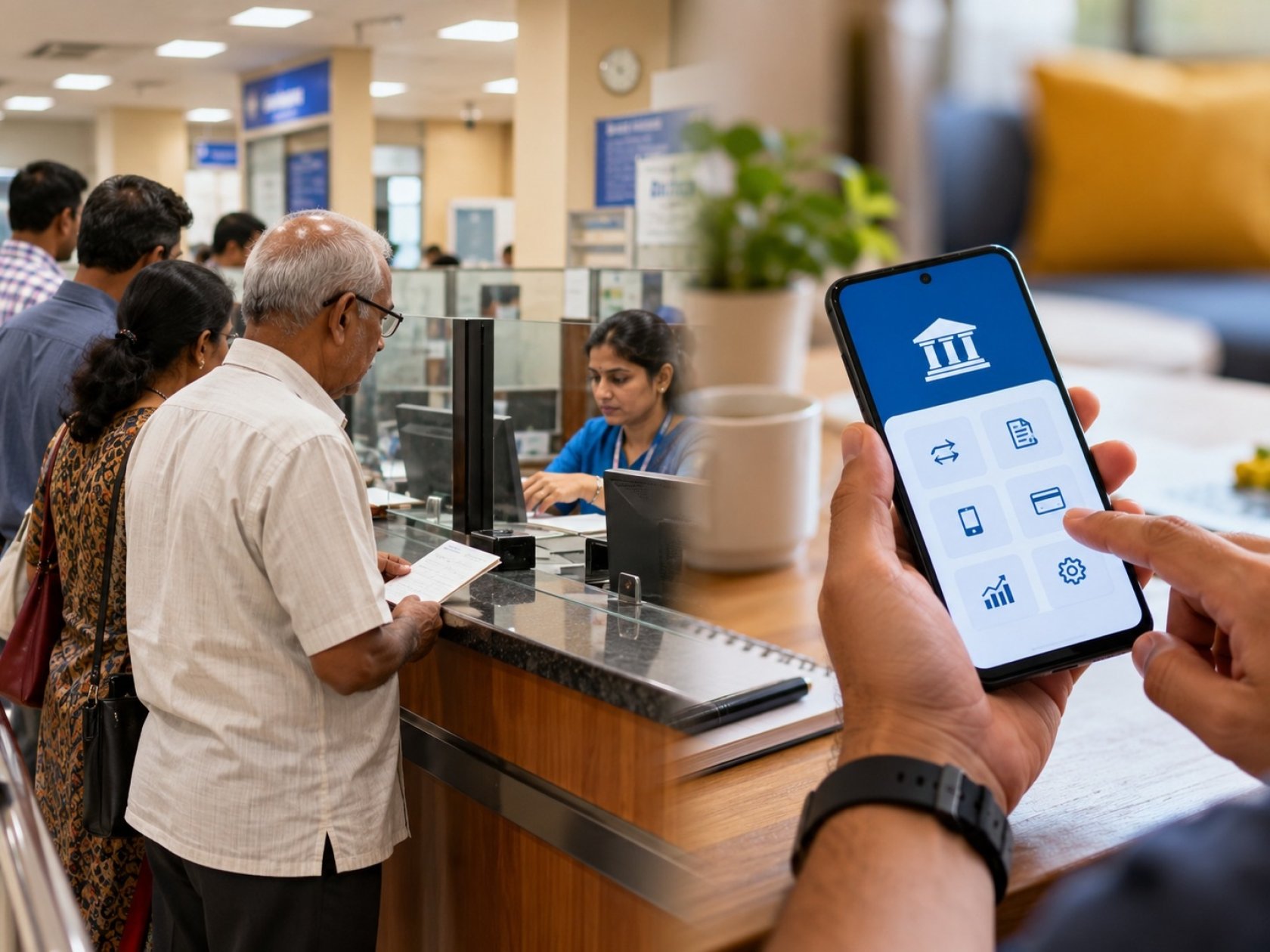
There was a time when going to the bank meant keeping aside an hour or two, carrying a passbook or cheque book and waiting for your turn at the counter. Today, for many customers, the same banking task ends with a few taps on a phone. A money transfer, bill payment or account check can be done without leaving home. But the bank branch has not disappeared from people's routines. It has simply become a place they visit when a phone cannot do the job, or when they would rather speak to a person than work their way through an app.
Hinal Hirani, Wealth Relationship Manager at IDFC, says the change is visible in the reduced footfall at branches. “Footfall is comparatively less because our online services are available and people can do most of their routine banking from their phones. The people who still come into the branch are mostly elderly customers, who may prefer speaking to someone directly or need assistance with their banking,” she remarks. For routine banking, however, the shift is clear. UPI, mobile banking and internet banking have made it possible to transfer money, pay bills, check balances and carry out several other transactions from almost anywhere. Senior Manager Ajinkya Ramakant Tawde says customers across age groups are becoming more comfortable with mobile apps and internet banking portals because they can use them at their convenience.
Still, having access to digital banking does not mean every banking requirement can be handled online. Loans, investments, documentation, and transactions requiring personalised assistance can still bring customers to a branch. For someone applying for a loan, completing certain documentation or seeking financial guidance, speaking to a bank employee can be more useful than navigating a screen. Tawade sees the two forms of banking as complementary rather than competing with each other, particularly as customers continue to have different levels of comfort with technology. “There will always be customers who are comfortable doing their regular banking through digital channels, while others may still want the assurance of dealing with a person, especially when the transaction is more important or complicated,” he says.
Retired bank employee Aleixo Francis Vaz believes people will have to become more familiar with online services as banking continues to move towards digital platforms. His point is that smartphones are no longer restricted to a particular section of society. “The garbage collectors, rag pickers and even the house maids have the most updated smartphones,” he says. In his colony, he adds, most domestic workers even come to work on their own scooters.
But a smartphone in one's hand does not automatically mean confidence with online banking. The concern is not simply whether someone owns a device, but whether they know how to identify a genuine banking message, avoid suspicious links and carry out a transaction safely. That is where another problem enters the picture: scams. Hirani says that scams “depend on the person”, while banks take precautions from their end. She notes that elderly customers often click on links without realising the risk. “Banks may stop such transactions especially if they detect unusually large or suspicious activity,” she says.
For customers who still depend on branches, the three-day bank strike from September 28 to 30 could mean postponing work that requires an in-person visit. Tawde says banks will remain open on Sunday, September 27, as per RBI directions, to reduce inconvenience to customers. The strike is primarily over the demand for a five-day working week. If the demand is accepted, he says working hours could be extended by 30 to 45 minutes on working days. Tawade also points out that banks already remain closed on the second and fourth Saturdays.
For most people, however, the bigger change is happening outside the strike dates. Banking is becoming something that can be done while travelling to work, sitting at home or standing in a queue for something completely unrelated. Yet, when the transaction involves paperwork, a loan, an investment, or simply the need to ask someone a question, the old-fashioned bank counter still has a purpose. While the bank may no longer be the first stop for every transaction, it continues to remain the stop for people when banking needs more than just a password and a phone screen.


