


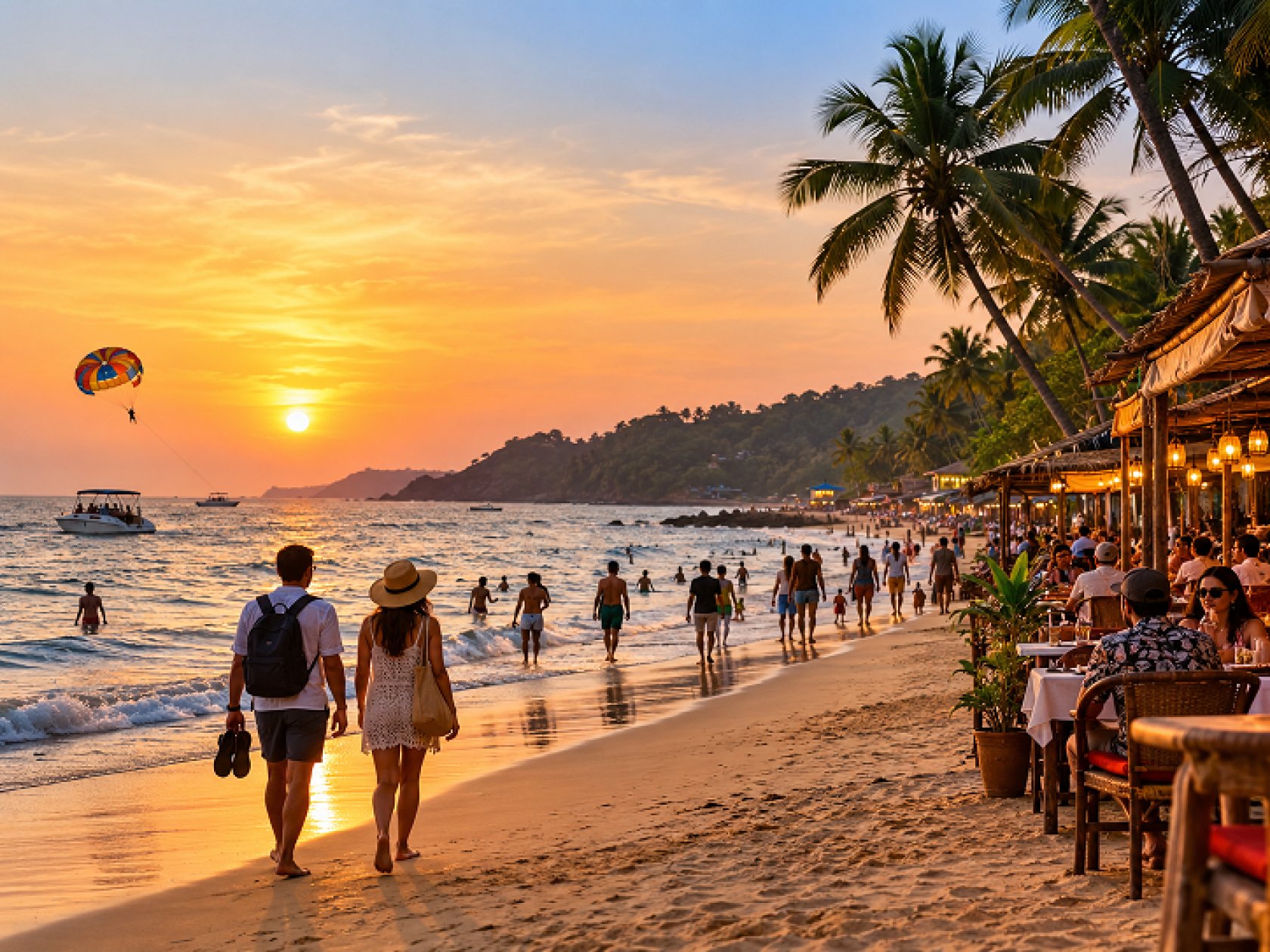
For decades, Goa has held a place of its own on India’s tourism map. Its beaches, sunsets and slower pace of life have long drawn visitors. With World Tourism Day being observed today, questions over what Goa offers today are worth asking.
But with cheaper destinations and fewer hassles competing for travellers, is Goa slowly losing some of its appeal? The charm remains, but complaints have grown. Recent travel agency scams have added to concerns over taxi and transport issues, high prices, and the gap between the Goa promoted on social media and the experience tourists sometimes find on arrival. We spoke to people from the tourism and travel sector to understand where Goa stands today, what works and where it falls short.
Industry concerns
“When issues like this happen in a state like ours, where tourism is such a large part of our lives, they do hamper the image. But when action is taken promptly, it reassures tourists that their concerns will be addressed,” says Jack Sukhija, president of TTAG. “The industry here is on par with the best in the world in terms of transparency and service standards. However, strict action should be taken against the few rotten apples, especially touts who scam tourists,” he remarks.
Travel influencer Kevin Pinto says social media has made negative incidents harder to contain. “When incidents like this happen, there is definitely an impact, especially today because social media is often the first place people go to check what a destination is really like,” he says. He adds that a few incidents should not define Goa, pointing to its people, culture, beaches and food.
The concerns do not take away from the importance tourism continues to hold for Goa. The sector supports a wide range of businesses and people offering visitor experiences. For many in the industry, the question is how Goa can ensure that the experience keeps pace with what travellers now expect.
Building trust
Ahraz Mulla, who runs GAC Travel Agency, suggests tourists avoid “fancy online advertisements” and visit local offices before booking. A visible online presence and meeting stakeholders can also help build trust.
Mihir Negandhi, proprietor of ThatChefWhoClicks, which works in production and social media, stresses caution. He believes scams may never disappear completely, but better verification and strict action could help reduce them. “Tourists should be encouraged to book through registered and verified businesses. Today, a strong and transparent digital presence, genuine reviews, clear contact details, and availability over calls or video calls can help businesses build credibility and trust,” he says.
Meanwhile, Roland Martins, Co-ordinator, GOACAN, feels authorities and tourism bodies must make reliable information easier to access. “First, the Department of Tourism must put out correct and updated information,” he says. Martins also feels the authorities should provide a system to cross-check information, along with a helpline email ID or Quick Response WhatsApp number for grievances.
Beyond beaches
Yet, there is more to Goa’s tourism story than the problems that make headlines. Kiyara, a Marketing Executive at Soul Travelling, points to growing interest beyond Goa’s familiar beach-and-nightlife image.
“Goa has so much more to offer beyond the traditional image of beaches, nightlife and parties,” she says, pointing to interest in its heritage, food, culture, nature, villages and local communities. “We cannot simply market a better image of Goa; we have to build an ecosystem that supports it. That means clear pricing, easier ways for tourists to verify genuine operators and better service standards,” she notes.
For Negandhi, visitors and locals also have a role to play. “Goa continues to remain a beautiful and welcoming destination. Visitors should come, enjoy Goa responsibly, respect its people and culture, and leave with positive memories. There is always room to further improve the tourism experience,” he remarks.
Changing expectations
According to Pinto, Goa’s tourism image is changing with travellers’ expectations. “I think Goa’s image is evolving rather than simply improving or declining. As someone from Goa who also travels around India and internationally, I see that people are still extremely interested in Goa. But today’s traveller is more informed and has much higher expectations,” he says.
He adds that Goa must improve the overall tourist experience, from transportation and accommodation to public spaces and hospitality. Pinto also feels Goa’s better side deserves more attention. “There are so many responsible local businesses, incredible experiences, our culture, food, heritage and people doing genuinely good work, but these stories don’t always go viral,” he says. He believes negative incidents should be addressed rather than hidden.
For Pinto, the way forward is to address problems while preserving Goa’s appeal. “If Goa can combine accountability with the warmth and hospitality that it has always been known for, I think we can build an even stronger tourism experience for the future,” he reckons.
The way forward
Ultimately, Goa’s tourism story is not only about protecting its image, but about making sure the experience lives up to it. As traveller expectations change, addressing practical concerns while preserving Goa’s culture, character and hospitality will remain key to keeping its appeal relevant.


