


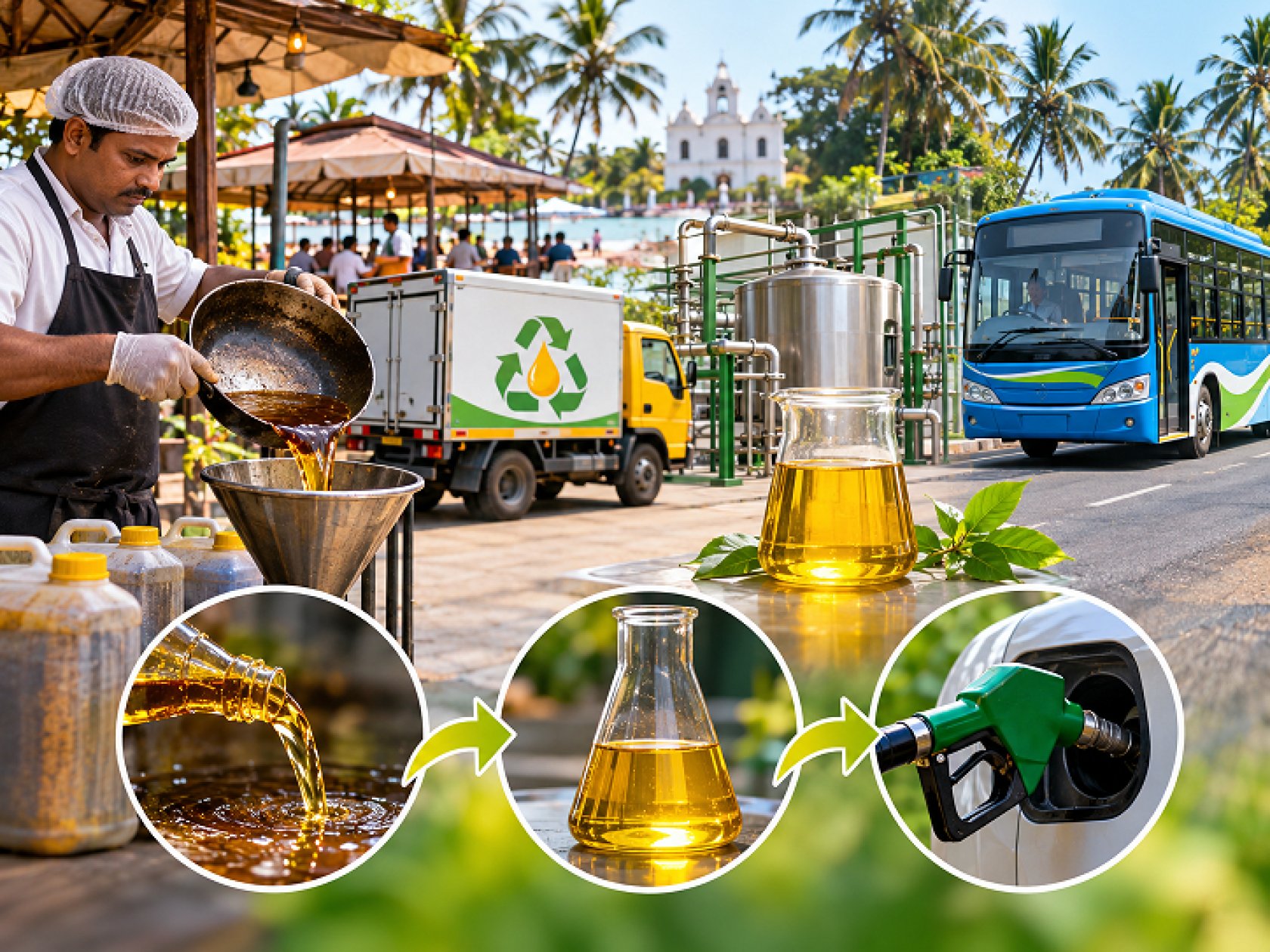
What if discarded cooking oil could be given a second life as fuel? With hotels and restaurants across Goa generating substantial quantities of used cooking oil, the State is exploring ways to convert it into biodiesel and eventually use the fuel to power Kadamba buses. The initiative highlights the wider potential of biofuels, their environmental and economic benefits, and the challenges involved in making them a viable alternative to fossil fuels.
Biofuel is a broad term for fuel produced from biological materials such as plants, agricultural waste, animal fats and used cooking oil. Biodiesel is one type of liquid biofuel derived from oils and fats. In simple terms, all biodiesel is biofuel, but not all biofuels are biodiesel.
Collection network
Byufuel India Pvt Ltd has established a used cooking oil (UCO) collection network across Goa, supported by dedicated vehicles and three warehouses in North, South and Central Goa. Its teams coordinate regular collections from hotels, restaurants and other food businesses, ensuring that the oil is gathered, stored and transported through an organised system.
“We have invested in the necessary infrastructure to ensure timely and reliable UCO collection across Goa,” said Varsha Karnad, Regional Manager, Goa, at Byufuel India Pvt Ltd.
Every collection is digitally recorded, with a challan documenting the quantity received from individual establishments. The company’s operations are also ISCC-certified, ensuring traceability and supporting sustainability throughout the supply chain.
Once collected, the oil is sent to authorised processing facilities, where it is treated and converted into biodiesel. Explaining the significance of the process, Karnad said it transforms waste into a renewable energy resource without requiring additional agricultural land or competing directly with food production.
“UCO is not merely waste; it is a valuable renewable feedstock that supports India’s decarbonisation, energy security and circular economy objectives,” she said.
Depending on its source and processing, biodiesel produced from used cooking oil can also have lower lifecycle greenhouse gas emissions than conventional diesel.
Processing challenges
However, converting used cooking oil into biodiesel presents several challenges, according to the Goa Energy Development Agency (GEDA). One of the main concerns is the varying quality of oil collected from different establishments. Differences in free fatty acid content, moisture levels and impurities mean that the oil cannot be processed uniformly and must undergo pre-treatment to separate the usable portion.
“Used cooking oil is not a single material,” GEDA pointed out.
The cost of processing is another concern. At the proposed procurement price of Rs 40 per litre, if only half of the collected oil is recovered as usable feedstock, the raw material cost could rise to around Rs 80 per litre of output. The heavier residue would also require a separate market, such as industrial burner fuel, to make the process economically viable.
GEDA also cautioned against the diversion of used cooking oil to unauthorised buyers, who may return it to the food chain or use it for soap production and adulteration.
“Traceability and enforcement, rather than collection logistics, will decide how much oil actually reaches a processor,” the agency said.
With collection volumes in Goa remaining relatively modest and fluctuating according to tourist activity, GEDA noted that processing plants could face high fixed costs during periods of low supply. It suggested expanding processing capacity in phases as collection volumes increase and ensuring that the heavier residue has a clearly defined end use, rather than merely shifting the waste-disposal problem further down the chain.
Ensuring compliance
The Freshly Fried programme is another step towards encouraging food establishments to handle used cooking oil responsibly, said Harald Sigl, Head of Corporate Communication, Public Affairs and Sustainability at Muenzer Bharat Pvt Ltd.
The initiative recognises establishments that meet frying-oil quality standards and maintain records of proper disposal. Its patches will carry QR codes, allowing customers to access information about oil-quality checks and disposal records.
“Our priority is to help restaurants meet their obligations and make compliance practical in their daily operations,” he said, adding that the company was working with its customers to help them comply with the Goa Gazette notification issued in August.
However, a steady supply of certified used cooking oil will be essential for the collection network to support increased biodiesel production.
“Certification helps unlock collection potential, while growing collection volumes give investors the confidence to commit capital,” he explained.
Existing authorised processors can handle the collected oil as the network develops, while verified collection volumes will help determine the need for additional processing facilities. Sigl also stressed the importance of digital tracking, independent certification and action against unauthorised diversion. Equally important, he said, is ensuring that there is a viable market for both the collected oil and the finished fuel.
The road ahead
Goa’s initiative offers an opportunity to address two concerns simultaneously: the safe disposal of used cooking oil and the search for alternatives to conventional fuels. However, establishing a collection network is only the first step. Ensuring that the oil reaches authorised processors, can be converted economically and is available in sufficient quantities will be crucial to the scheme’s success.
Its long-term viability will ultimately depend on how effectively these challenges are addressed and how efficiently the collection and processing network expands.


