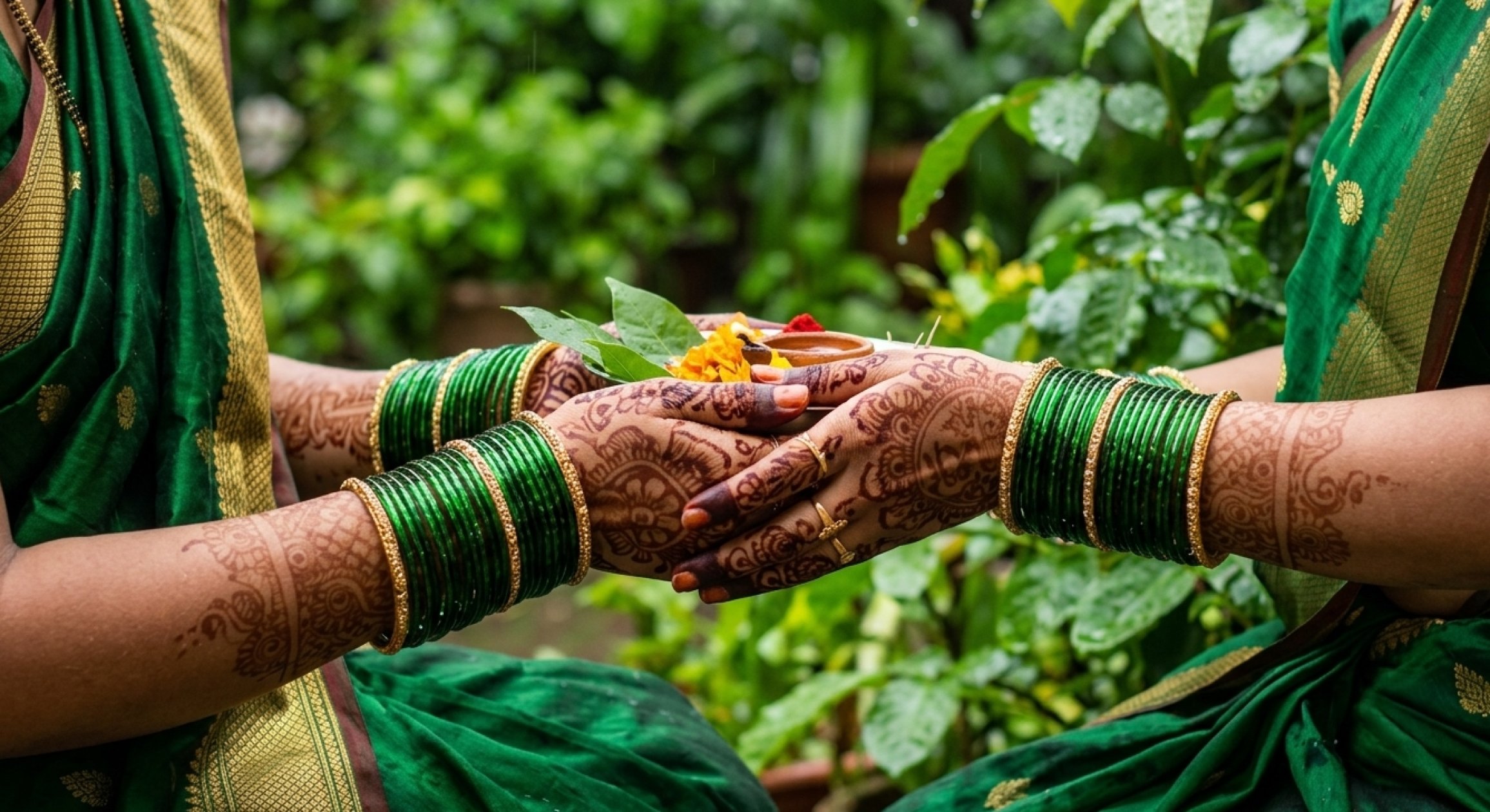
As the monsoon paints the world around us in every shade of green, women too bring a little of that colour onto their hands. During Shravan, green bangles become a familiar sight, adding a bright splash of colour to traditional sarees and festive attire. The soft clinking of the glass bangles is almost synonymous with the season, particularly among married women. But why green? Why during Shravan? Behind this seemingly simple tradition lies a blend of nature, faith, symbolism, and age-old beliefs that have kept the custom alive across generations.
Season of green
Shravan is considered one of the most auspicious months in the Hindu calendar. The month is closely associated with Lord Shiva and Goddess Parvati, with devotees observing fasts and offering prayers as part of various traditions. It also arrives with the monsoon, when the dry landscape is transformed almost overnight. Trees sprout new leaves, fields turn green, and the earth appears to come alive again. Green, therefore, naturally becomes the colour of the season. “It is green everywhere around us; new leaves are sprouting, nature is alive, so that could be one of the possible reasons for women wearing green bangles in particular,” mentions Chitra Desai from Margao. For many communities, this connection with nature is one of the reasons green holds such significance during Shravan. The colour is traditionally associated with growth, fertility, prosperity and renewal.
A married tradition
“For married women, the suhasinis, these green bangles are associated with saubhagya. Additionally, a lot of our Hindu festivals also begin during Shravan; hence it is almost like dressing up and decorating ourselves,” mentions Sumitra Bhate, from Panaji. Bangles themselves have traditionally been an important part of a married woman’s shringar, and their colours can often carry different meanings depending on the region and community. “Some of them also wear red bangles,” she adds.
The association with Goddess Parvati is particularly significant. Revered as the wife of Lord Shiva, Parvati is often regarded as the embodiment of devotion, marital commitment, and feminine strength. Shravan is considered an important time to worship the divine couple, and women may observe various rituals and prayers seeking happiness, prosperity, and harmony in their married lives.
Symbol of wishes
Green bangles, in this context, are often worn as a symbol of these wishes. In some traditions, married women wear them while praying for the well-being and longevity of their husbands and for happiness within the family. In Maharashtra and some parts of Goa as well, the connection is particularly visible through the tradition of the hirva chuda, or green bridal bangles. Green bangles form an important part of traditional bridal adornment and are associated with prosperity, new beginnings and marital happiness. During Shravan, the colour continues to have a strong cultural presence. “Sale of green bangles and Mehndi too is more in Shravan as compared to other months,” mentions Siraj Ali, a bangle seller at Pinky Bangles in Panaji. “I think green colour is associated with nature and monsoon and is also considered as favourite colour of Goddess Parvati; that is why green bangles are popular among married women,” he says, adding that newly married women are often gifted green bangles for a happy marriage. “The minimum number that one wears is 6 bangles at least on each hand; the maximum is as many as one wishes,” he remarks. Customs often differ from one region to another. The significance attached to the colour, the number of bangles worn, and the rituals accompanying them can all vary.
Faith meets nature
While being followed as a tradition that isn’t questioned, the simplest explanation perhaps lies in the season itself. Shravan is when Goa and much of India seem to breathe differently. The rain washes the dust away, the trees become fuller, and the landscape is suddenly alive with green. Women wearing green bangles almost seem to carry a small reflection of that landscape with them. A colour borrowed from the monsoon becomes a symbol of life, a prayer for prosperity, and an expression of saubhagya, continuing a tradition where faith meets nature, quite literally, in the hands of women.