


THE GOAN NETWORK
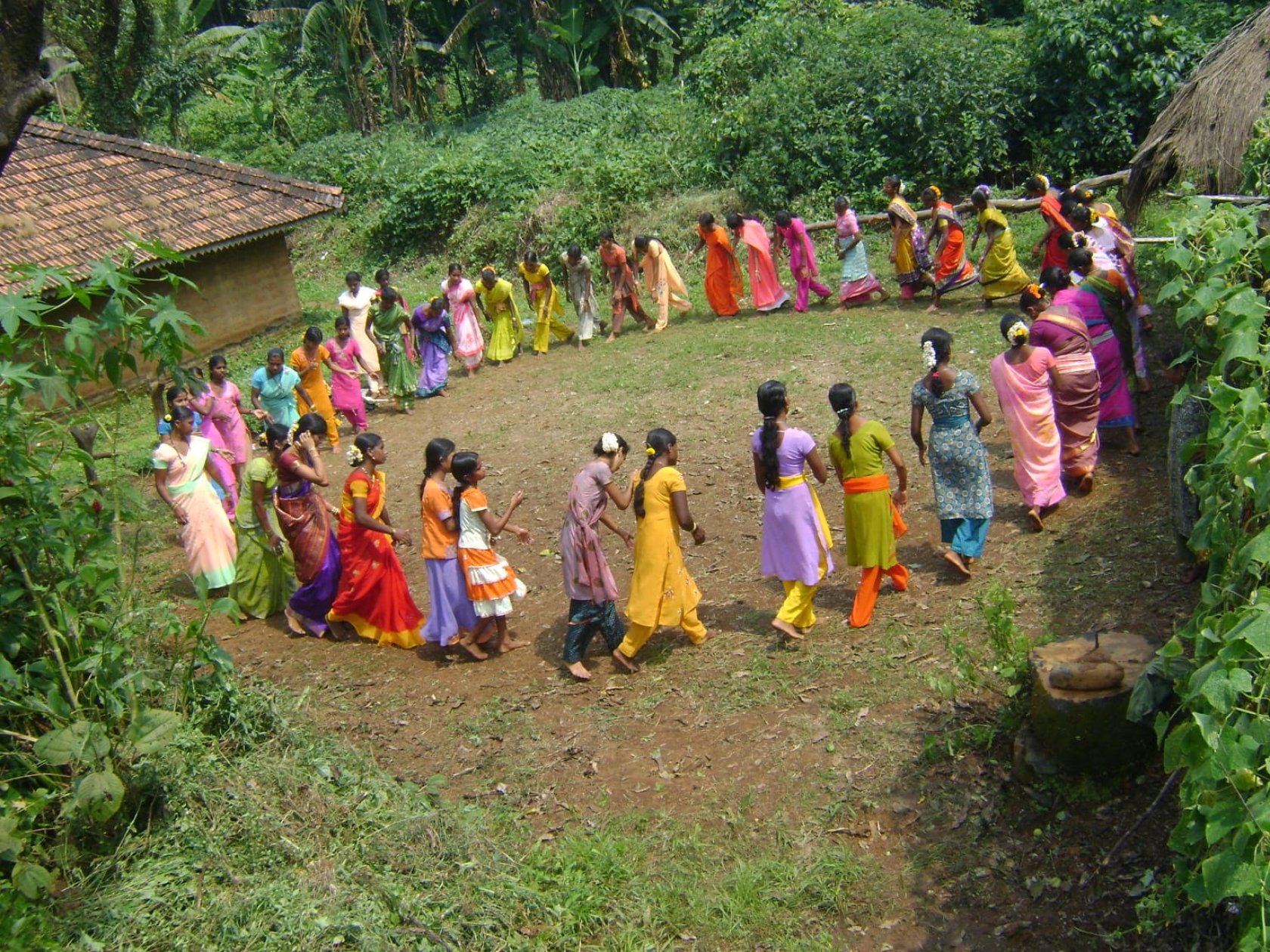
The Dhillo maand is prepared; the women are dressed in dhetlyache kaapad, an attire worn for generations, and they gather around the Dhillocho maand.
ANCESTRAL ROOTS
In several villages of South Goa, the period from Dussehra to Diwali Padwa sees the nights come alive with this unique tradition, which reflects the relationship between tribal women, nature and the land they inhabit. Observed in around 26 villages, including Kurpem, Gaodongri, Vavurla, Khotigao, Rivona and Nune in Netravali, Dhillo is a lesser-known aspect of Goa’s tribal culture. Village communities believe that Dhillo has been observed since time immemorial, with its origins associated with the first communities that settled in these areas. Many elders say their families have followed the tradition for generations, making it difficult to establish when it began. Dhillo means ‘dhartari’, or Mother Earth.
The tradition begins with families paying homage to their departed ancestors. For instance, if a grandmother has passed away, the family invites a woman of a similar age to their home on Dussehra and serves her a meal of ‘Panchpakvann’. This symbolises feeding the woman in memory of the deceased grandmother. The women then gather to sing and perform the ‘Dhillyache khel’.
SACRED RITUALS
While some villages begin on Dussehra night, others start the following night. Like the Shigmyacho maand, these villages also prepare a Dhillyacho maand. The ‘mannili’, or respected women of the village, collect mud from the ‘pavitra jaago’, a sacred place comprising a termite mound known as ‘ro’in’. “We bring the mud from this ro’in and prepare the round mud ball or globe, which is called the Dhillo,” shares Supriya Gaonkar, a banker from Khotigao. “Every five days, we have to prepare the maand again. If we cannot do so within five days due to any issue, then we do it after seven days, but the maand has to be made five times again,” she shares.
In some villages, unmarried women collect and shape the mud into a globe, which is worshipped with wildflowers. “After this, the ‘chakari che geet’ is sung. It is believed that once this song is sung, the globe attains power or life; we call it the ‘praan pratishthaan’ in Marathi,” shares Devidas Gaonkar, a tribal researcher from Badde, Khotigao, Canacona. Gaonkar explains that the ritual is followed by a fugdi performed by five women on the ‘kolso’, and then Naman. “They do this naman as a part of the performance itself. They don’t stand during the Naman; rather, they say it as they go around in the Dhillyacho maand,” he remarks.
TRADITIONAL DANCES
According to him, several forms of fugdi performed in Goa can be traced to the Dhillyacho maand. “While we call it fugdi now, the original names were very different. The play which requires one to do phuu phuu is fugdi; however, the ones performed here are called Dhillyancho Khel or Popyancho Khel,” he adds. The performances take place nightly between 9 pm and midnight over 21 or 22 days, culminating on Diwali Padwa. One of the final rituals is ‘oli dhartaat’, during which women perform what is now popularly known as Dhalo.
“In fact, the origin of all the varieties of fugdi can be traced back here, to the Dhillyacho maand,” states Gaonkar. The songs also describe the preparation of the Dhillo and the offering of rice. In Nune village of Netravali, Chandan Gaonkar, a teacher, explains, “Following this, the women stand holding rice in their hands. While singing the Chakari songs, they offer rice at specific intervals.” Verses such as ‘Aakari bhakari, Dhilla tuji chakari…’ and ‘Ya Dhillya kay saajo, mati saajo…’ describe the preparation of the Dhillo and the invocation of divinity. On the final day, the rituals continue until almost 4 am, after which the Dhillo is immersed in water. “Once there is a little light, that is when everything is then bid adieu by immersing it in water,” she shares.
COMMUNITY BONDING
Beyond its rituals and songs, Dhillo also brings village women together. Gaonkar captures this aspect of the tradition, saying, “Even if two women have differences during the day, by night, you will see them coming together to perform the Dhillo, with no ill feelings towards each other.” Perhaps this is what makes Dhillo special. It is more than a seasonal ritual.
Through its songs, worship and traditional games, it keeps alive the community’s relationship with the earth and its ancestors. More importantly, it brings women together, giving them a shared space to celebrate, preserve and pass on a tradition that has survived across generations.


