THE GOAN
PANAJI
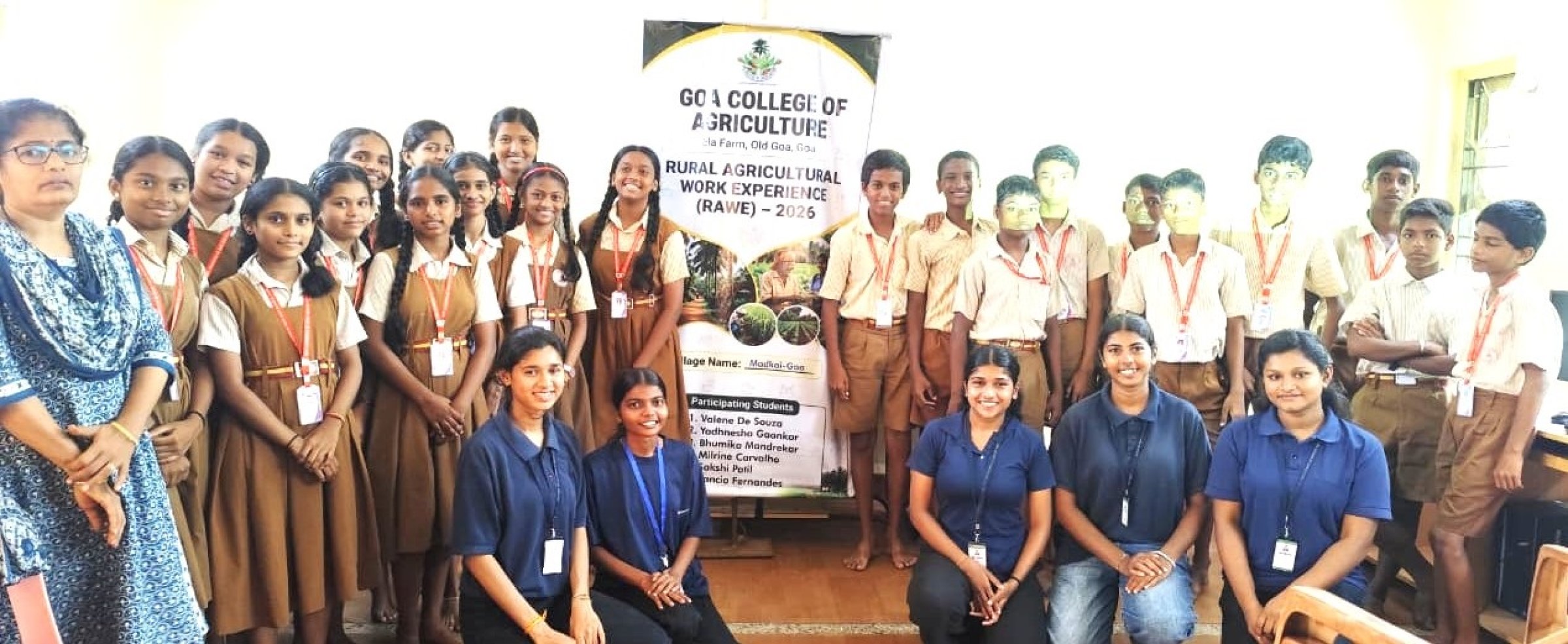
Agriculture education stepped outside the classroom walls as fourth-year students of the Goa College of Agriculture introduced schoolchildren across Goa to innovative methods of food production through a series of practical demonstrations on hydroponics and kitchen gardening.
The initiative, conducted in approximately 30 schools across the state, was organised under the Institute Attachment component of the Rural Agricultural Work Experience (RAWE) Programme, in collaboration with the World Wide Fund for Nature (WWF). The programme aimed to familiarise young learners with simple, space-efficient and environmentally responsible approaches to growing food.
Rather than limiting agricultural education to textbooks, the students were encouraged to use live demonstrations to explain how plants can be cultivated even where conventional farming space is limited. Students were introduced to the principles of soil-less cultivation, water and nutrient management, crop selection, and hydroponic production systems.
Kitchen gardening was presented as yet another practical way of connecting children with food production. Demonstrations showed how vegetables and other useful crops can be grown in school premises, household spaces, containers, pots and other small available areas. The approach encouraged students to view food production as something that can be practised even within their immediate surroundings.
A significant feature of the initiative was its integration with the State Council of Educational Research and Training (SCERT) curriculum. Concepts prescribed under Kitchen Gardening for Class VI and Hydroponics for Class VIII were reinforced through demonstrations and activity-based learning. This provided students with an opportunity to experience concepts that they normally encounter through classroom instruction.
Dr Suresh Kunkalikar, Principal, Goa College of Agriculture and Chairman of the RAWE Programme, said that agricultural institutions have an important role in taking knowledge beyond the boundaries of the campus. “Such initiatives create a connection between agricultural education and the community. They encourage schoolchildren to see agriculture as a dynamic field driven by science, technology, innovation and sustainability,” he said.
Aditya Kakodkar, Goa State Coordinator, World Wide Fund for Nature (WWF), welcomed the initiative and highlighted the importance of experiential learning. He said that connecting SCERT curriculum topics with practical demonstrations can help students understand sustainable food production, efficient use of natural resources, and environmentally responsible practices in a more meaningful manner.
According to programme coordinator Dr Shreyas Jadhav, agricultural education should begin by creating curiosity among young minds. “When students see and experience technologies such as hydroponics and kitchen gardening, concepts become more meaningful and relatable. The initiative also provides our agriculture students with an excellent opportunity to practise extension education and scientific communication in a real-world setting.”
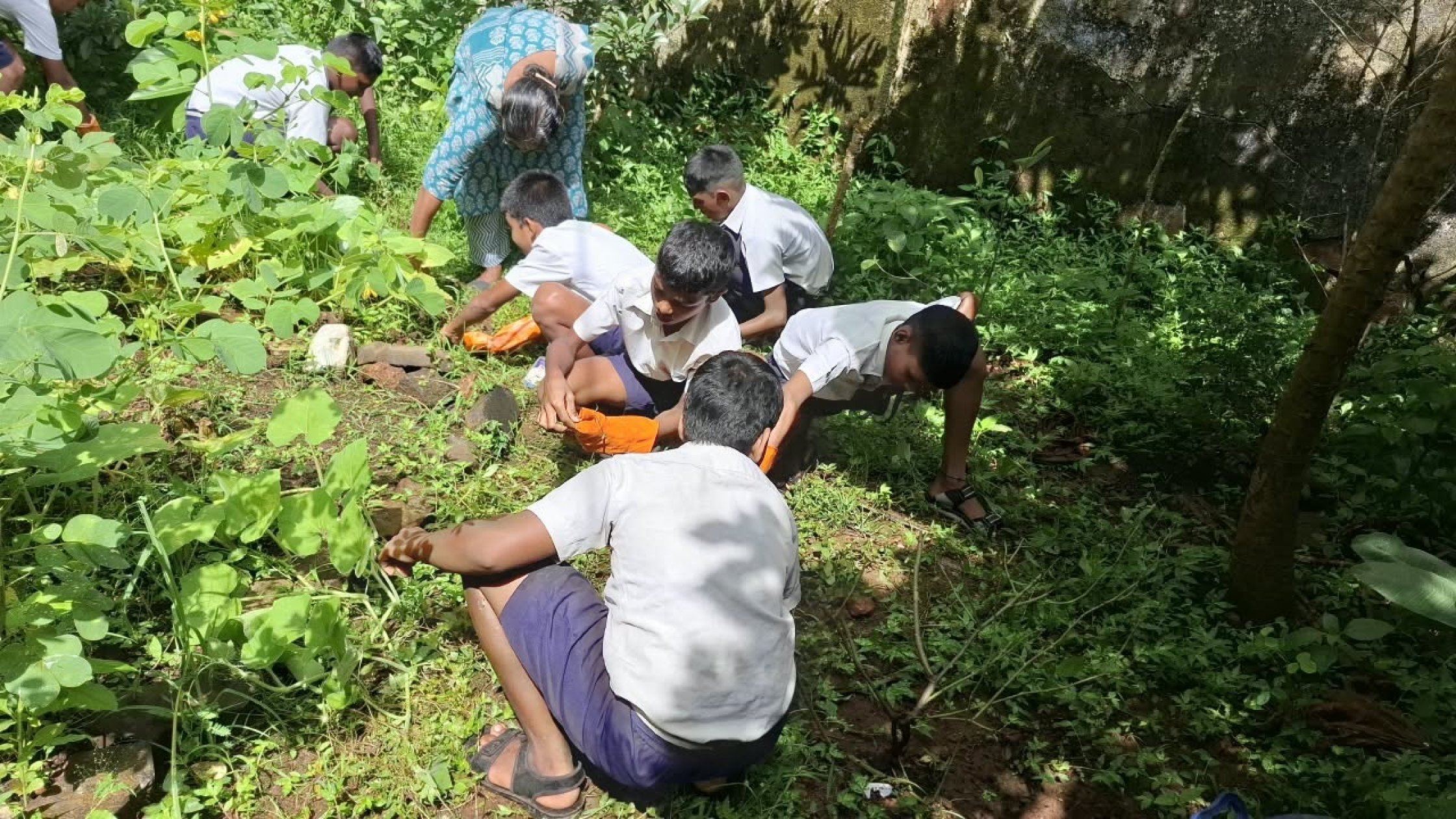
The programme generated considerable enthusiasm among participating students and teachers. Students actively interacted with the agriculture students, raised questions about hydroponic systems and showed interest in establishing kitchen gardens in their homes and schools. Teachers also appreciated the initiative for providing a practical dimension to concepts already included in the school curriculum.
The initiative represents more than just an outreach activity; it demonstrates how agricultural universities and colleges can become catalysts for developing scientific curiosity and environmental awareness among the next generation. Through the combined efforts of the Goa College of Agriculture and WWF, modern farming technologies were brought closer to schoolchildren, creating an early connection between education, agriculture, sustainability, and responsible use of natural resources.